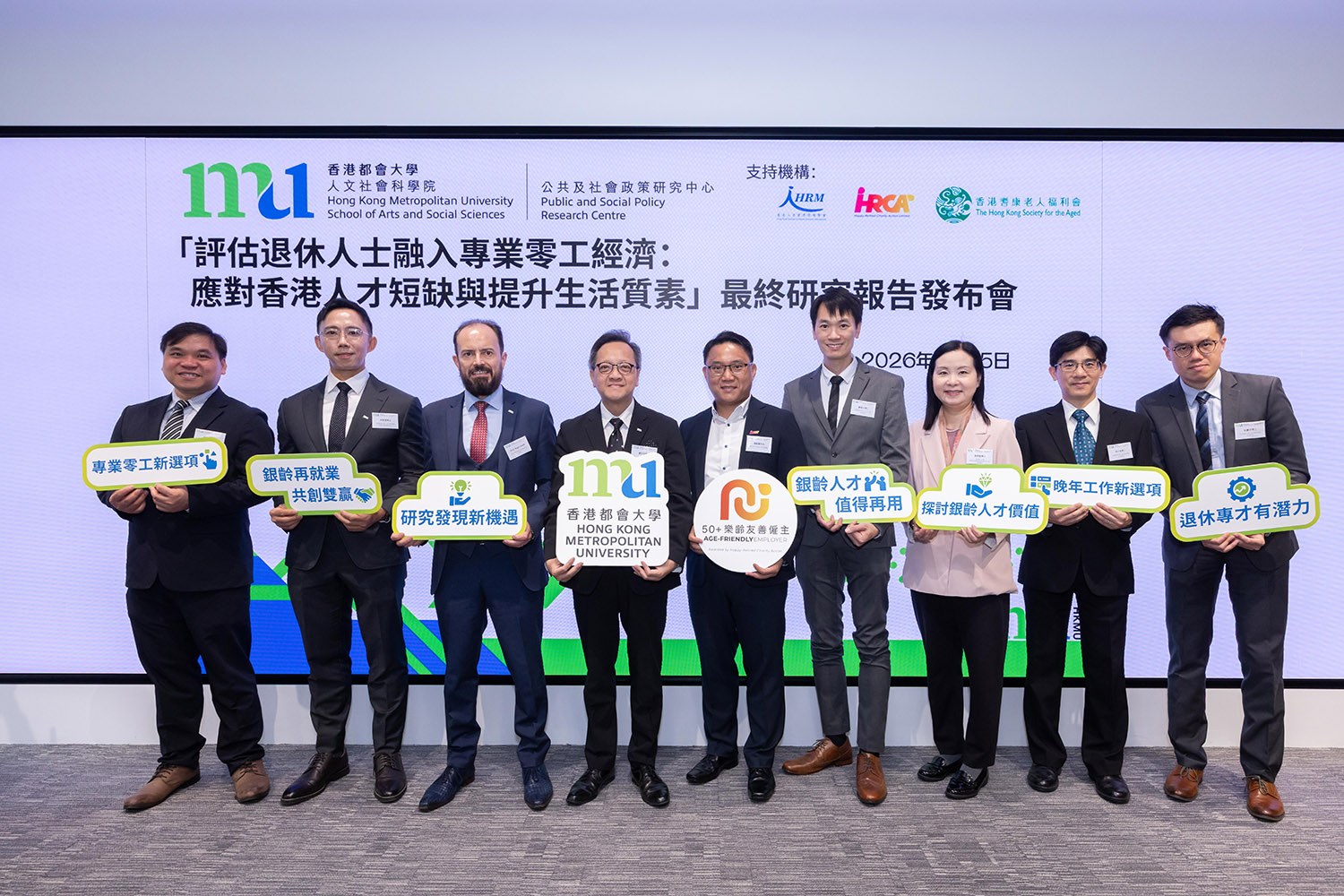
As Hong Kong faces an ageing population and a widening experience gap in several sectors due to the talent drain and succession challenges, a recent study by the Public and Social Policy Research Centre of the School of Arts and Social Sciences at Hong Kong Metropolitan University (HKMU) highlights the potential for developing a “Professional Gig” model for retirees in local enterprises. Encouraging organisations to hire retired professionals and leveraging their expertise could be a strategic solution to meet the market's demand for experienced talent, benefiting both employers and retirees.
The “Professional Gig” model allows retirees to make their professional skills accumulated over the years in flexible, project-based, short-term contracts or consultancy roles.
The research team conducted in-depth interviews with 20 retirees and 20 employers between June and September 2025. This was followed by a survey from October 2025 to March 2026, which collected responses from 602 retiree questionnaires and 212 employer questionnaires. The surveyed employers spanned sectors such as education, engineering, finance, healthcare, information technology and logistics. More than 60% were small and medium-sized enterprises (SMEs).
The findings revealed that 33% of surveyed employers have hired or are currently hiring retirees through the “Professional Gig” model. Among them, education (54.5%), healthcare (42.9%), and construction/engineering/property (40.6%) are currently the top three sectors most actively adopting the model. Among those who have yet to adopt the model, over a quarter (25.9%) expressed openness to it. The research team believes that this reflects the potential for Hong Kong enterprises to explore this model.
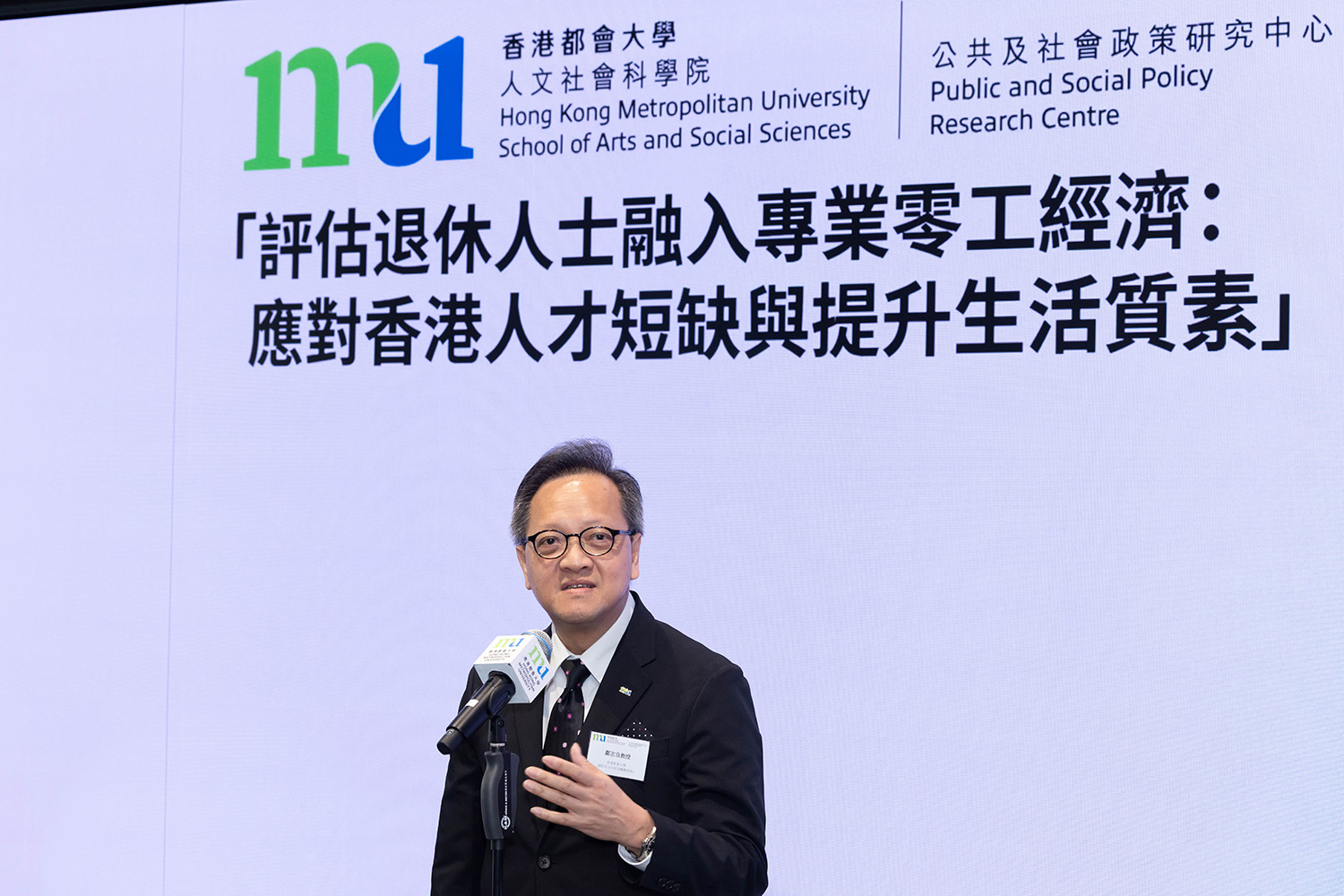
The research project was funded by the Public Policy Research Funding Scheme under the Chief Executive's Policy Unit. Prof. Charles Kwong Che-leung, HKMU Vice President (Administration and Corporate Development) and Director of the Public and Social Policy Research Centre, noted that the research project embodies HKMU's commitment to social responsibility. He expressed the University's goal of effectively addressing social needs through policy research and recommendations, thus contributing positively to Hong Kong's sustainable socio-economic development.
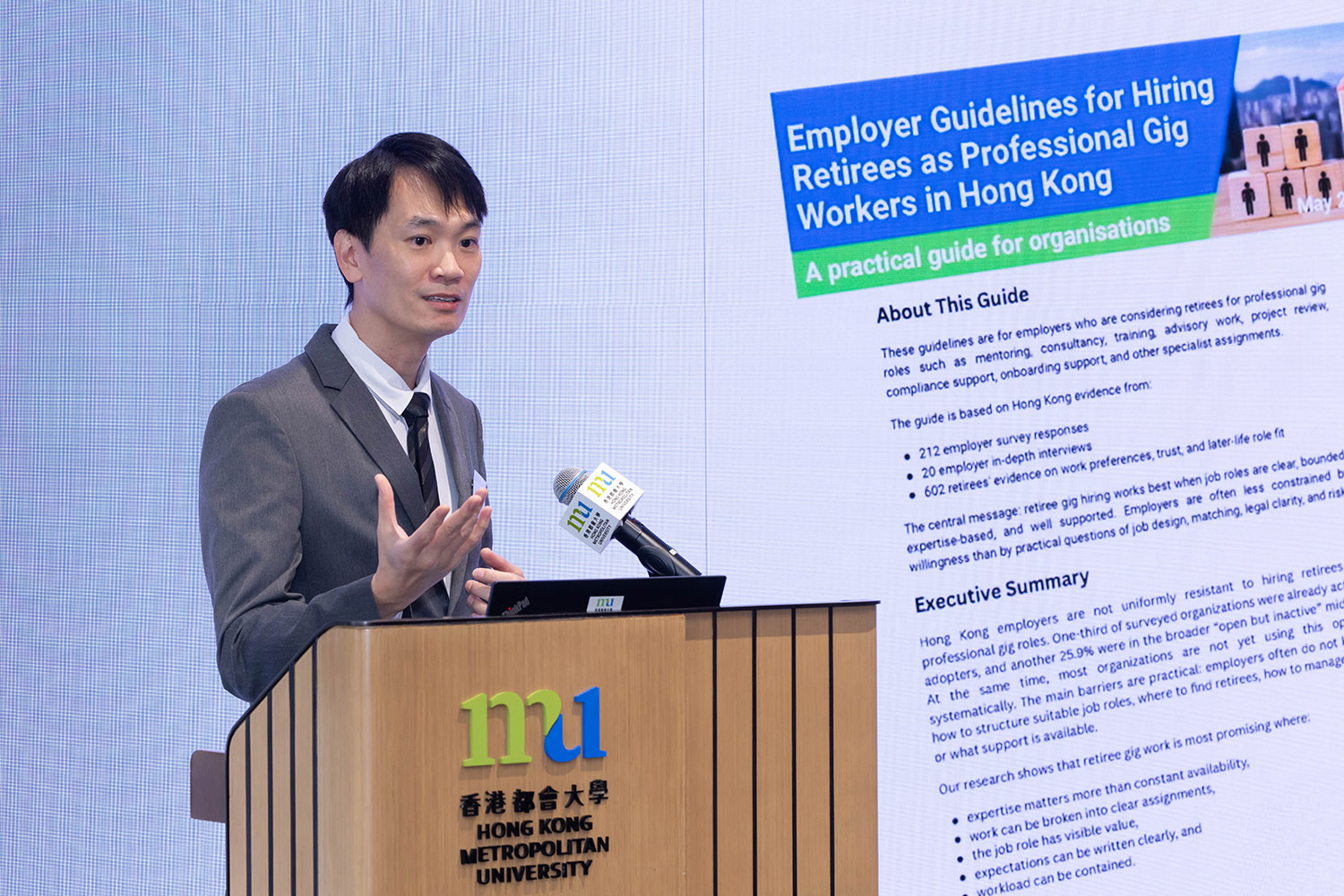
“The findings reveal that Hong Kong already has a pool of retirees and corporations interested in or ready to participate and adopt the 'Professional Gig' model,” said Prof. Kwong. “The real challenge lies in establishing a credible matching mechanism, redesigning suitable jobs, and providing operational support.” The research team therefore compiled the Employer Guidelines for Hiring Retirees as Professional Gig Workers in Hong Kong (link) to serve as a reference for employers to provide policy recommendations and practical support to facilitate the implementation of such employment arrangements.
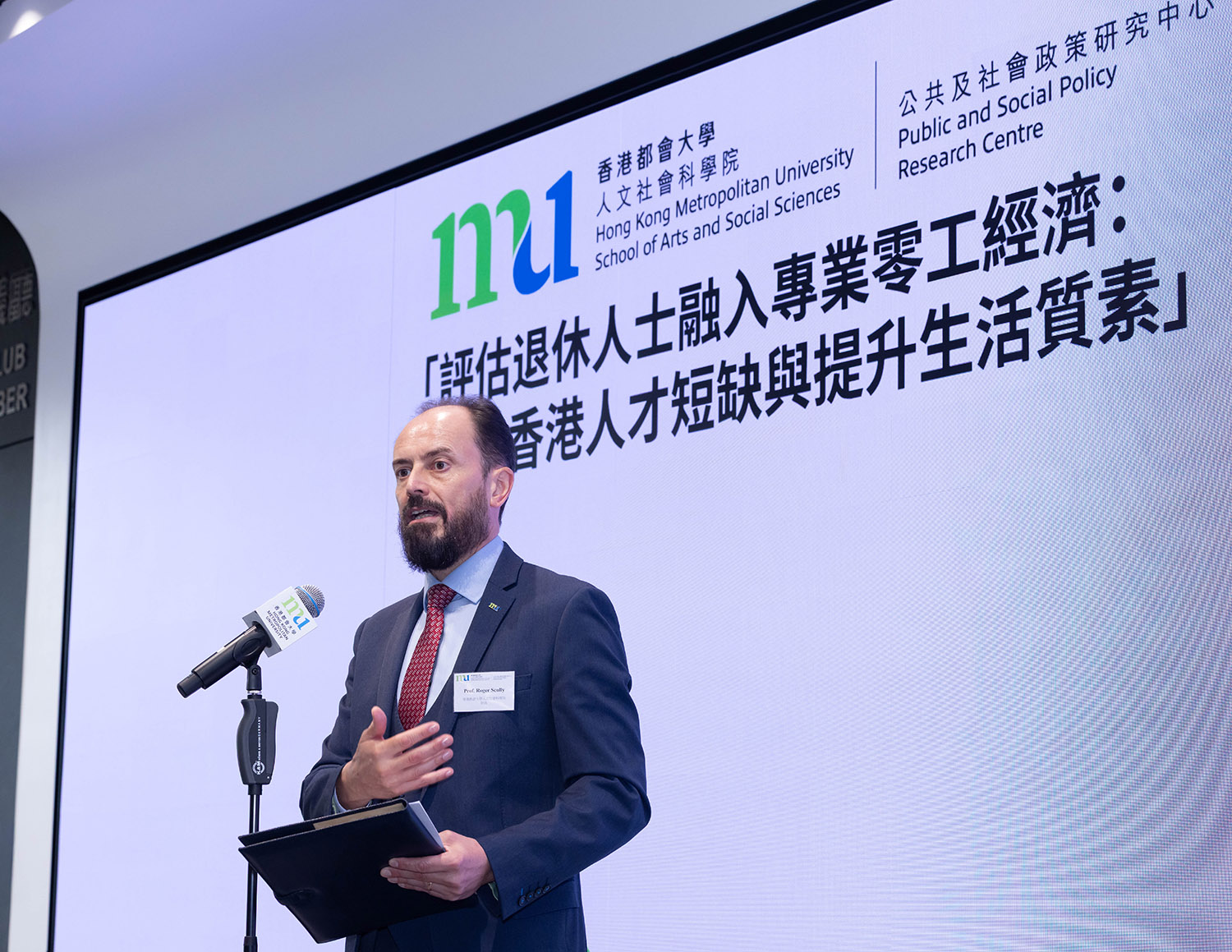
Prof. Roger Scully, Dean of the School of Arts and Social Sciences at HKMU, noted that the research topic is not only directly relevant to the society in Hong Kong, but also reflects a challenge faced by countries worldwide amid the global trends of an ageing population and a shrinking workforce. He added that this research demonstrates how HKMU's research goes beyond intellectual interest and is grounded in local issues with global relevance.
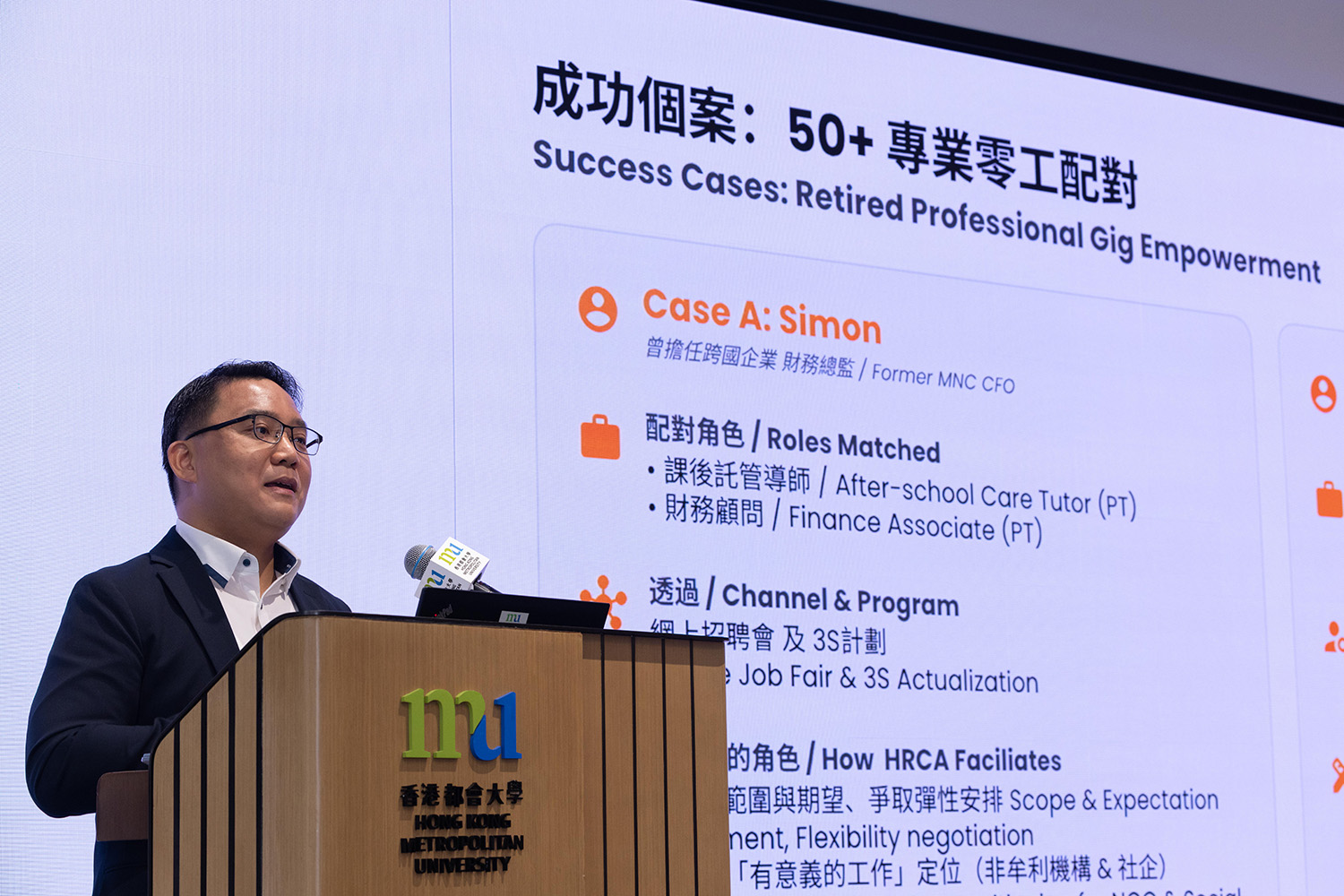
Proposed Matching Platform to Connect Retired Talent with Corporate Needs
Dr Raymond Kwong Wai-man, Assistant Professor in the School of Arts and Social Sciences at HKMU, who led the study, pointed out that Hong Kong is facing a “structural mismatch” in job nature. “While entry-level positions are shrinking due to economic shifts and the impact of AI, there remains robust demand for talent who possess deep expertise and professional judgment,” he explained. “Roles involving consultancy, mentoring, and compliance oversight cannot be immediately filled by fresh graduates entering the workforce.”
He emphasised that hiring retirees on a “Professional Gig” basis helps alleviate the talent shortage, provides effective cost control, and facilitates the transfer of invaluable experience. Based on the findings from in-depth interviews and surveys, he noted that while many employers are willing to hire retirees, they are unsure about where to start, including not knowing how to design suitable roles, lacking reliable recruitment channels, and having concerns about contractual arrangements.
The survey found that nearly a quarter (23.4%) of retired respondents are currently working, while another 21.4% intend to re-enter the workforce, reflecting untapped potential in the retiree workforce. The higher the education level of the retirees, the higher their intention to remain in or to re-join the workforce. Retirees cited several motivations for returning to work and is not just about financial gain:
- 4% believe that work helps maintain social interaction with others
- 1% believe that it contributes to their physical and mental well-being
- 3% would like to share their experience and knowledge
- 3% seek to improve their financial condition
Drawing on practices from Japan and Singapore, the research team made four policy recommendations:
- Establish an Official Professional Matching Platform: This would provide a credible and systematic mechanism for effectively connecting retirees with employers.
- Provide Legal and Contractual Support: Develop clear guidelines and model contracts for employers that outline work scope, remuneration, confidentiality and insurance.
- Redesign Jobs: Help employers redesign jobs and tasks to make them suitable for retiree participation.
- Consider providing kick-start subsidies to employers: This would encourage enterprises new to this model to pilot and explore the “Professional Gig” arrangement for retirees.
Dr Kwong stated that, in light of these recommendations, the research team formulated the Employer Guidelines, which have been released online. The guidelines offer specific advice, ranging from job redesign and recruitment strategies to contractual protections.