HKMU unveils development blueprint to further leverage its advantages as a university of applied sciences

News HKMU unveils development blueprint to further leverage its advantages as a university of applied sciences
1

HKMU unveils development blueprint to further leverage its advantages as a university of applied sciences

News Centre

HKMU News Centre HKMU unveils development blueprint to further leverage its advantages as a university of applied sciences

HKMU unveils development blueprint to further leverage its advantages as a university of applied sciences

SHARE

Share on email
Share on facebook
Share on twitter
Share on whatsapp
Share on linkedin

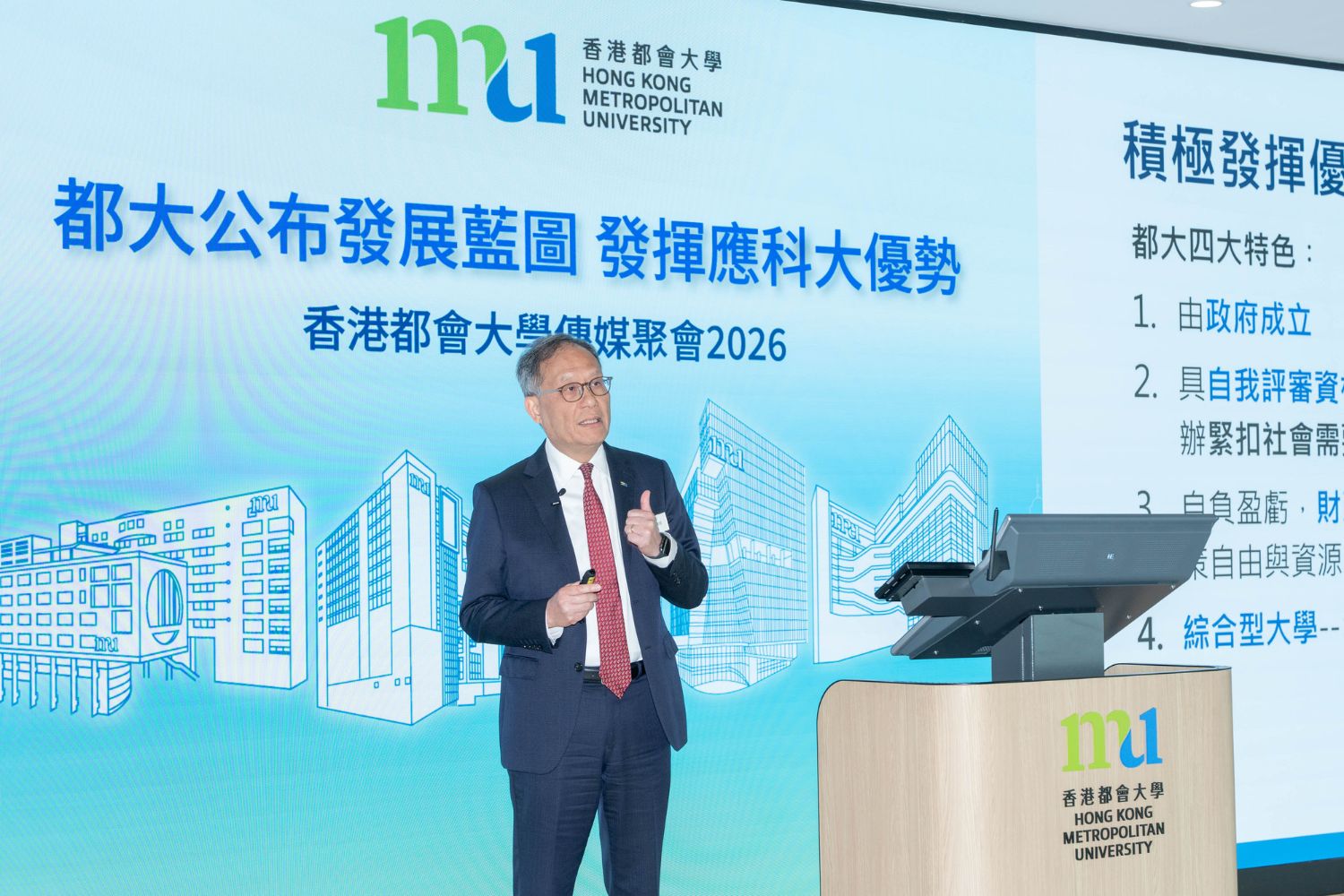
Hong Kong Metropolitan University (HKMU) has experienced steady growth and achieved outstanding progress in teaching and research since being designated a university of applied sciences (UAS) in 2024. Today (16 April), it unveiled its future development blueprint. HKMU President Prof. Paul Lam Kwan-sing highlighted that the University is entering a new phase of development. He stated that HKMU will closely align itself with the needs of society and industry, further strengthening its capabilities in teaching, research and innovation to nurture a new generation of professionals equipped with strong practical skills and an innovative mindset, in alignment with the National 15th Five-Year Plan and Hong Kong's overall development priorities.

To enhance students' artificial intelligence (AI) literacy and competency on all fronts, HKMU is introducing new AI modules into two of its university core courses. Starting from the 2026/27 academic year, undergraduate students will be required to take the revamped courses: “Co-creating with AI: Communication and Teamwork for the Future” and “AI, Sustainability, and Entrepreneurial Leadership”. Through the updated curriculum, the University aims to prepare students to become “AI-ready” talent who can leverage emerging AI technologies innovatively, critically, and ethically.

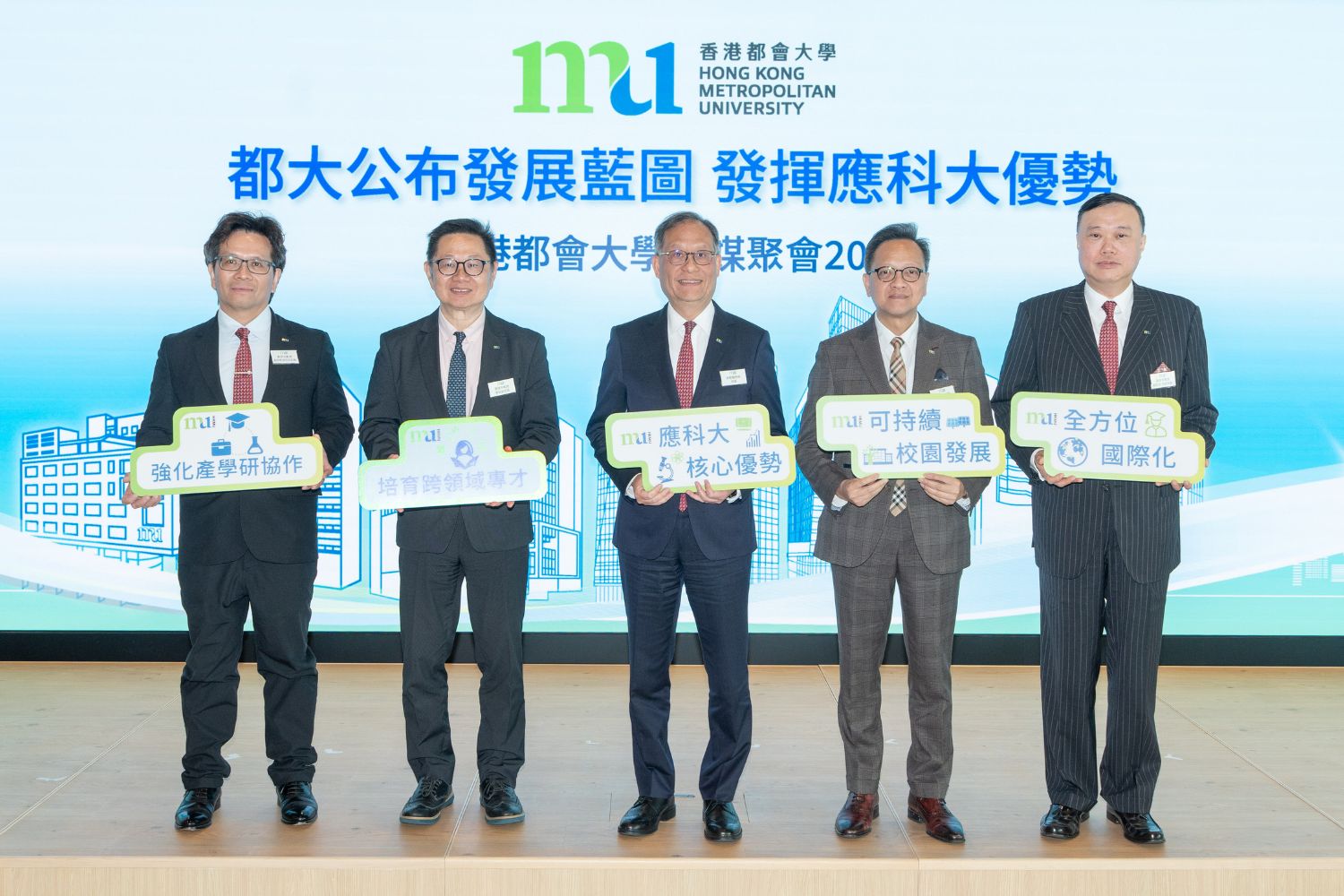
Prof. Lam, together with the University's senior management team – Prof. Reggie Kwan Ching-ping, Provost; Prof. Charles Kwong Che-leung, Vice President (Administration and Corporate Development); Prof. Ricky Kwok Yu-kwong, Vice President (Research and Institutional Advancement); and Prof. Alan Au Kai-ming, Vice President (Strategic Initiatives) – briefed the media on HKMU's latest developments and future plans.

Prof. Lam noted that the Northern Metropolis will serve as a new engine for Hong Kong's future development. HKMU will leverage the geographical advantages of the Northern Metropolis University Town to focus on technology education and research, while deepening industry-academia-research collaboration with enterprises and research institutions in the Greater Bay Area (GBA) to create stronger synergies. He stressed, “The Northern Metropolis University Town will provide impetus for HKMU's development. With the support of the Government's loan scheme, the University will enhance resources for teaching, learning and research, and capitalise on its strengths as a UAS to foster deep integration with industry and nurture high-calibre talent equipped with applied knowledge and skills.”

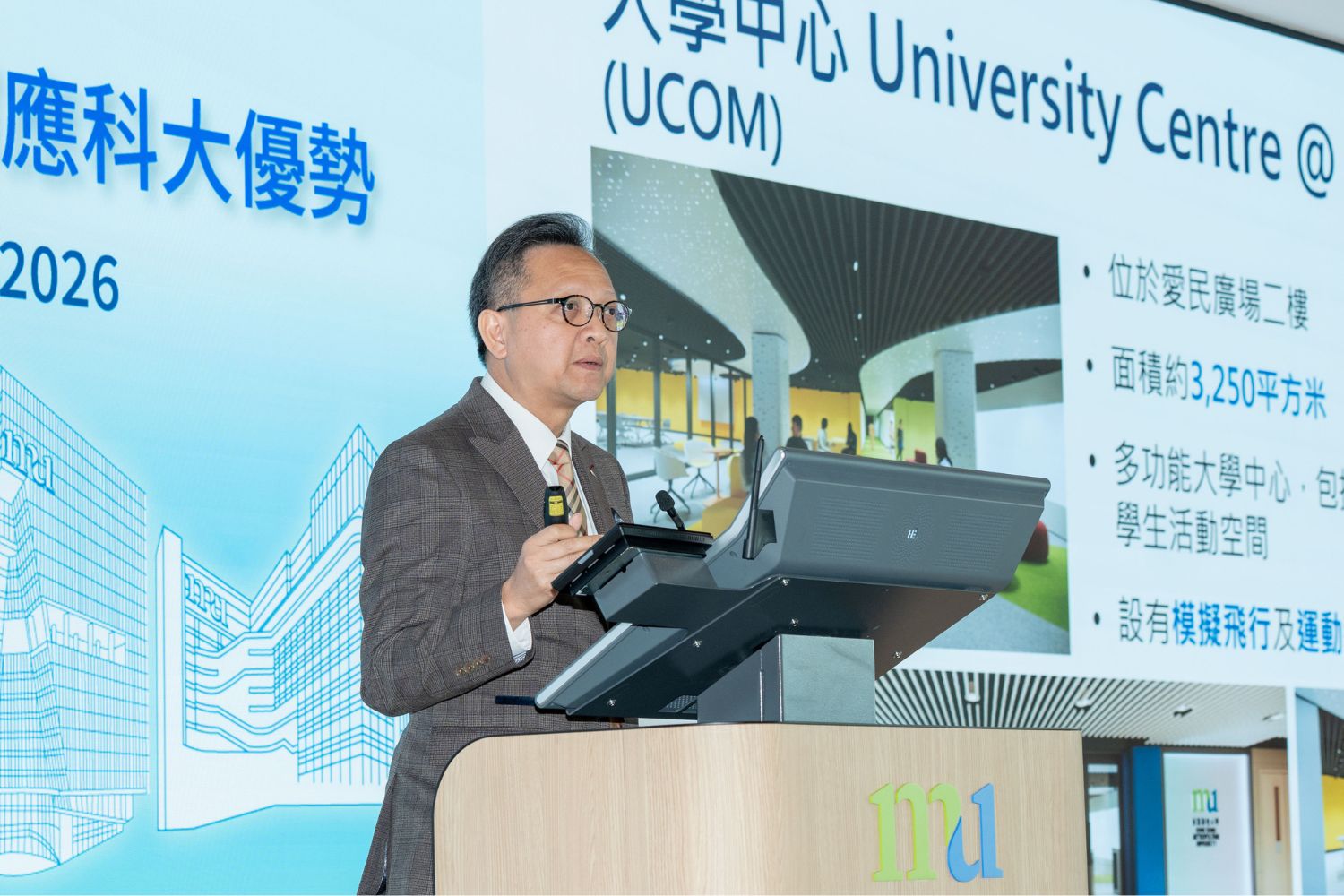
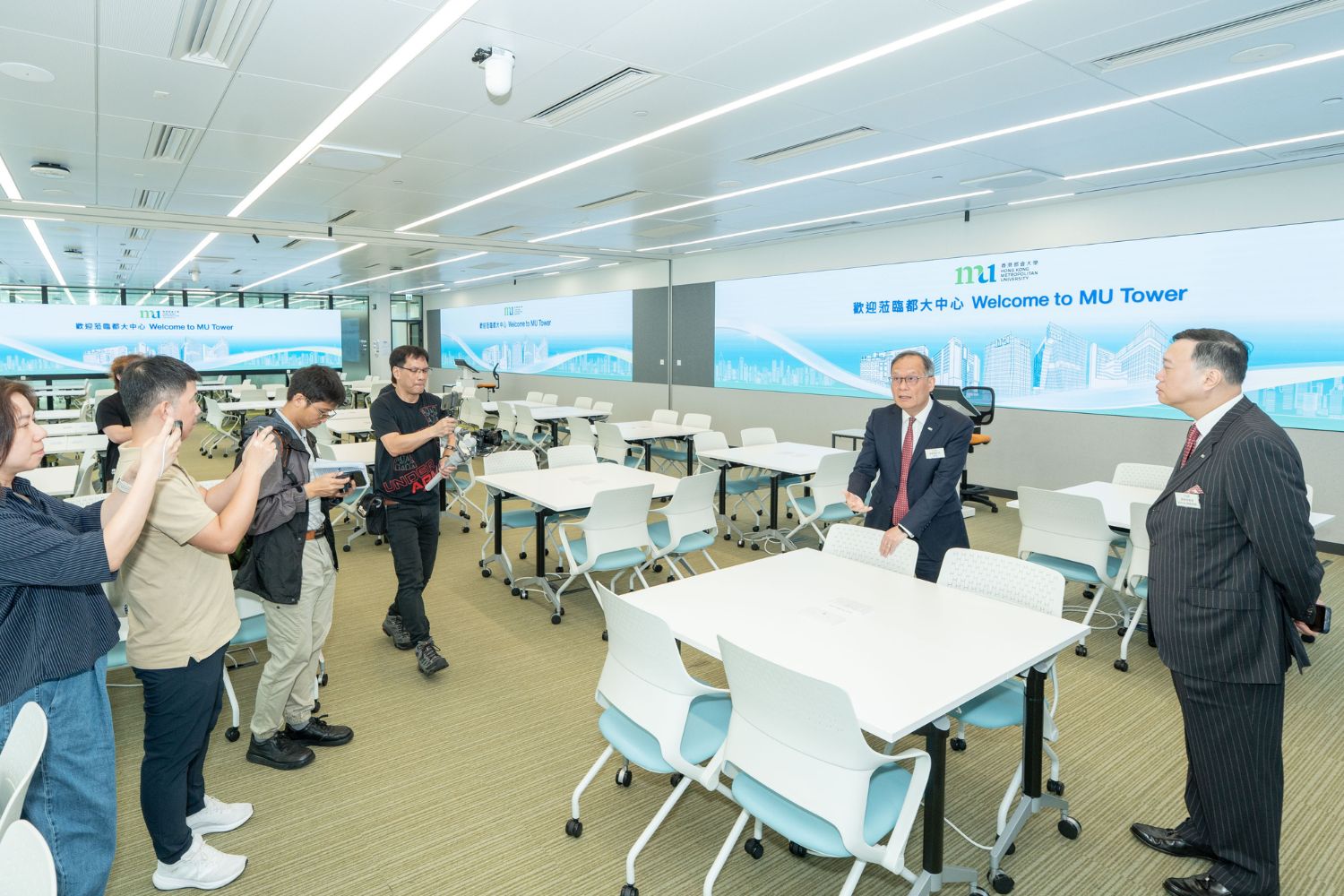
To support its long-term strategy, the University earlier acquired MU Tower in Hung Hom. Following a series of renovations and upgrades, MU Tower has been transformed into a multi-functional space integrating teaching, research and international conferences since last August. The University will further develop it into a hub for executive training and start-up incubation, fostering collaboration between its startup teams and industry to promote the translation of research outcomes into practical applications and innovations. Additionally, an innovation and entrepreneurship centre will be launched in the fourth quarter of this year to provide incubation support and co-working spaces for students and start-ups, thereby enhancing the industry-academia-research ecosystem.

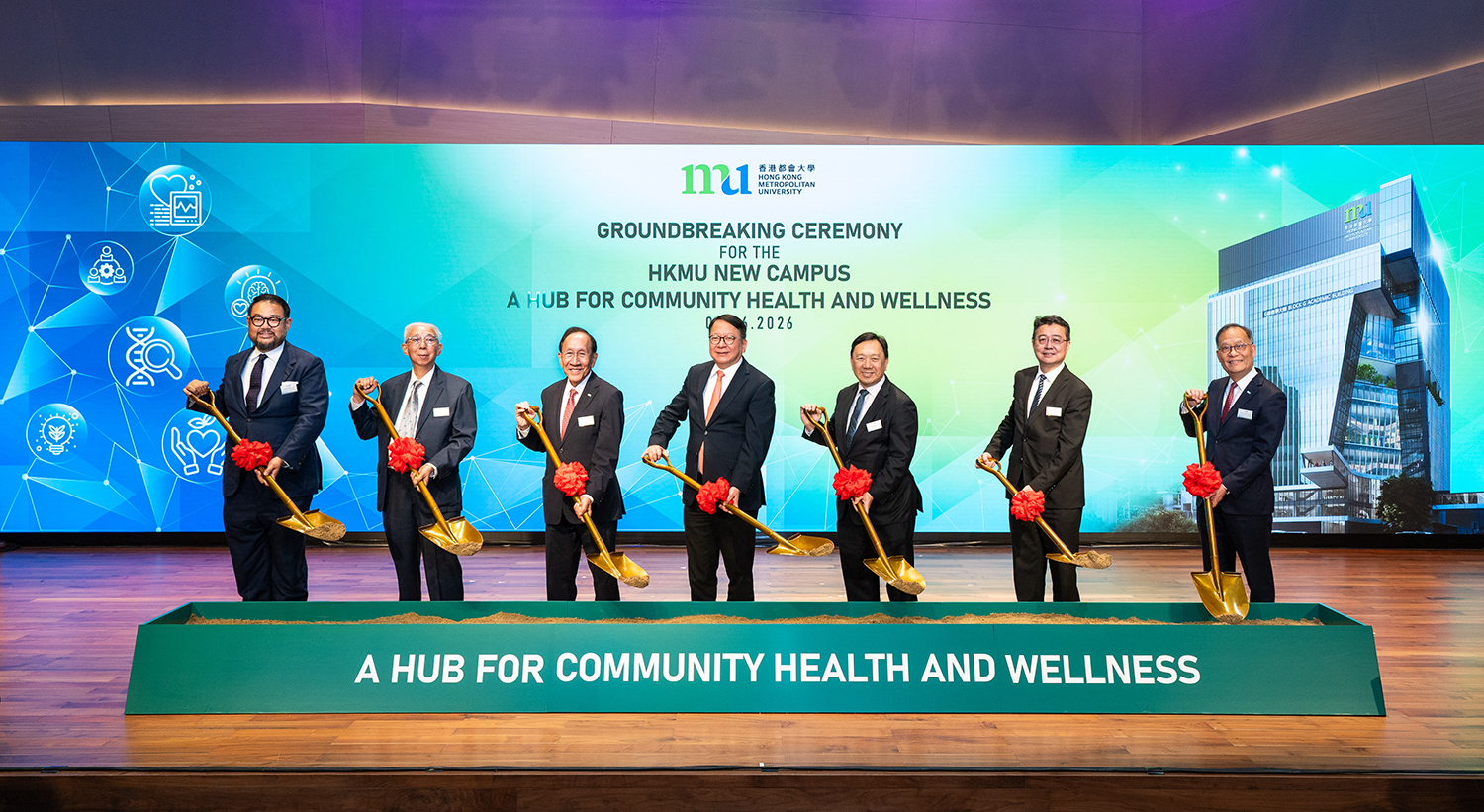
Prof. Lam added that the University will position the newly launched HKMU Shenzhen Research Institute as a Shenzhen-Hong Kong industry-academia-research base to seize the significant opportunities presented by the development of the GBA and to promote the deep integration of academic research and industrial innovation across the border. At the same time, HKMU will continue to expand its teaching and research facilities, including a new campus development project, titled “A Hub for Community Health and Wellness”, in Ho Man Tin, and will also convert MU88 into a brand-new student hostel, thereby creating a better overall learning and interaction environment for staff and students.

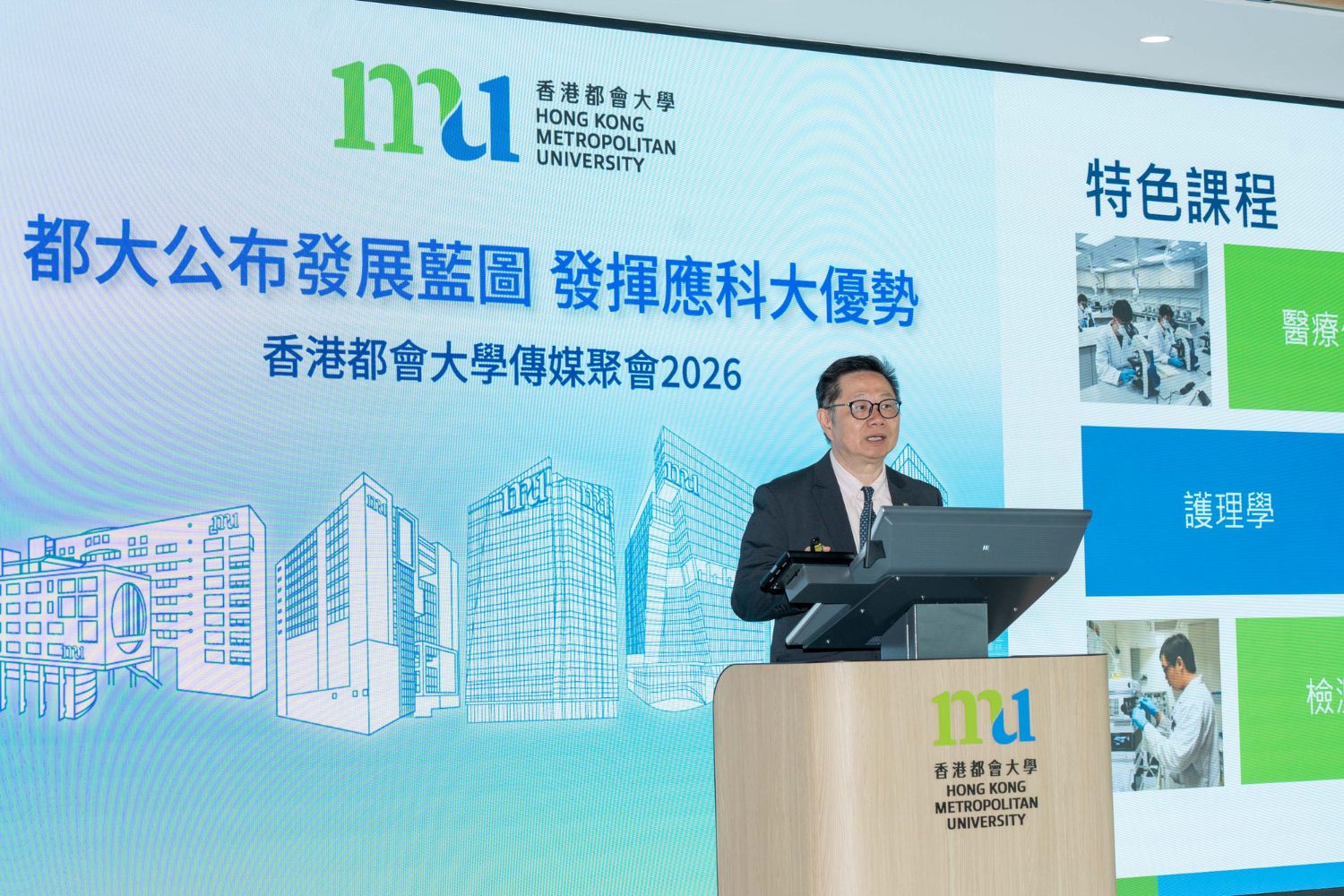
Additionally, HKMU will launch two new JUPAS programmes in the 2026/27 academic year: the Bachelor of Science with Honours in Diagnostic Radiography and the Bachelor of Applied Science with Honours in Robotics and Automation Engineering. These programmes are designed to nurture talent equipped with both professional expertise and technical skills for the benefit of society.

Moreover, the University introduced a “Minor in Global Studies” in early 2026, enabling undergraduate students to study abroad for one semester at partner institutions around the world, thereby broadening their global perspectives. The University set up a new scholarship fund of HK$4.5 million annually, providing 100 scholarships to further support students' overseas exchange and learning experiences.

In conclusion, Prof. Lam said, “This blueprint lays a solid foundation for the University's future development. Leveraging our unique advantages as a UAS, HKMU will continue to uphold its vision and mission, provide quality education and nurture outstanding professionals. With the dedication of and support from the entire HKMU community, we look forward to working together to contribute to the long-term development of Hong Kong and the nation.”


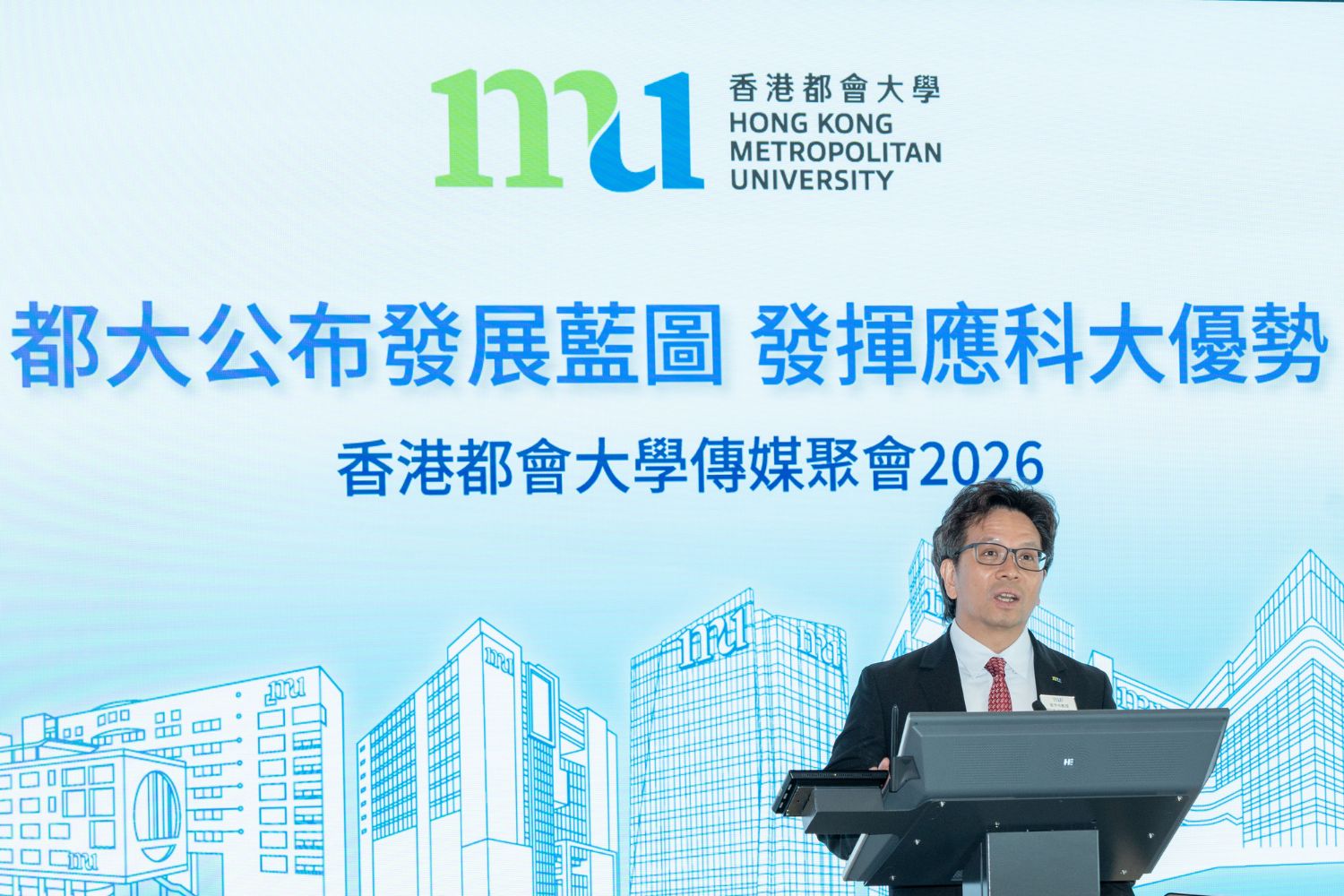
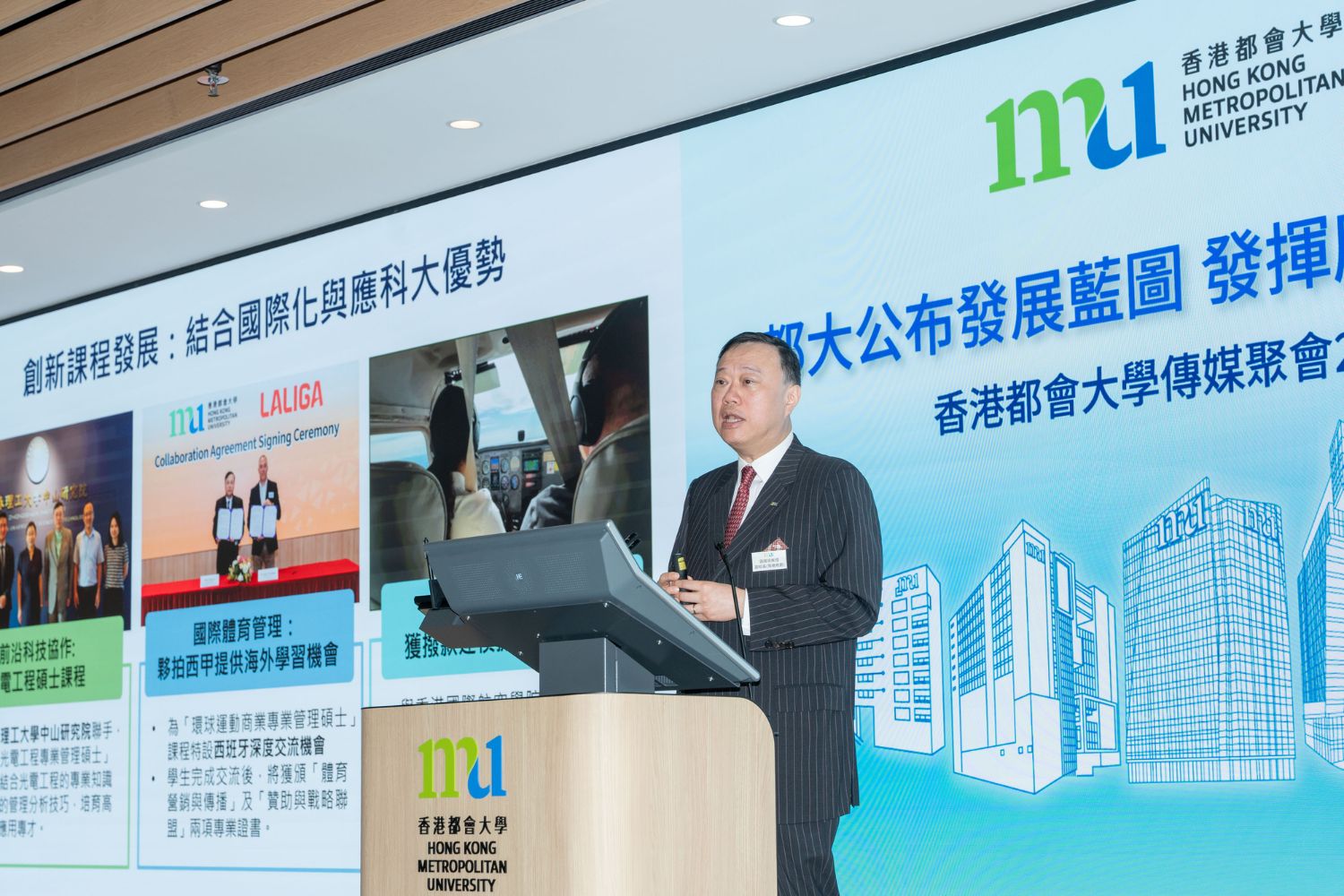
HKMU President Prof. Paul Lam Kwan-sing, led the University's management team, including Prof. Reggie Kwan Ching-ping, Provost; Prof. Charles Kwong Che-leung, Vice President (Administration and Corporate Development); Prof. Ricky Kwok Yu-kwong, Vice President (Research and Institutional Advancement); and Prof. Alan Au Kai-ming, Vice President (Strategic Initiatives), to brief the media on HKMU's latest developments and future plans.

Hong Kong Metropolitan University (HKMU) has experienced steady growth and achieved outstanding progress in teaching and research since being designated a university of applied sciences (UAS) in 2024. Today (16 April), it unveiled its future development blueprint. HKMU President Prof. Paul Lam Kwan-sing highlighted that the University is entering a new phase of development. He stated that HKMU will closely align itself with the needs of society and industry, further strengthening its capabilities in teaching, research and innovation to nurture a new generation of professionals equipped with strong practical skills and an innovative mindset, in alignment with the National 15th Five-Year Plan and Hong Kong's overall development priorities.

To enhance students' artificial intelligence (AI) literacy and competency on all fronts, HKMU is introducing new AI modules into two of its university core courses. Starting from the 2026/27 academic year, undergraduate students will be required to take the revamped courses: “Co-creating with AI: Communication and Teamwork for the Future” and “AI, Sustainability, and Entrepreneurial Leadership”. Through the updated curriculum, the University aims to prepare students to become “AI-ready” talent who can leverage emerging AI technologies innovatively, critically, and ethically.

Prof. Lam, together with the University's senior management team – Prof. Reggie Kwan Ching-ping, Provost; Prof. Charles Kwong Che-leung, Vice President (Administration and Corporate Development); Prof. Ricky Kwok Yu-kwong, Vice President (Research and Institutional Advancement); and Prof. Alan Au Kai-ming, Vice President (Strategic Initiatives) – briefed the media on HKMU's latest developments and future plans.

Prof. Lam noted that the Northern Metropolis will serve as a new engine for Hong Kong's future development. HKMU will leverage the geographical advantages of the Northern Metropolis University Town to focus on technology education and research, while deepening industry-academia-research collaboration with enterprises and research institutions in the Greater Bay Area (GBA) to create stronger synergies. He stressed, “The Northern Metropolis University Town will provide impetus for HKMU's development. With the support of the Government's loan scheme, the University will enhance resources for teaching, learning and research, and capitalise on its strengths as a UAS to foster deep integration with industry and nurture high-calibre talent equipped with applied knowledge and skills.”

To support its long-term strategy, the University earlier acquired MU Tower in Hung Hom. Following a series of renovations and upgrades, MU Tower has been transformed into a multi-functional space integrating teaching, research and international conferences since last August. The University will further develop it into a hub for executive training and start-up incubation, fostering collaboration between its startup teams and industry to promote the translation of research outcomes into practical applications and innovations. Additionally, an innovation and entrepreneurship centre will be launched in the fourth quarter of this year to provide incubation support and co-working spaces for students and start-ups, thereby enhancing the industry-academia-research ecosystem.

Prof. Lam added that the University will position the newly launched HKMU Shenzhen Research Institute as a Shenzhen-Hong Kong industry-academia-research base to seize the significant opportunities presented by the development of the GBA and to promote the deep integration of academic research and industrial innovation across the border. At the same time, HKMU will continue to expand its teaching and research facilities, including a new campus development project, titled “A Hub for Community Health and Wellness”, in Ho Man Tin, and will also convert MU88 into a brand-new student hostel, thereby creating a better overall learning and interaction environment for staff and students.

Additionally, HKMU will launch two new JUPAS programmes in the 2026/27 academic year: the Bachelor of Science with Honours in Diagnostic Radiography and the Bachelor of Applied Science with Honours in Robotics and Automation Engineering. These programmes are designed to nurture talent equipped with both professional expertise and technical skills for the benefit of society.

Moreover, the University introduced a “Minor in Global Studies” in early 2026, enabling undergraduate students to study abroad for one semester at partner institutions around the world, thereby broadening their global perspectives. The University set up a new scholarship fund of HK$4.5 million annually, providing 100 scholarships to further support students' overseas exchange and learning experiences.

In conclusion, Prof. Lam said, “This blueprint lays a solid foundation for the University's future development. Leveraging our unique advantages as a UAS, HKMU will continue to uphold its vision and mission, provide quality education and nurture outstanding professionals. With the dedication of and support from the entire HKMU community, we look forward to working together to contribute to the long-term development of Hong Kong and the nation.”

RELATED NEWS

RELATED TOPICS

CATEGORY

FEATURED TOPICS

YEARS

MORE HKMU

SIGN UP FOR OUR LATEST NEWS