15 May 2026
HKMU study: “Professional Gig” model for retirees helps bridge talent gap

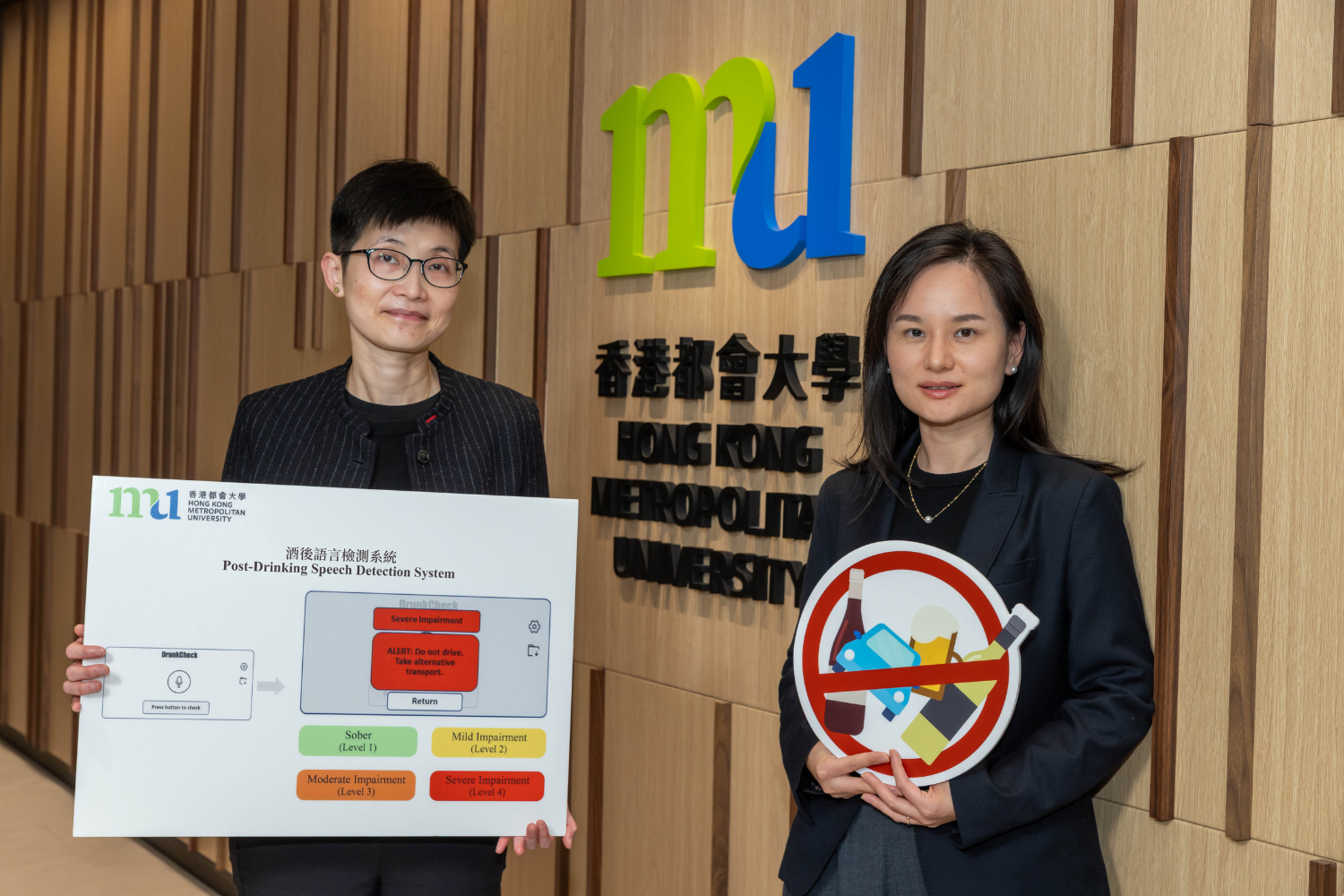
A research team led by Prof. Peppina Lee Po-lun (left), from the School of Education and Languages at HKMU, is developing the first Cantonese post-drinking speech detection system. Assistant Professor Dr Emily Ge Haoyan (right) is the project manager of the study.

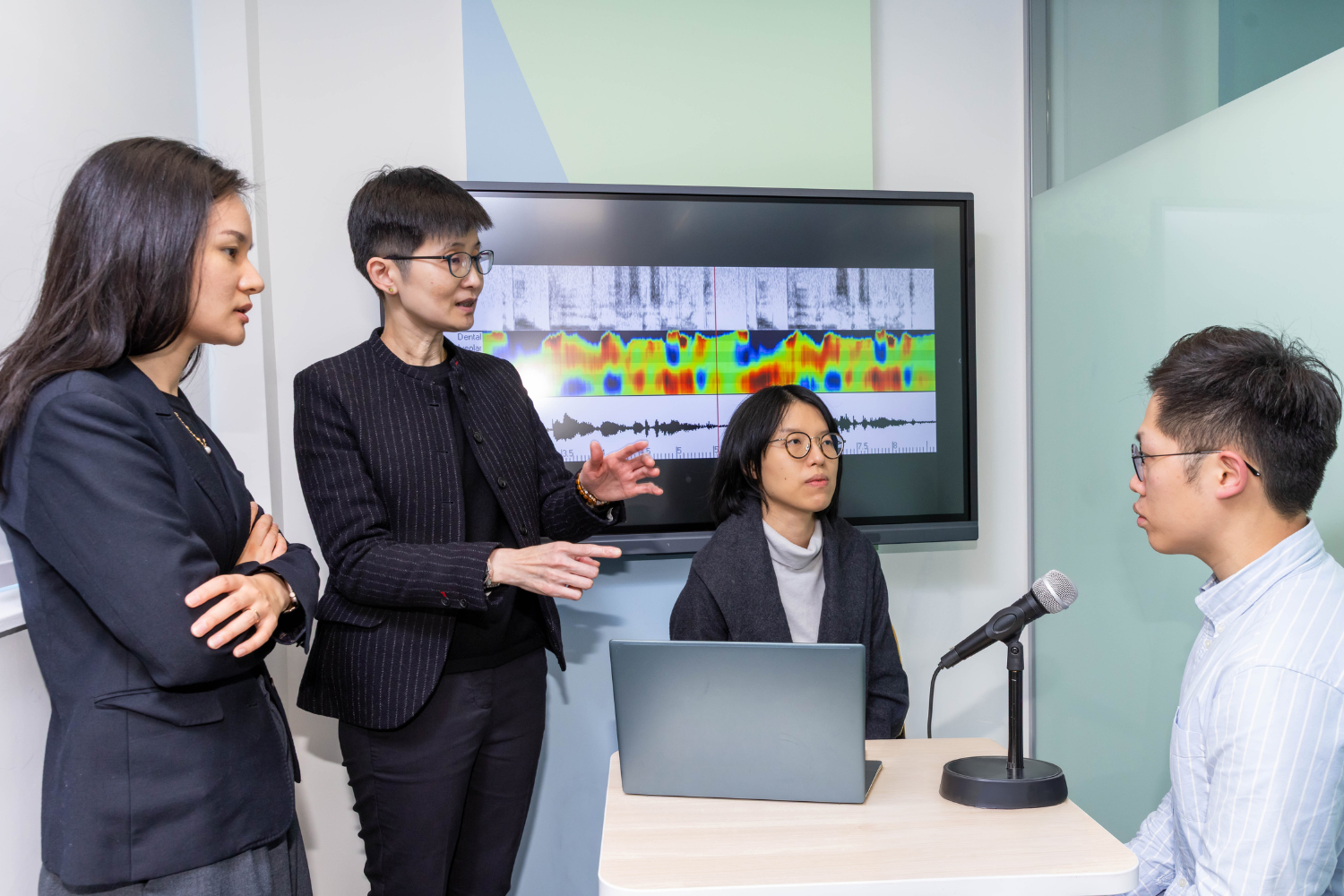
The study will compare participants' speech before and after alcohol consumption to assess the impact of alcohol on cognitive and linguistic abilities.
A research team from Hong Kong Metropolitan University (HKMU) has secured over HK$3.4 million from the Smart Traffic Fund to develop the first Cantonese post-drinking speech database and build an artificial intelligence (AI)-based language detection system. Leveraging a multimodal language model, the system will analyse multiple indicators, including speech rate, intonation stability, speech pauses and grammatical structure deviations, by comparing users' language performance before and after alcohol consumption.
“The funding support for this research project by the Smart Traffic Fund, coupled with the active support from our industry partners, fully demonstrates HKMU's unique strengths as a university of applied sciences,” said Prof. Ricky Kwok Yu-kwong, Vice President (Research and Institutional Advancement) at HKMU. “We are committed to bridging academic research with societal needs. By developing practical solutions, we strive to drive industry advancement and tackle crucial social challenges, such as improving road safety.”
Previous studies focusing on European languages have found that alcohol consumption affects language processing in the brain, leading to disruptions in comprehension and language expression. These disruptions manifest themselves in specific linguistic features, such as frequent logical errors, abnormal speech rate and pauses, and unstable intonation. However, research on the effects of alcohol on Chinese languages remains scarce.
In light of this, Prof. Peppina Lee Po-lun, Associate Dean of the HKMU School of Education and Languages, commenced this two-year study. Preliminary findings show significant differences in participants' speech, including pronunciation, speech rate and word choice, after alcohol consumption compared to their sober state.
The research team plans to collect over 1,000 minutes of Cantonese speech samples from approximately 100 participants aged 18 to 60 to establish a post-drinking speech database. This database will be used to train a multimodal AI language model that comprehensively analyses multiple indicators, including speech rate, intonation stability, speech pauses and grammatical structure deviations, to compare users' language performance before and after alcohol consumption and assess the impact of alcohol on their cognitive and linguistic abilities. Upon completion, the project will establish a system prototype available via a mobile application, allowing users to conduct real-time self-assessments and monitor the effects of alcohol to determine their fitness to drive.
All tests in the project will be conducted under medical supervision. Participants must pass a health assessment by a registered doctor, and their alcohol consumption will be monitored by a registered nurse. The study will adopt a strict alcohol consumption standard, ensuring alcohol intake is below Hong Kong's current legal limit for drink driving.
“The system being developed is a real-time self-monitoring tool that can serve as a supplementary aid to existing alcohol detection methods, such as breath or laboratory tests, rather than replacing statutory testing procedures,” explained Prof. Lee.
The Hong Kong and China Gas Company Limited (Towngas) has signed a letter of support and will collaborate with the team to test the system. It expects to apply the system in routine pre-drive safety assessments in the future to improve fleet management efficiency.
Prof. Lee added that the relevant technology has the potential to be extended to other application scenarios, such as monitoring language abnormalities caused by medication or fatigue.
The collaborative team includes researchers from HKMU, City University of Hong Kong, Southwest University of Political Science and Law, and Guangzhou Overseas Chinese Hospital.

A research team led by Prof. Peppina Lee Po-lun (left), from the School of Education and Languages at HKMU, is developing the first Cantonese post-drinking speech detection system. Assistant Professor Dr Emily Ge Haoyan (right) is the project manager of the study.


A research team from Hong Kong Metropolitan University (HKMU) has secured over HK$3.4 million from the Smart Traffic Fund to develop the first Cantonese post-drinking speech database and build an artificial intelligence (AI)-based language detection system. Leveraging a multimodal language model, the system will analyse multiple indicators, including speech rate, intonation stability, speech pauses and grammatical structure deviations, by comparing users' language performance before and after alcohol consumption.
“The funding support for this research project by the Smart Traffic Fund, coupled with the active support from our industry partners, fully demonstrates HKMU's unique strengths as a university of applied sciences,” said Prof. Ricky Kwok Yu-kwong, Vice President (Research and Institutional Advancement) at HKMU. “We are committed to bridging academic research with societal needs. By developing practical solutions, we strive to drive industry advancement and tackle crucial social challenges, such as improving road safety.”
Previous studies focusing on European languages have found that alcohol consumption affects language processing in the brain, leading to disruptions in comprehension and language expression. These disruptions manifest themselves in specific linguistic features, such as frequent logical errors, abnormal speech rate and pauses, and unstable intonation. However, research on the effects of alcohol on Chinese languages remains scarce.
In light of this, Prof. Peppina Lee Po-lun, Associate Dean of the HKMU School of Education and Languages, commenced this two-year study. Preliminary findings show significant differences in participants' speech, including pronunciation, speech rate and word choice, after alcohol consumption compared to their sober state.
The research team plans to collect over 1,000 minutes of Cantonese speech samples from approximately 100 participants aged 18 to 60 to establish a post-drinking speech database. This database will be used to train a multimodal AI language model that comprehensively analyses multiple indicators, including speech rate, intonation stability, speech pauses and grammatical structure deviations, to compare users' language performance before and after alcohol consumption and assess the impact of alcohol on their cognitive and linguistic abilities. Upon completion, the project will establish a system prototype available via a mobile application, allowing users to conduct real-time self-assessments and monitor the effects of alcohol to determine their fitness to drive.
All tests in the project will be conducted under medical supervision. Participants must pass a health assessment by a registered doctor, and their alcohol consumption will be monitored by a registered nurse. The study will adopt a strict alcohol consumption standard, ensuring alcohol intake is below Hong Kong's current legal limit for drink driving.
“The system being developed is a real-time self-monitoring tool that can serve as a supplementary aid to existing alcohol detection methods, such as breath or laboratory tests, rather than replacing statutory testing procedures,” explained Prof. Lee.
The Hong Kong and China Gas Company Limited (Towngas) has signed a letter of support and will collaborate with the team to test the system. It expects to apply the system in routine pre-drive safety assessments in the future to improve fleet management efficiency.
Prof. Lee added that the relevant technology has the potential to be extended to other application scenarios, such as monitoring language abnormalities caused by medication or fatigue.
The collaborative team includes researchers from HKMU, City University of Hong Kong, Southwest University of Political Science and Law, and Guangzhou Overseas Chinese Hospital.

SIGN UP FOR OUR LATEST NEWS
This website uses cookies so that we can provide you with the best user experience possible. Cookie information is stored in your browser and performs functions such as recognising you when you return to our website and helping our team to understand which sections of the website you find most interesting and useful.
Strictly Necessary Cookie should be enabled at all times so that we can save your preferences for cookie settings.
If you disable this cookie, we will not be able to save your preferences. This means that every time you visit this website you will need to enable or disable cookies again.