HKMU and AI health-tech company Heidi collaborate to explore integrating AI medical documentation in nurse training

News HKMU and AI health-tech company Heidi collaborate to explore integrating AI medical documentation in nurse training
1

HKMU and AI health-tech company Heidi collaborate to explore integrating AI medical documentation in nurse training

News Centre

HKMU News Centre HKMU and AI health-tech company Heidi collaborate to explore integrating AI medical documentation in nurse training

HKMU and AI health-tech company Heidi collaborate to explore integrating AI medical documentation in nurse training

SHARE

Share on email
Share on facebook
Share on twitter
Share on whatsapp
Share on linkedin

Hong Kong Metropolitan University (HKMU) has signed a Memorandum of Understanding (MoU) with Australian artificial intelligence (AI) health-tech company Heidi to explore the integration of Heidi's AI platform into HKMU's nursing curriculum.

This initiative aims to equip nursing students with AI-assisted clinical documentation technology, thus nurturing professionals with both clinical and technological competencies. The two parties will also conduct applied research to co-develop an educational tool for nursing handover training. HKMU students will have the opportunity to do an internship at Heidi, learning how healthcare tools are designed with integrated AI technology. Concurrently, the HKMU Physiotherapy Centre plans to utilise the AI platform to assist physiotherapists in processing clinical assessment records.

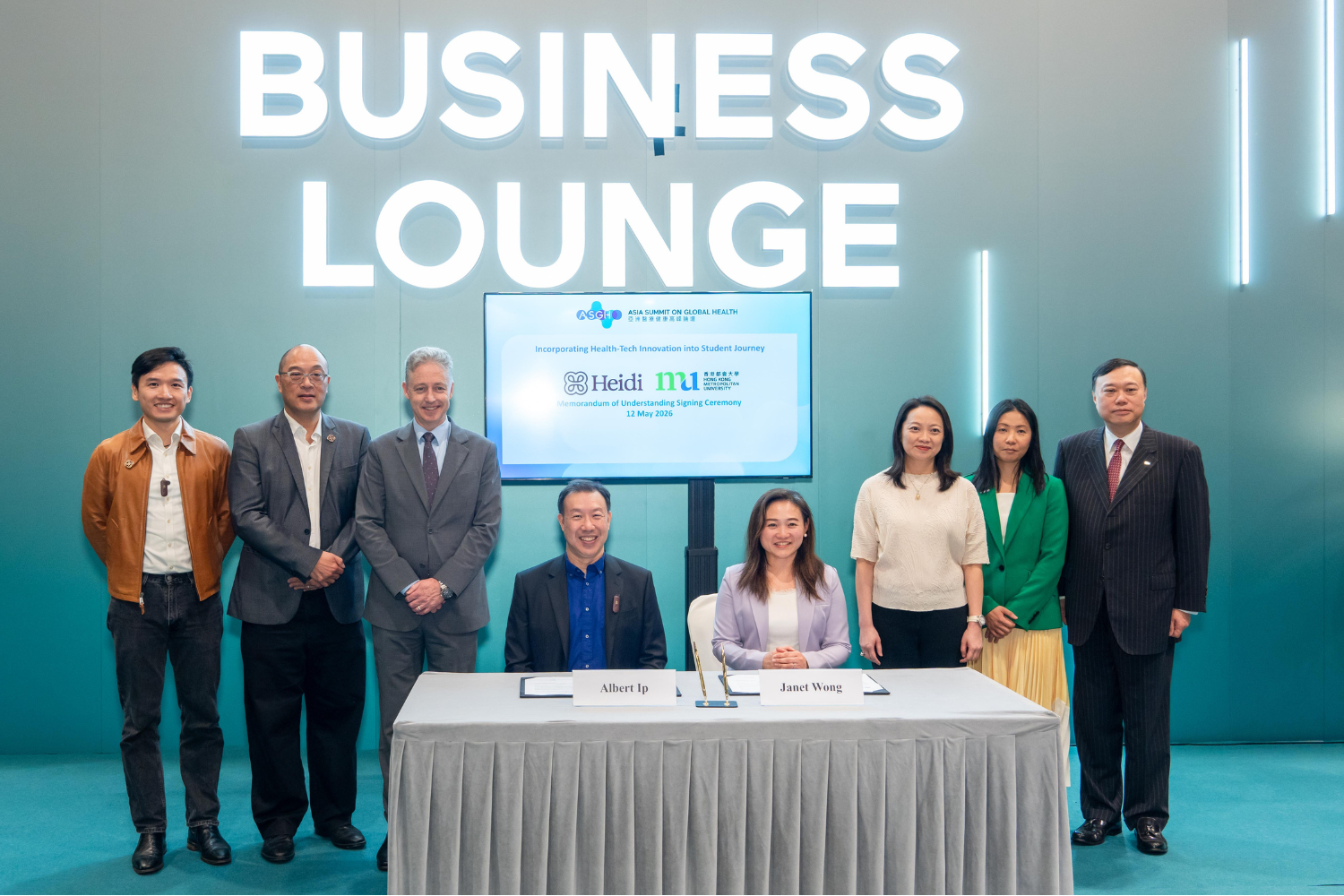
The MoU was signed by Prof. Janet Wong Yuen-ha, Dean of the HKMU School of Nursing and Health Sciences, and Dr Albert Ip Chee-tsun, Chief Medical Officer (Asia) of Heidi. It was witnessed by Mr Scott Dewar, Australian Ambassador to the People's Republic of China; Ms Anna Cheung Sze-wai, Assistant Executive Director of the Hong Kong Trade Development Council; Prof. Alan Au Kai-ming, HKMU Vice President (Strategic Initiatives); Dr Charles Chan Wen-cheng, Executive Medical Director (Hong Kong) of Heidi; and Mr Ivan Wong Wing-kwan, Hong Kong representative of Heidi.

Under the MoU, HKMU will explore integrating Heidi's AI platform into its teaching and training programmes, aiming to provide students with complimentary access to enable them to master the relevant technology early on through practical experience. The two parties will also conduct research on AI-assisted clinical documentation to explore the application of AI technology in medical education and clinical practice, further promoting collaboration between industry, academia and research.

Prof. Alan Au Kai-ming stated that this collaboration fully reflects HKMU's positioning and role as a university of applied sciences (UAS), closely integrating cutting-edge technology with teaching and research. He highlighted that the evidence-based search function of Heidi's platform can quickly retrieve medical literature and research data, improving teaching efficiency.

Prof. Wong remarked that the application of AI across various industries is an unstoppable trend. Familiarising students with relevant AI platforms during their studies will help them adapt more quickly to an AI-integrated medical work environment after graduation, enhancing their competitiveness.

Prof. Wong pointed out that HKMU will develop a nursing handover educational tool with Heidi. “In a clinical nursing setting, nurses are required to accurately communicate patient conditions and clinical needs to colleagues on the next shift,” she explained. “Students can use this tool to practice handover skills and improve the accuracy of their communication, allowing them to be fully prepared before commencing their practicums.”

Prof. Wong added that at the application level, physiotherapists at the HKMU Physiotherapy Centre have received training to utilise Heidi's AI platform to assist in processing clinical assessment records, thereby streamlining the treatment process.

She hopes to combine the strengths of both parties to drive health-tech innovation, stating, “The AI platform is expected to alleviate the administrative burden on healthcare professionals, allowing them to devote more precious time to patients and strengthening the doctor-patient relationship.”

Dr Ip pointed out that Heidi's health-tech can reduce documentation processing time for healthcare professionals. He emphasised that the application of this technology is not limited to current clinical services; it will also extend to the training of future medical professionals in Hong Kong through the collaboration with HKMU.

The signing ceremony was held during the Asia Summit on Global Health in May. This collaboration further demonstrates HKMU's commitment, as a UAS, to driving medical innovation and nurturing talent that meets societal needs.


Hong Kong Metropolitan University has signed a Memorandum of Understanding with Australian artificial intelligence (AI) health-tech company Heidi to explore collaboration in introducing Heidi's AI platform into its nursing curriculum.

Hong Kong Metropolitan University (HKMU) has signed a Memorandum of Understanding (MoU) with Australian artificial intelligence (AI) health-tech company Heidi to explore the integration of Heidi's AI platform into HKMU's nursing curriculum.

This initiative aims to equip nursing students with AI-assisted clinical documentation technology, thus nurturing professionals with both clinical and technological competencies. The two parties will also conduct applied research to co-develop an educational tool for nursing handover training. HKMU students will have the opportunity to do an internship at Heidi, learning how healthcare tools are designed with integrated AI technology. Concurrently, the HKMU Physiotherapy Centre plans to utilise the AI platform to assist physiotherapists in processing clinical assessment records.

The MoU was signed by Prof. Janet Wong Yuen-ha, Dean of the HKMU School of Nursing and Health Sciences, and Dr Albert Ip Chee-tsun, Chief Medical Officer (Asia) of Heidi. It was witnessed by Mr Scott Dewar, Australian Ambassador to the People's Republic of China; Ms Anna Cheung Sze-wai, Assistant Executive Director of the Hong Kong Trade Development Council; Prof. Alan Au Kai-ming, HKMU Vice President (Strategic Initiatives); Dr Charles Chan Wen-cheng, Executive Medical Director (Hong Kong) of Heidi; and Mr Ivan Wong Wing-kwan, Hong Kong representative of Heidi.

Under the MoU, HKMU will explore integrating Heidi's AI platform into its teaching and training programmes, aiming to provide students with complimentary access to enable them to master the relevant technology early on through practical experience. The two parties will also conduct research on AI-assisted clinical documentation to explore the application of AI technology in medical education and clinical practice, further promoting collaboration between industry, academia and research.

Prof. Alan Au Kai-ming stated that this collaboration fully reflects HKMU's positioning and role as a university of applied sciences (UAS), closely integrating cutting-edge technology with teaching and research. He highlighted that the evidence-based search function of Heidi's platform can quickly retrieve medical literature and research data, improving teaching efficiency.

Prof. Wong remarked that the application of AI across various industries is an unstoppable trend. Familiarising students with relevant AI platforms during their studies will help them adapt more quickly to an AI-integrated medical work environment after graduation, enhancing their competitiveness.

Prof. Wong pointed out that HKMU will develop a nursing handover educational tool with Heidi. “In a clinical nursing setting, nurses are required to accurately communicate patient conditions and clinical needs to colleagues on the next shift,” she explained. “Students can use this tool to practice handover skills and improve the accuracy of their communication, allowing them to be fully prepared before commencing their practicums.”

Prof. Wong added that at the application level, physiotherapists at the HKMU Physiotherapy Centre have received training to utilise Heidi's AI platform to assist in processing clinical assessment records, thereby streamlining the treatment process.

She hopes to combine the strengths of both parties to drive health-tech innovation, stating, “The AI platform is expected to alleviate the administrative burden on healthcare professionals, allowing them to devote more precious time to patients and strengthening the doctor-patient relationship.”

Dr Ip pointed out that Heidi's health-tech can reduce documentation processing time for healthcare professionals. He emphasised that the application of this technology is not limited to current clinical services; it will also extend to the training of future medical professionals in Hong Kong through the collaboration with HKMU.

The signing ceremony was held during the Asia Summit on Global Health in May. This collaboration further demonstrates HKMU's commitment, as a UAS, to driving medical innovation and nurturing talent that meets societal needs.

RELATED NEWS

RELATED TOPICS

CATEGORY

FEATURED TOPICS

YEARS

MORE HKMU

SIGN UP FOR OUR LATEST NEWS