HKMU faculty and students use technology to enhance travel safety and crop harvesting in China’s “hometown of lychees”

News HKMU faculty and students use technology to enhance travel safety and crop harvesting in China’s “hometown of lychees”

HKMU faculty and students use technology to enhance travel safety and crop harvesting in China’s “hometown of lychees”

News Centre

HKMU News Centre HKMU faculty and students use technology to enhance travel safety and crop harvesting in China's “hometown of lychees”

HKMU faculty and students use technology to enhance travel safety and crop harvesting in China's “hometown of lychees”

SHARE

Share on email
Share on facebook
Share on twitter
Share on whatsapp
Share on linkedin

Hong Kong Metropolitan University (HKMU), as Hong Kong's first university of applied sciences, is committed to integrating practical learning into its curriculum, empowering students to tackle societal challenges and develop into innovative, socially responsible professionals. Last month, students and faculty members from the Department of Electronic Engineering and Computer Science in the School of Science and Technology visited Maoming, Guangdong province, where they voluntarily installed solar-powered lampposts in a local village, improving travel safety for residents. They are also working on agricultural technologies to improve the harvesting efficiency of local lychees and other crops, supporting the country's rural revitalisation strategy.

Maoming, known as China's “hometown of lychees”, is the world's largest contiguous lychee production base. However, some local villages still face challenges because of underdeveloped infrastructure and technology. In Xiantang village, for example, the absence of public lighting has previously resulted in nighttime falls, causing fatalities among older residents. To address these issues, Dr Kevin Hung King-fai, Head of Electronic Engineering and Computer Science and Associate Professor, and Dr Bell Liu Jianqing, Lecturer, secured funding through the University's Quality Enhancement Measures (QEM) scheme to launch a two-year project. The initiative aims to improve rural living conditions through technology while nurturing students' sense of social responsibility and innovation.

The project combines academic knowledge with hands-on practice. Starting in January 2025, undergraduate students from the “Bachelor of Engineering with Honours in Electronic and Computer Engineering”, the “Bachelor of Science with Honours in Cyber and Computer Security” and the “Bachelor of Science with Honours in Data Science and Artificial Intelligence” programmes participated in expert talks on Environmental, Social and Governance (ESG) issues, the UN Sustainable Development Goals (SDGs) and agricultural technology. They also visited farms in Hong Kong to explore real-world agricultural challenges. Subsequently, students received comprehensive technical training and installed four solar-powered lampposts in Fanling, Hong Kong, as practical exercises to prepare for their Maoming trip.

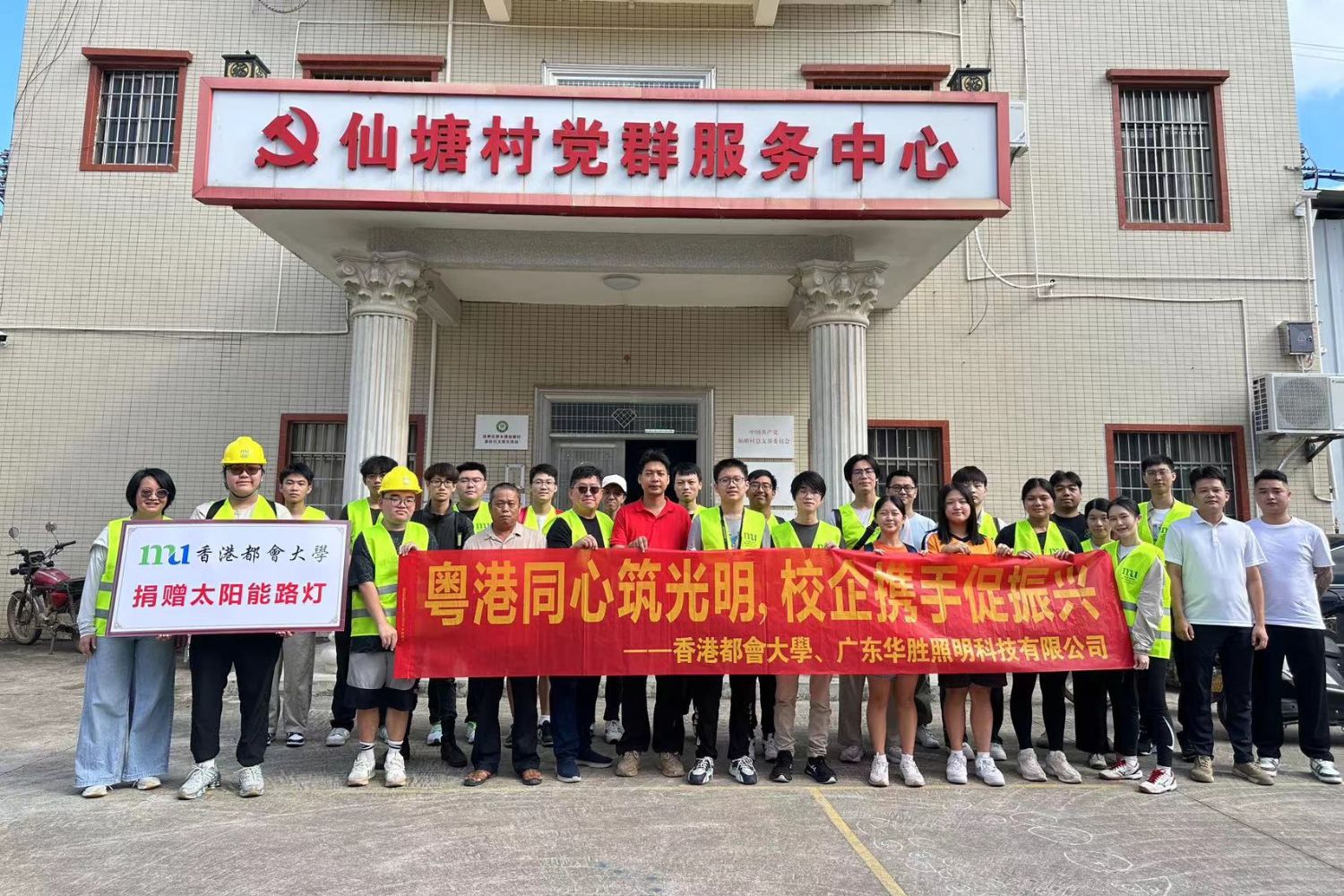
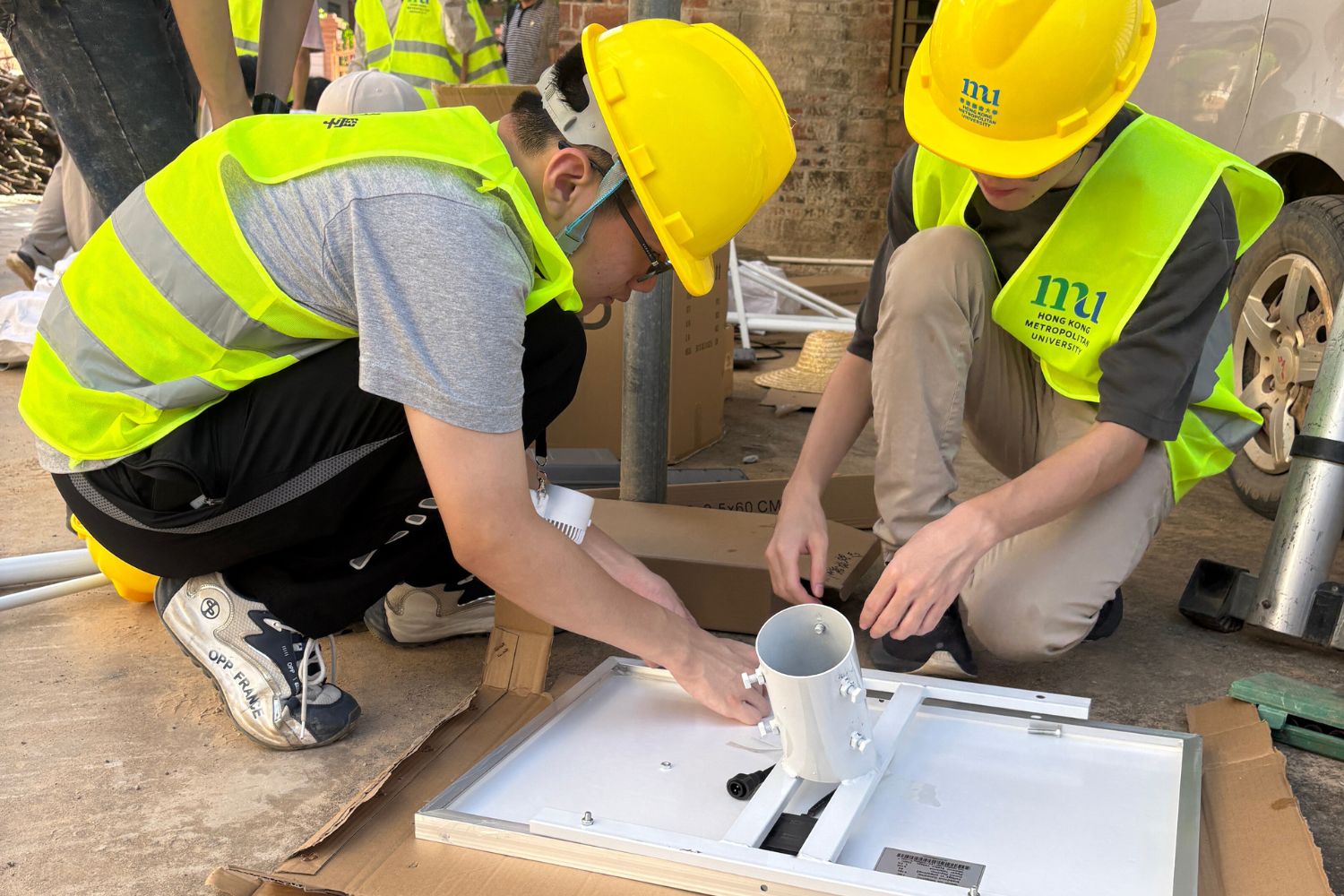
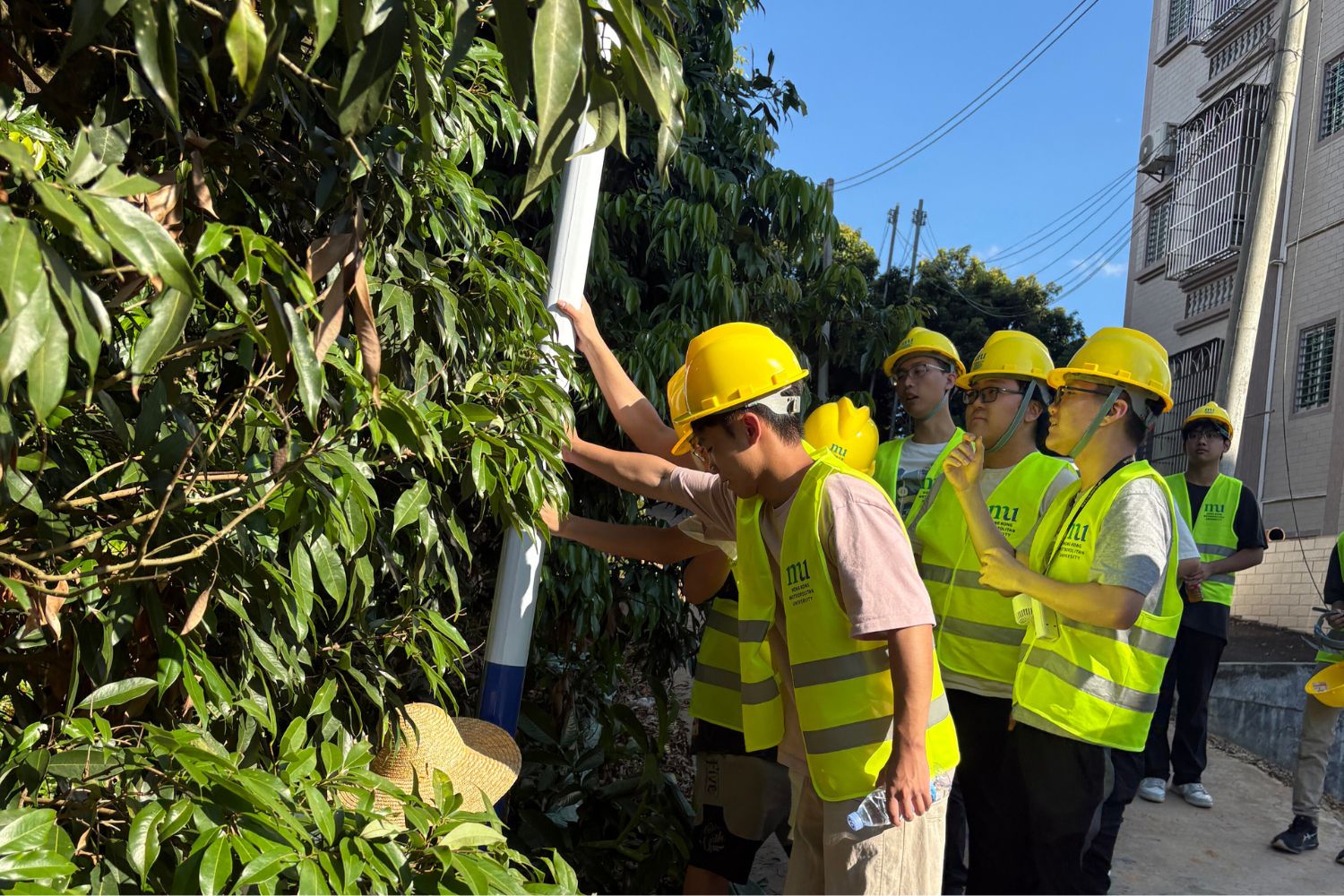
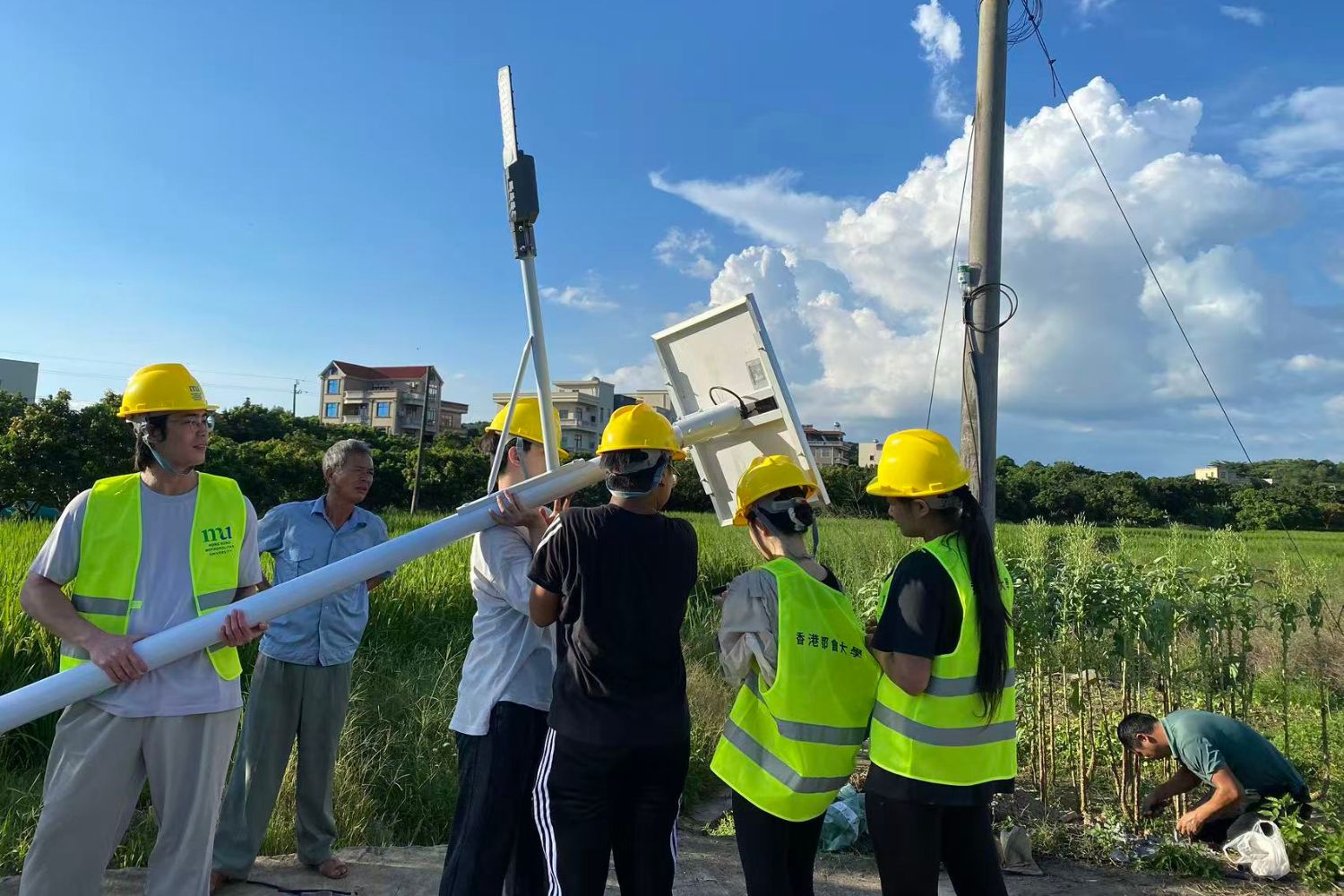
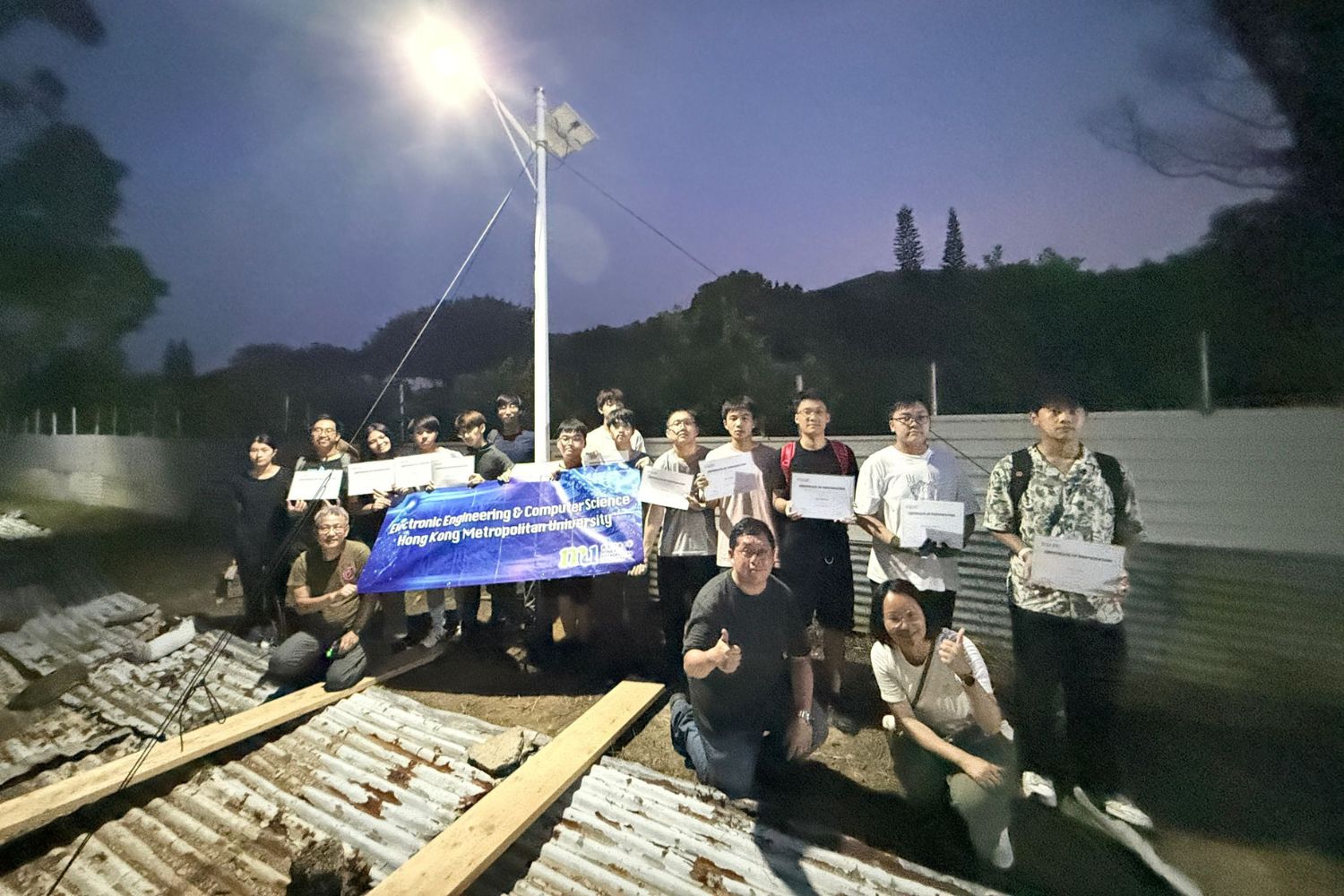
In mid-September, a team of 20 HKMU faculty members and students visited Xiantang village for a three-day trip. Collaborating with a local engineering company and villagers, they voluntarily installed ten solar-powered lampposts to improve nighttime travel safety and residents' quality of life. The students were actively involved in every stage of the project, from design and procurement to installation, gaining valuable hands-on experience beyond the classroom.

The students gained valuable insights by interacting with local farmers and learning about their challenges. Casey Lin Yuhao, an Electronic and Computer Engineering student, said, “Talking with the farmers inspired me to develop agritech solutions, like rain-resistant fertilisers and improved harvesting tools, to ease their workload and boost crop yields. Installing solar-powered lampposts also taught us the important of precision in tasks like digging holes, placing bases and mixing cement—knowledge that goes beyond traditional classroom learning.”

Fellow student Wilhelm Mackie De Guzman shared, “Witnessing the struggles of local farmers firsthand was an opportunity to apply our skills, whether through small contributions or innovative solutions. Although the trip was intense and tiring, it was incredibly meaningful and rewarding.”

Dr Hung explained that the project integrates design thinking with service learning while nurturing students' empathy. “By interacting with villagers, the students learned that innovation and research should focus on people-oriented solutions, which is vital for their future development,” he said. “The team's efforts improved the villagers' safety and quality of life and support China's rural revitalisation goals by 2050, actively promoting modern agriculture and a beautiful countryside.”

He added that the department plans to expand the project into a regular co-curricular programme and extend it to other countries, including Vietnam, the Philippines and Cambodia. Discussions are currently underway with relevant organisations.


The HKMU team installed ten solar-powered lampposts in Xiantang Village.

Hong Kong Metropolitan University (HKMU), as Hong Kong's first university of applied sciences, is committed to integrating practical learning into its curriculum, empowering students to tackle societal challenges and develop into innovative, socially responsible professionals. Last month, students and faculty members from the Department of Electronic Engineering and Computer Science in the School of Science and Technology visited Maoming, Guangdong province, where they voluntarily installed solar-powered lampposts in a local village, improving travel safety for residents. They are also working on agricultural technologies to improve the harvesting efficiency of local lychees and other crops, supporting the country's rural revitalisation strategy.

Maoming, known as China's “hometown of lychees”, is the world's largest contiguous lychee production base. However, some local villages still face challenges because of underdeveloped infrastructure and technology. In Xiantang village, for example, the absence of public lighting has previously resulted in nighttime falls, causing fatalities among older residents. To address these issues, Dr Kevin Hung King-fai, Head of Electronic Engineering and Computer Science and Associate Professor, and Dr Bell Liu Jianqing, Lecturer, secured funding through the University's Quality Enhancement Measures (QEM) scheme to launch a two-year project. The initiative aims to improve rural living conditions through technology while nurturing students' sense of social responsibility and innovation.

The project combines academic knowledge with hands-on practice. Starting in January 2025, undergraduate students from the “Bachelor of Engineering with Honours in Electronic and Computer Engineering”, the “Bachelor of Science with Honours in Cyber and Computer Security” and the “Bachelor of Science with Honours in Data Science and Artificial Intelligence” programmes participated in expert talks on Environmental, Social and Governance (ESG) issues, the UN Sustainable Development Goals (SDGs) and agricultural technology. They also visited farms in Hong Kong to explore real-world agricultural challenges. Subsequently, students received comprehensive technical training and installed four solar-powered lampposts in Fanling, Hong Kong, as practical exercises to prepare for their Maoming trip.

In mid-September, a team of 20 HKMU faculty members and students visited Xiantang village for a three-day trip. Collaborating with a local engineering company and villagers, they voluntarily installed ten solar-powered lampposts to improve nighttime travel safety and residents' quality of life. The students were actively involved in every stage of the project, from design and procurement to installation, gaining valuable hands-on experience beyond the classroom.

The students gained valuable insights by interacting with local farmers and learning about their challenges. Casey Lin Yuhao, an Electronic and Computer Engineering student, said, “Talking with the farmers inspired me to develop agritech solutions, like rain-resistant fertilisers and improved harvesting tools, to ease their workload and boost crop yields. Installing solar-powered lampposts also taught us the important of precision in tasks like digging holes, placing bases and mixing cement—knowledge that goes beyond traditional classroom learning.”

Fellow student Wilhelm Mackie De Guzman shared, “Witnessing the struggles of local farmers firsthand was an opportunity to apply our skills, whether through small contributions or innovative solutions. Although the trip was intense and tiring, it was incredibly meaningful and rewarding.”

Dr Hung explained that the project integrates design thinking with service learning while nurturing students' empathy. “By interacting with villagers, the students learned that innovation and research should focus on people-oriented solutions, which is vital for their future development,” he said. “The team's efforts improved the villagers' safety and quality of life and support China's rural revitalisation goals by 2050, actively promoting modern agriculture and a beautiful countryside.”

He added that the department plans to expand the project into a regular co-curricular programme and extend it to other countries, including Vietnam, the Philippines and Cambodia. Discussions are currently underway with relevant organisations.

RELATED NEWS

RELATED TOPICS

CATEGORY

FEATURED TOPICS

YEARS

MORE HKMU

SIGN UP FOR OUR LATEST NEWS