21 May 2026
HKMU Chinese Orchestra debuts with Cantonese opera highlights

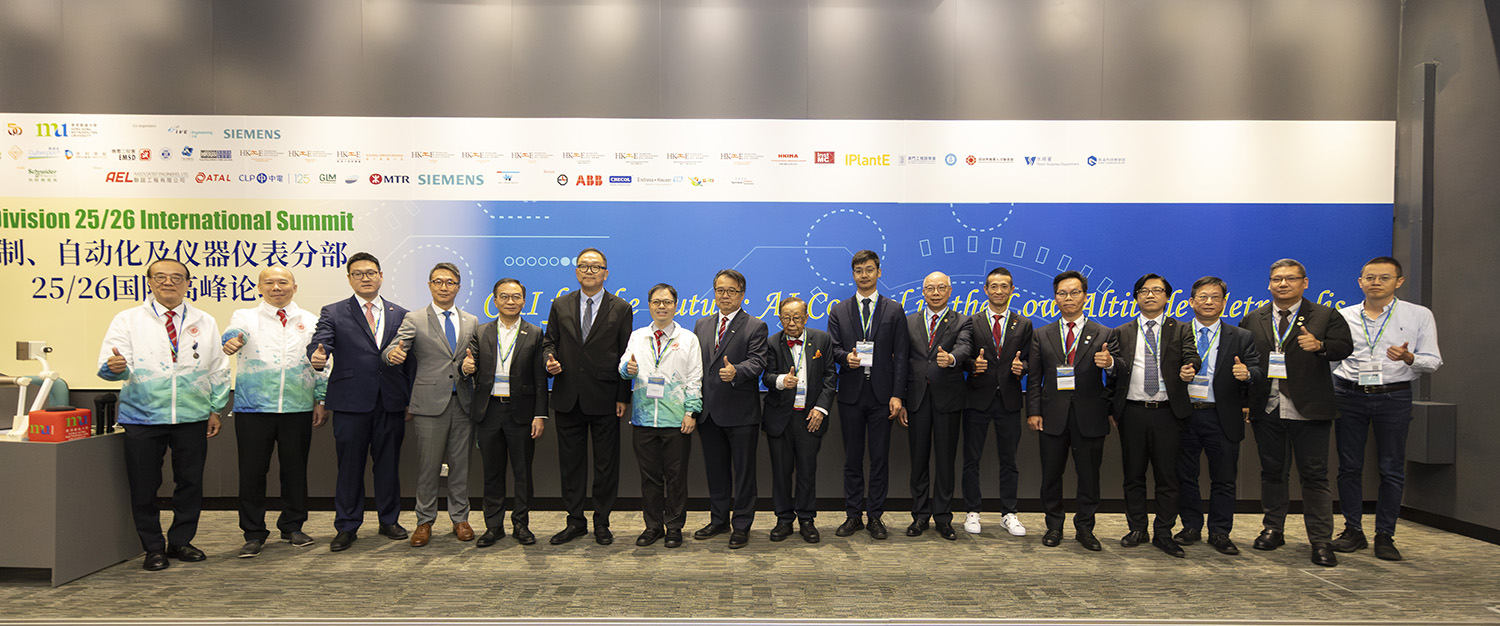
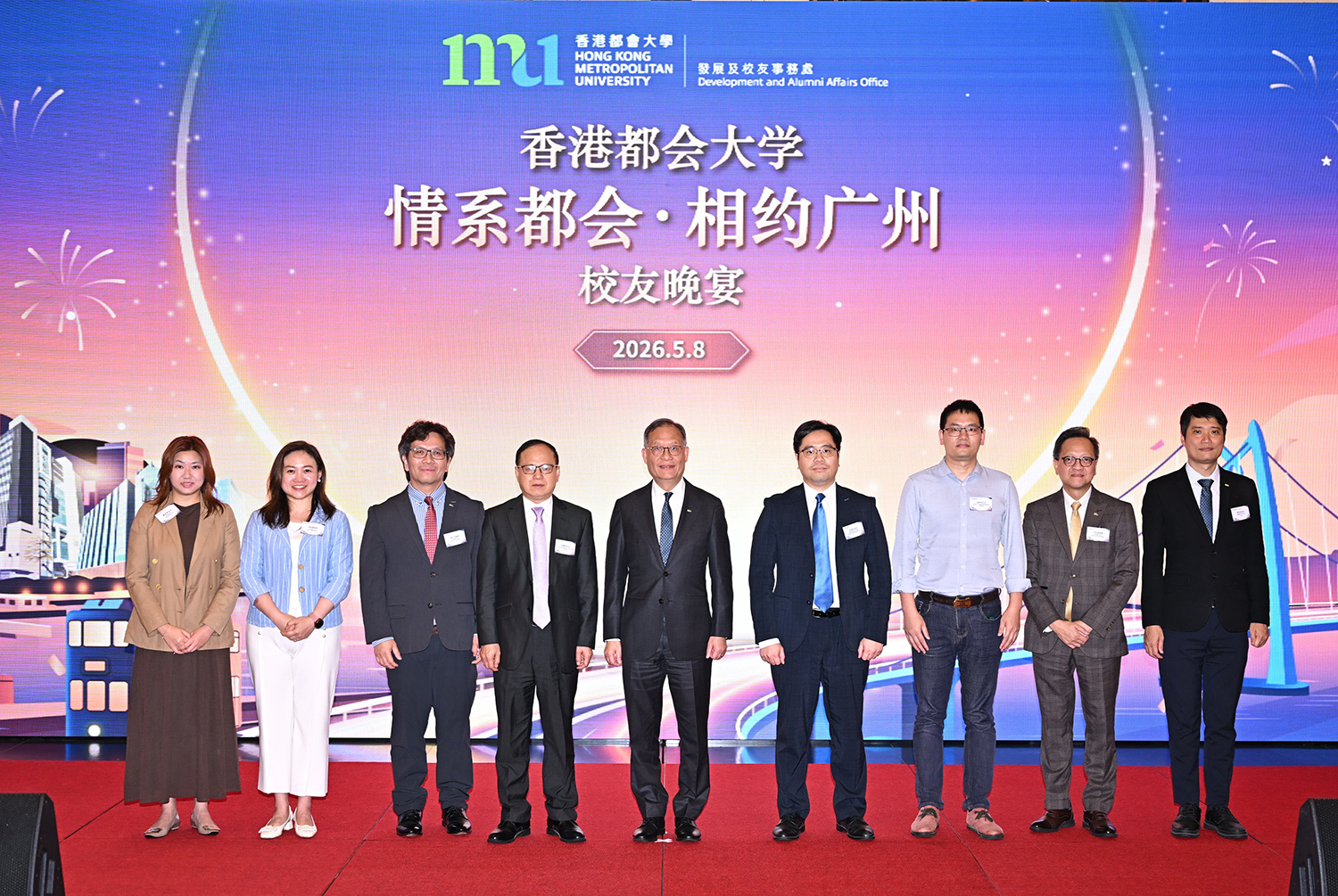
Officiating guests gather for a group photo at the “CA Division 25/26 International Summit”.

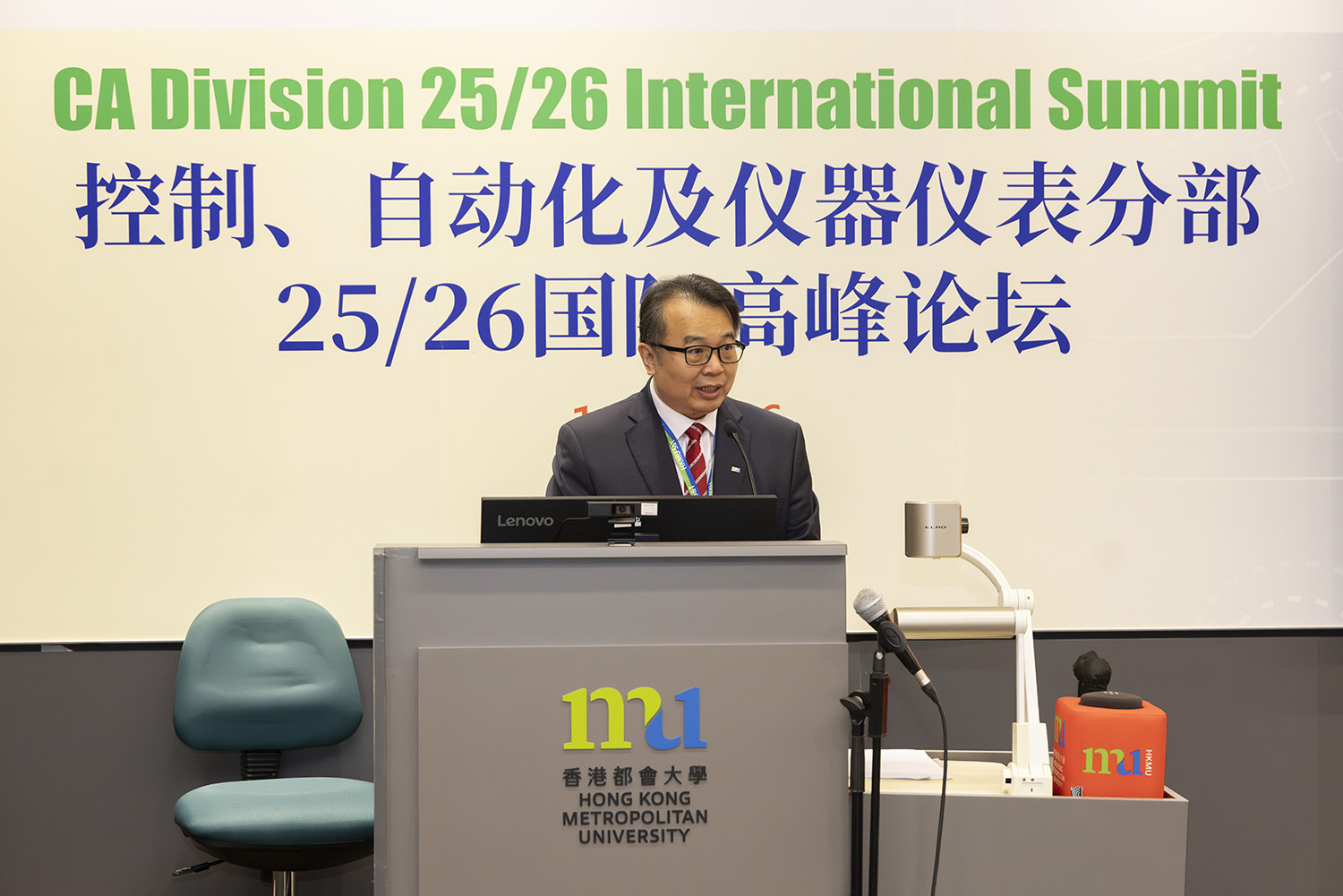
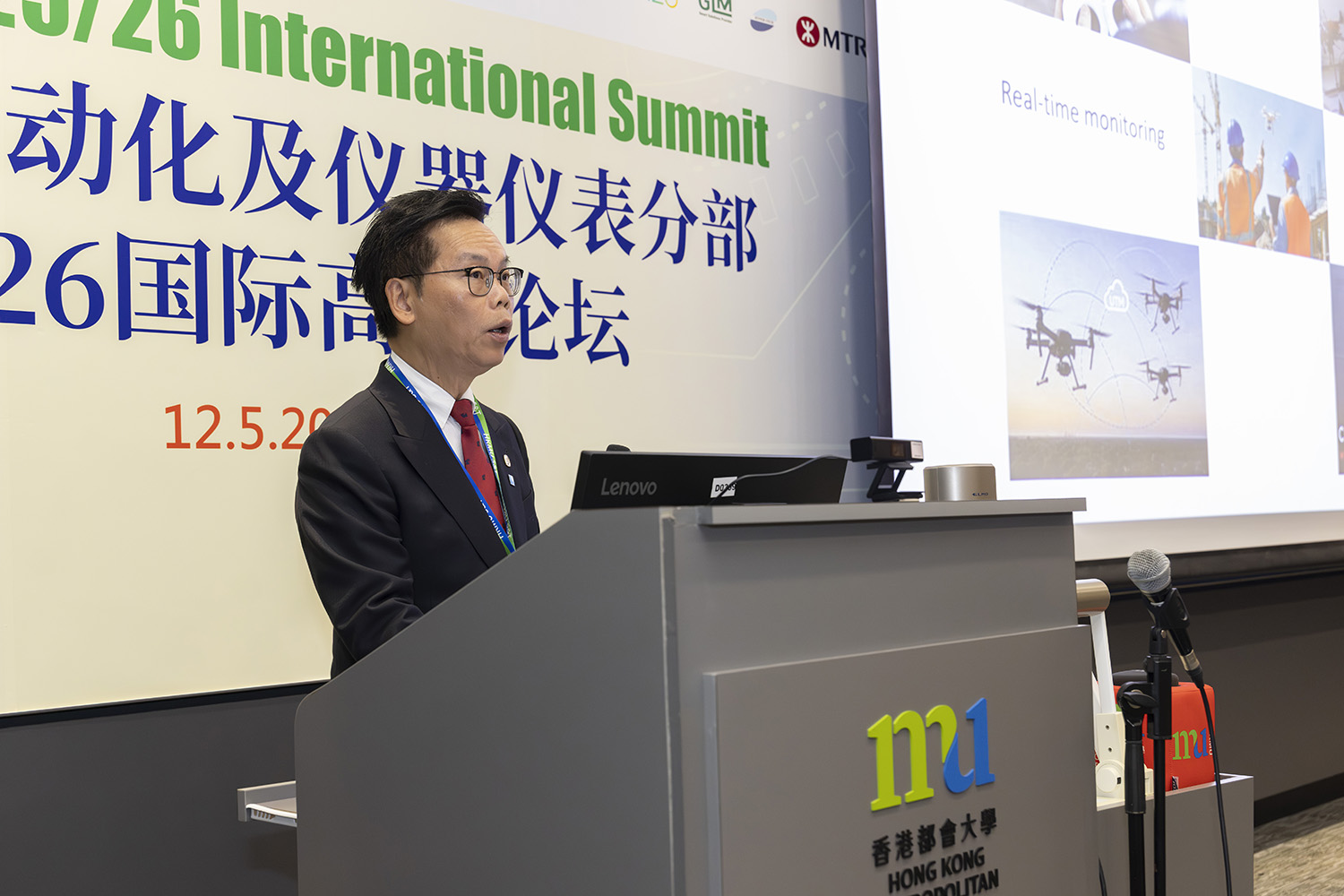
Prof. Philips Wang Fu-lee delivers a welcoming address, emphasising the University's commitment to advancing innovation and technology.

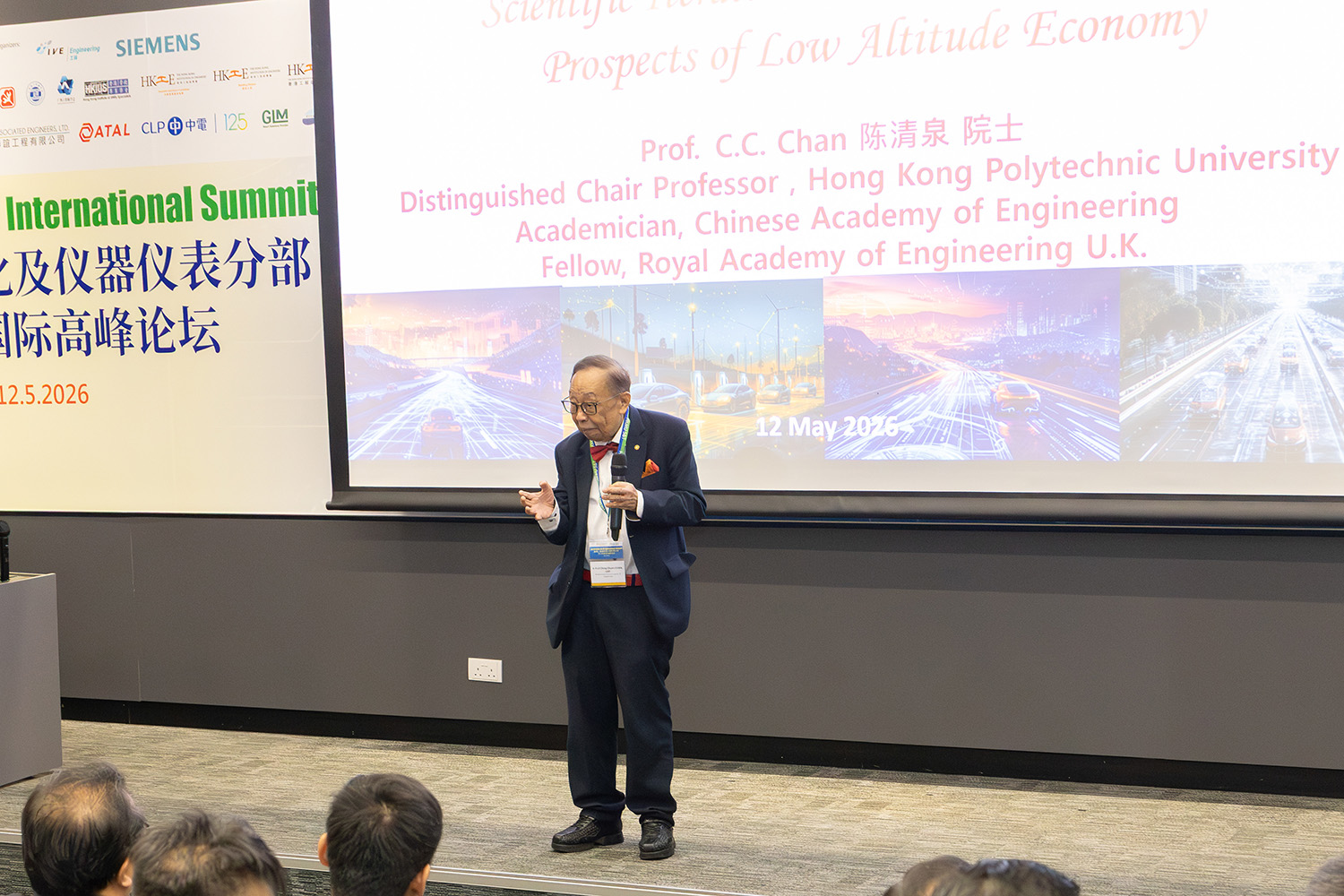
Prof. Chan Ching-chuen shares his profound insights on the five core characteristics required to nurture future innovative talents.

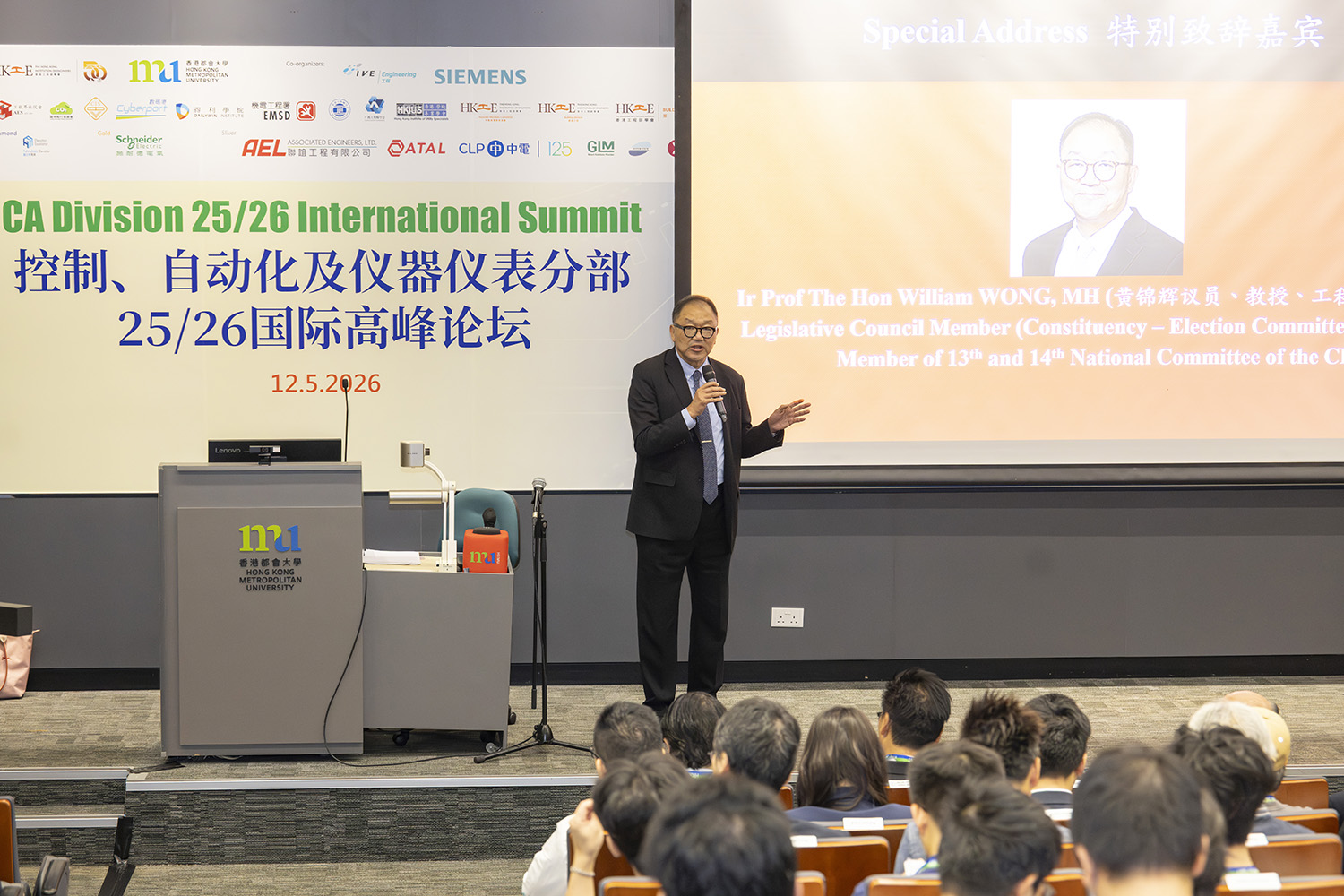
Prof. Hon William Wong Kam-fai highlights that integrating the low-altitude economy and AI will inject strong new momentum into the long-term development of smart cities.

Hon Aaron Bok Kwok-ming speaks on the need to develop Unmanned Aircraft System Traffic Management (UTM) in Hong Kong.
Hong Kong Metropolitan University (HKMU) and the Hong Kong Institution of Engineers (HKIE) co-hosted the “Control, Automation and Instrumentation Division 25/26 International Summit” on 12 May. The event brought together over 200 participants, including government officials, Legislative Council members, and academic experts and industry representatives from the UK and Greater Bay Area cities, including Hong Kong, Macau and Shenzhen. The participants collaboratively explored the key roles and the profound impact of artificial intelligence (AI) and low-altitude economy applications on future urban development.
The summit invited several prominent figures from the engineering sector to attend and deliver speeches. These included Prof. Chan Ching-chuen, Academician of the Chinese Academy of Engineering; Prof. Hon William Wong Kam-fai and Hon Aaron Bok Kwok-ming, Legislative Council Member; Dr Ge Ming, Commissioner for Industry (Innovation and Technology) of the Innovation, Technology and Industry Bureau; Mr Vincent Chow Hau-keung, Deputy Director of the Electrical and Mechanical Services Department; and Mr Cho Ping-ho, Assistant Director of the Water Supplies Department.
The summit, themed “CAI for the Future: AI Control in the Low-Altitude Metropolis”, featured multiple keynote addresses and a panel discussion. Participants engaged in in-depth discussions on a wide range of cutting-edge topics, including integrating drones with AI technology to drive public service digitalisation, developing intelligent building envelopes for a net-zero future, defining the balance between humans and AI in low-altitude economy applications, and the role of “embodied intelligence” in workplace transformation.
In his welcome address, Prof. Philips Wang Fu-lee, Dean of the School of Science and Technology at HKMU, emphasised the University's commitment to advancing innovation and technology. “HKMU has always been dedicated to driving innovation in the fields of control, automation and instrumentation, which is the core of the low-altitude economy, and the development of new quality productive forces,” he said. “This summit provides a vital platform to exchange insights and to collaboratively explore the changes brought about by AI and the low-altitude economy.”
In his keynote speech, Prof. Hon William Wong noted that the deep integration of the low-altitude economy and AI will bring disruptive changes to urban planning, logistics, transportation and smart governance, injecting strong new momentum into the long-term development of smart cities.
Hon Aaron Bok characterised the low-altitude economy as a revolutionary engine for new quality productive forces. Addressing the challenges posed by Hong Kong's hyper-dense urban environment, he stressed the need to develop Unmanned Aircraft System Traffic Management (UTM) and to drive digital infrastructure. He pointed out that Hong Kong has the potential to leverage its international strengths to formulate industry standards that meet national development needs and align with global best practices.
Prof. Chan Ching-chuen shared his insights on nurturing innovative talent. He suggested that innovative talent must possess five core characteristics: (1) a solid foundation in mathematics, physics, chemistry and the humanities; (2) keen perceptiveness; (3) in-depth analytical capabilities; (4) a spirit of “free inquiry”, characterised by the courage to pursue originality, discovery and breakthroughs; and (5) the confidence to articulate their innovative ideas. He concluded that advancing the industry will rely on professionals equipped with deep expertise and an innovative mindset.
As Hong Kong's first university of applied sciences, HKMU is actively responding to the demand for talent for emerging technologies, such as AI and the low-altitude economy. To this end, it will launch the Bachelor of Applied Science with Honours in Robotics and Automation Engineering programme in the 2026/27 academic year. Integrating theoretical knowledge, practical application and career-oriented training, the programme aims to nurture a new generation of engineers, equipping them to master a wide range of AI-driven systems to cope with the complex and ever-evolving urban environments of the future.

Officiating guests gather for a group photo at the “CA Division 25/26 International Summit”.


Hong Kong Metropolitan University (HKMU) and the Hong Kong Institution of Engineers (HKIE) co-hosted the “Control, Automation and Instrumentation Division 25/26 International Summit” on 12 May. The event brought together over 200 participants, including government officials, Legislative Council members, and academic experts and industry representatives from the UK and Greater Bay Area cities, including Hong Kong, Macau and Shenzhen. The participants collaboratively explored the key roles and the profound impact of artificial intelligence (AI) and low-altitude economy applications on future urban development.
The summit invited several prominent figures from the engineering sector to attend and deliver speeches. These included Prof. Chan Ching-chuen, Academician of the Chinese Academy of Engineering; Prof. Hon William Wong Kam-fai and Hon Aaron Bok Kwok-ming, Legislative Council Member; Dr Ge Ming, Commissioner for Industry (Innovation and Technology) of the Innovation, Technology and Industry Bureau; Mr Vincent Chow Hau-keung, Deputy Director of the Electrical and Mechanical Services Department; and Mr Cho Ping-ho, Assistant Director of the Water Supplies Department.
The summit, themed “CAI for the Future: AI Control in the Low-Altitude Metropolis”, featured multiple keynote addresses and a panel discussion. Participants engaged in in-depth discussions on a wide range of cutting-edge topics, including integrating drones with AI technology to drive public service digitalisation, developing intelligent building envelopes for a net-zero future, defining the balance between humans and AI in low-altitude economy applications, and the role of “embodied intelligence” in workplace transformation.
In his welcome address, Prof. Philips Wang Fu-lee, Dean of the School of Science and Technology at HKMU, emphasised the University's commitment to advancing innovation and technology. “HKMU has always been dedicated to driving innovation in the fields of control, automation and instrumentation, which is the core of the low-altitude economy, and the development of new quality productive forces,” he said. “This summit provides a vital platform to exchange insights and to collaboratively explore the changes brought about by AI and the low-altitude economy.”
In his keynote speech, Prof. Hon William Wong noted that the deep integration of the low-altitude economy and AI will bring disruptive changes to urban planning, logistics, transportation and smart governance, injecting strong new momentum into the long-term development of smart cities.
Hon Aaron Bok characterised the low-altitude economy as a revolutionary engine for new quality productive forces. Addressing the challenges posed by Hong Kong's hyper-dense urban environment, he stressed the need to develop Unmanned Aircraft System Traffic Management (UTM) and to drive digital infrastructure. He pointed out that Hong Kong has the potential to leverage its international strengths to formulate industry standards that meet national development needs and align with global best practices.
Prof. Chan Ching-chuen shared his insights on nurturing innovative talent. He suggested that innovative talent must possess five core characteristics: (1) a solid foundation in mathematics, physics, chemistry and the humanities; (2) keen perceptiveness; (3) in-depth analytical capabilities; (4) a spirit of “free inquiry”, characterised by the courage to pursue originality, discovery and breakthroughs; and (5) the confidence to articulate their innovative ideas. He concluded that advancing the industry will rely on professionals equipped with deep expertise and an innovative mindset.
As Hong Kong's first university of applied sciences, HKMU is actively responding to the demand for talent for emerging technologies, such as AI and the low-altitude economy. To this end, it will launch the Bachelor of Applied Science with Honours in Robotics and Automation Engineering programme in the 2026/27 academic year. Integrating theoretical knowledge, practical application and career-oriented training, the programme aims to nurture a new generation of engineers, equipping them to master a wide range of AI-driven systems to cope with the complex and ever-evolving urban environments of the future.

SIGN UP FOR OUR LATEST NEWS
This website uses cookies so that we can provide you with the best user experience possible. Cookie information is stored in your browser and performs functions such as recognising you when you return to our website and helping our team to understand which sections of the website you find most interesting and useful.
Strictly Necessary Cookie should be enabled at all times so that we can save your preferences for cookie settings.
If you disable this cookie, we will not be able to save your preferences. This means that every time you visit this website you will need to enable or disable cookies again.