12 Jan 2026
HKMU Hackathon 2026: Innovating smart property management and pet wellness

HKMU and the FHKI signed a MoU to strengthen collaboration between academia and industry, working together to foster talent development, facilitate knowledge transfer, and promote applied research.

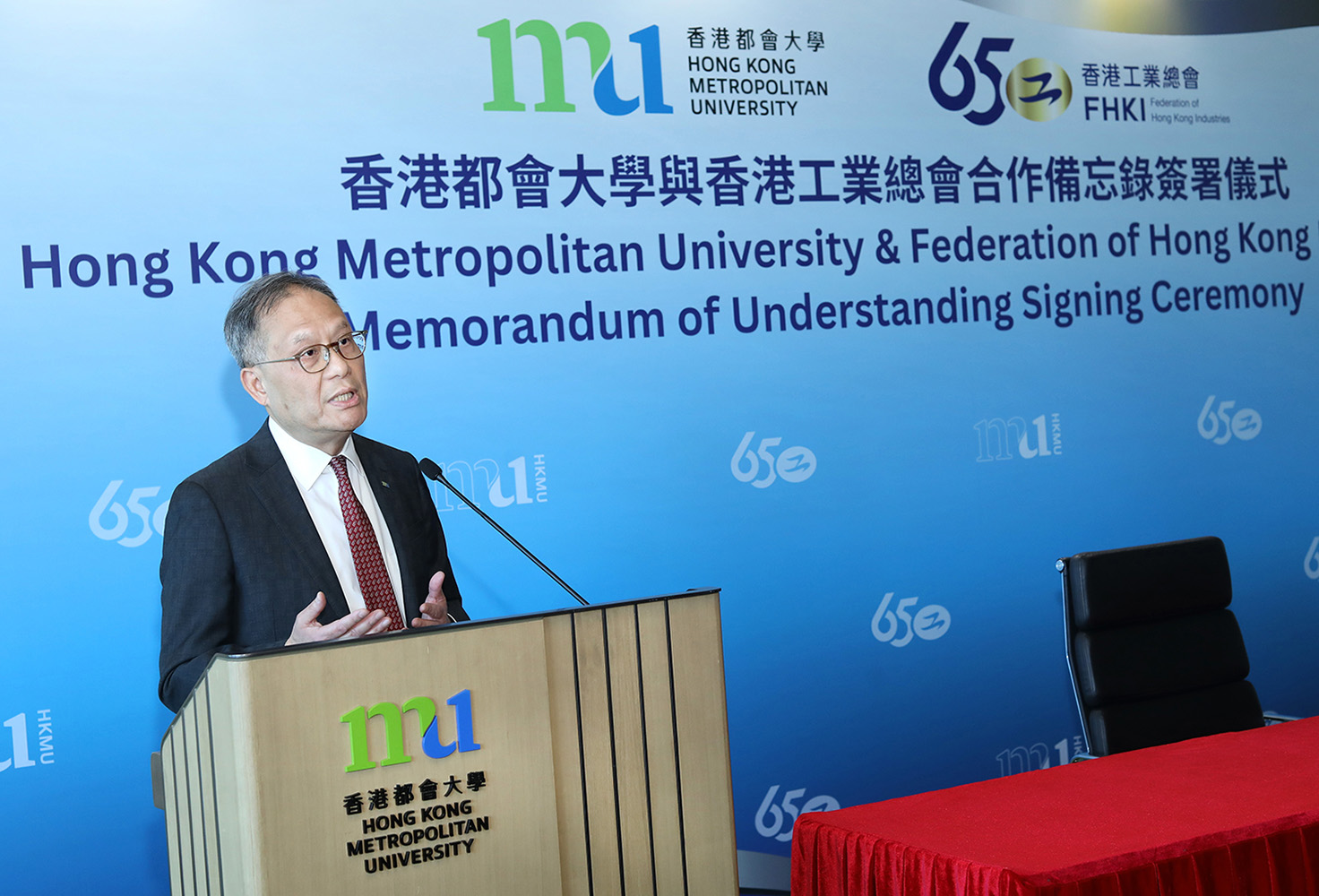
Prof. Paul Lam Kwan-sing, HKMU President, remarked that this partnership exemplified HKMU's commitment as a university of applied science to integrate knowledge with practical application, further bridging education with real-world practice.

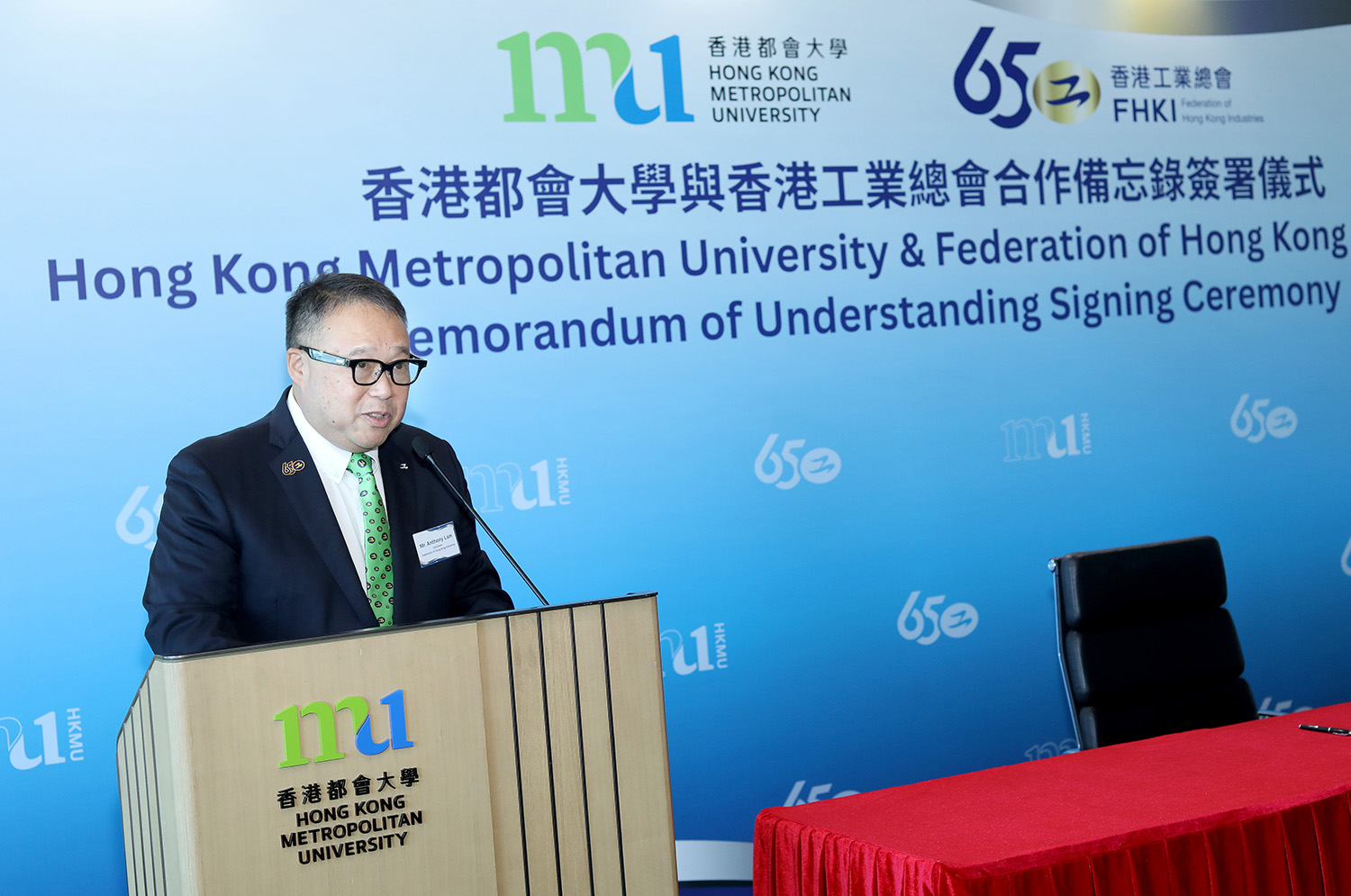
Mr Anthony Lam, Chairman of the FHKI, remarked that the FHKI and HKMU integrate academic R&D with corporate expertise, and this model of industry-academia collaboration will cultivate talent tailored to the sector's requirements and inject new momentum into Hong Kong's industries.

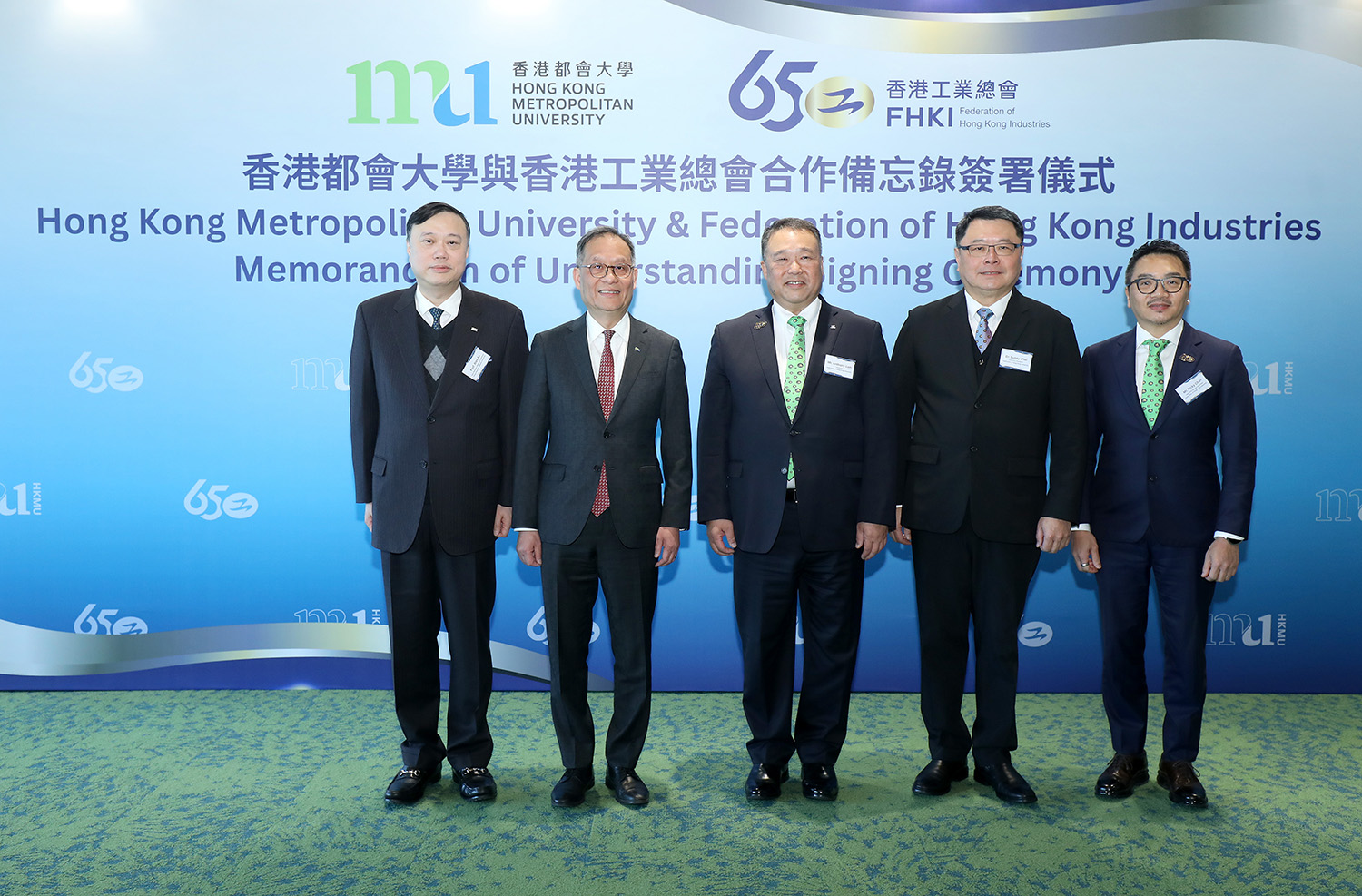
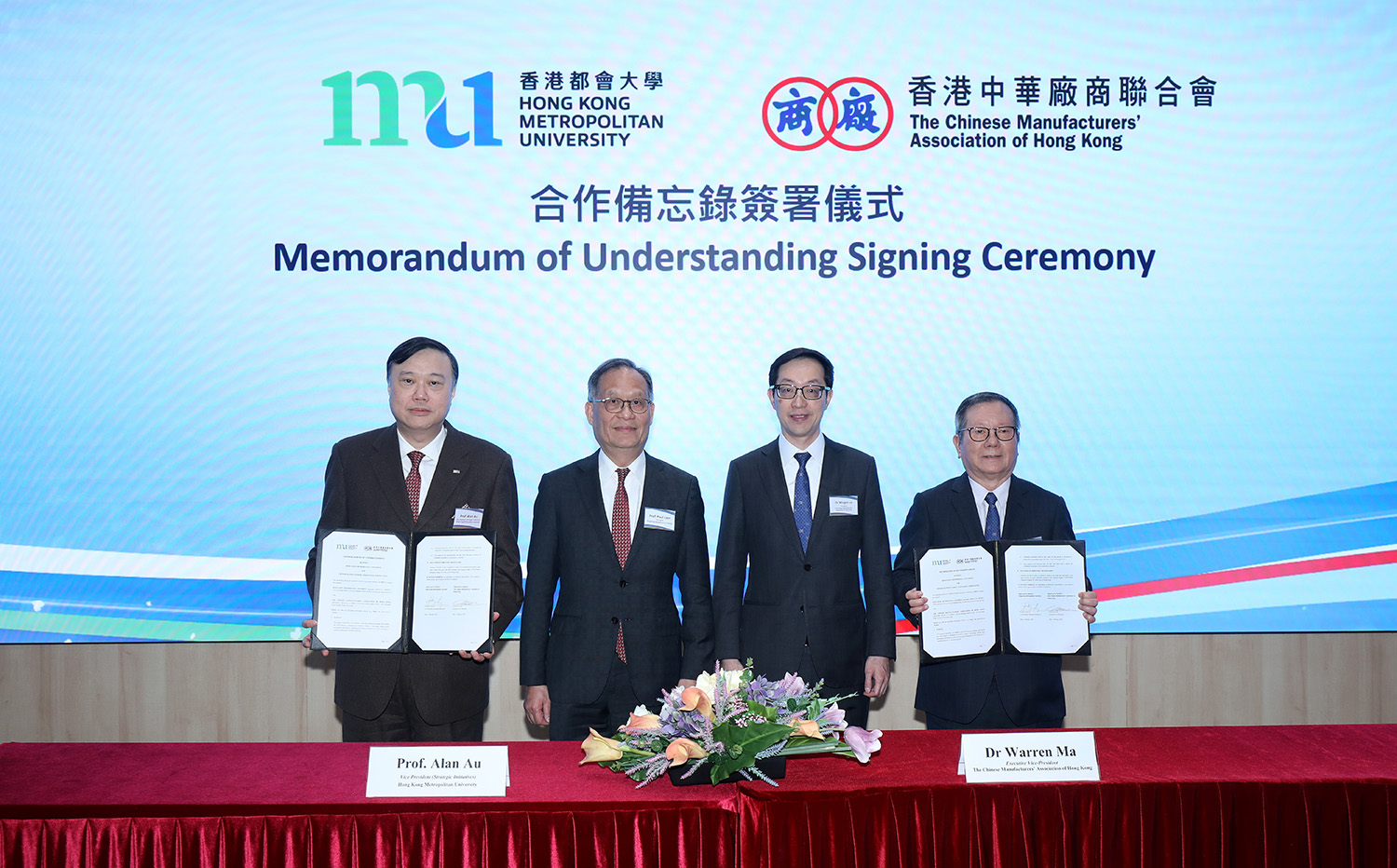
A group photo of Prof. Paul Lam Kwan-sing (second from left), HKMU President, Prof. Alan Au Kai-ming (first from left), HKMU Vice President (Strategic Initiatives), Mr Anthony Lam (middle), Chairman of the FHKI and Dr Sunny Chai (second from right), Honorary President of the FHKI and Chairman of Hong Kong Science and Technology Parks Corporation, and Mr Ricky Chan Wai-chung (first from right), Executive Deputy Chairman of the FHKI.
Hong Kong Metropolitan University (HKMU) and the Federation of Hong Kong Industries (FHKI) signed a Memorandum of Understanding (MoU) yesterday (14 January) to strengthen collaboration between academia and industry. Under the partnership, the two parties will work together to foster talent development, facilitate knowledge transfer, and promote applied research, contributing to Hong Kong's long-term social and economic development.
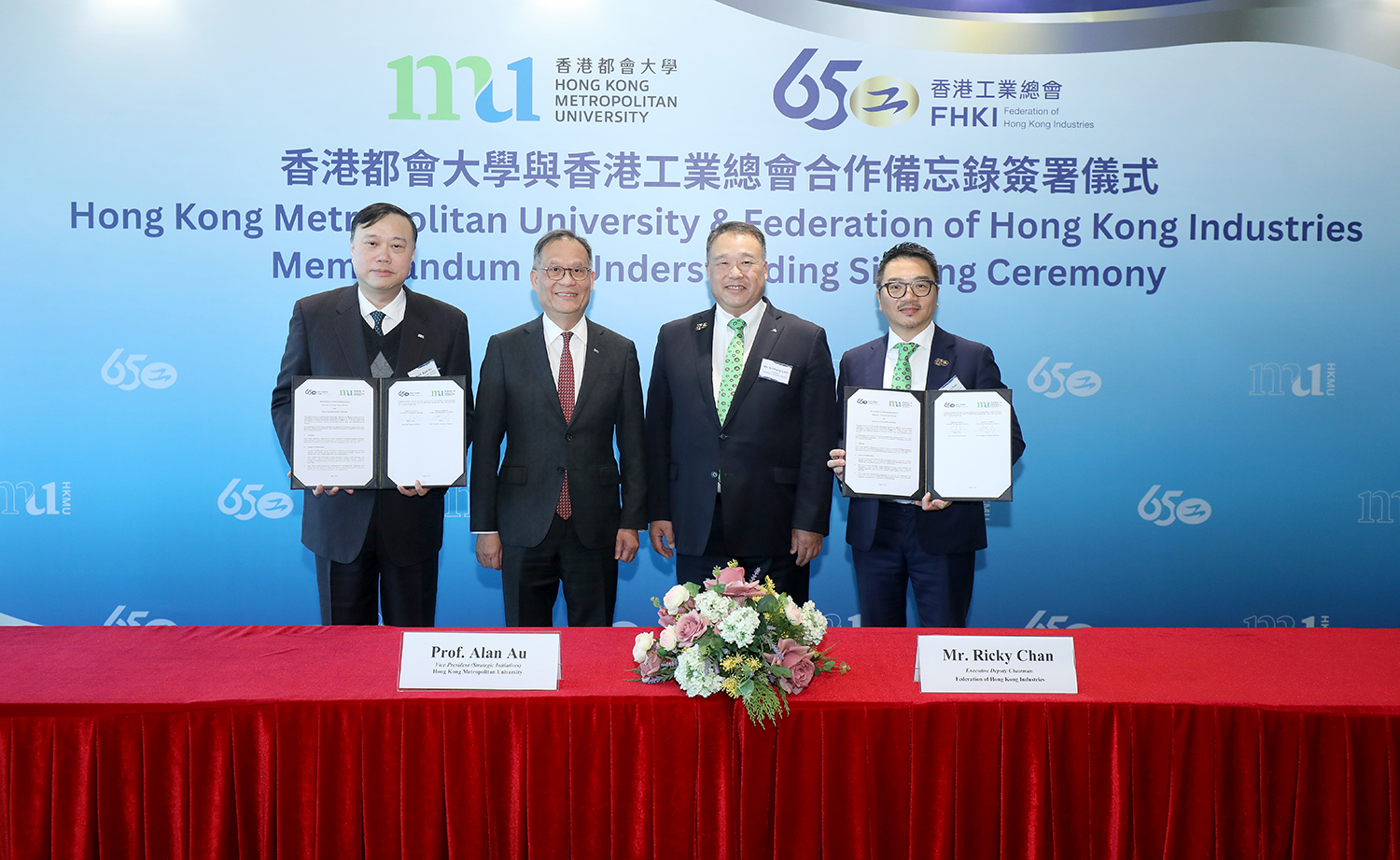
Witnessed by Prof. Paul Lam Kwan-sing, HKMU President, and Mr Anthony Lam, Chairman of the FHKI, the MoU was signed by Prof. Alan Au Kai-ming, HKMU Vice President (Strategic Initiatives), and Mr Ricky Chan Wai-chung, Executive Deputy Chairman of the FHKI. Guests of Honour also included Dr Sunny Chai, Honorary President of the FHKI and Chairman of Hong Kong Science and Technology Parks Corporation.
Prof. Lam remarked that this partnership exemplifies HKMU's commitment as a university of applied science (UAS) to integrate knowledge with practical applications. By deepening collaboration with industry, HKMU further bridges education with real-world practice. He stated, “We aim to co-develop work-based learning programmes that are closely aligned with industry standards and professional practice, ensuring that our graduates possess both the technical skills and soft skills that employers value.”
Chairman Lam is confident that this collaboration will mark a new milestone in the development of Hong Kong's industrial and technological sectors. “This represents a significant step forward in the strategic partnership between FHKI and HKMU,” he remarked. “Through this collaborative platform, we aim to assist students in securing more high-quality internship opportunities, enabling them to gain early insights into industry needs and build practical experience. In parallel, both parties are committed to integrating academic R&D with corporate expertise to co-develop innovative projects. This model of industry-academia collaboration will not only cultivate talent tailored to the sector's requirements but also inject new momentum into Hong Kong's industries, driving them towards high value-added development.”
As Hong Kong's first UAS, HKMU offers programmes that integrate theory and practice while maintaining close collaboration with professional sectors to nurture talent equipped with practical expertise for Hong Kong's economic development. Under this MoU, HKMU and the FHKI will establish regular dialogue between academics and industry representatives to better understand industry and economic trends and challenges. This will lay the groundwork for developing work-based learning programmes aligned with industry talent needs and applied research projects that deliver practical solutions and drive innovation.
HKMU and the FHKI will also explore other collaborative initiatives in knowledge transfer, industry policy research, professional development, and industry promotion. By strengthening the ecosystem for industry-academia-research collaboration, this partnership aims to enhance Hong Kong's competitive edge and support sustainable economic development.

HKMU and the FHKI signed a MoU to strengthen collaboration between academia and industry, working together to foster talent development, facilitate knowledge transfer, and promote applied research.


Hong Kong Metropolitan University (HKMU) and the Federation of Hong Kong Industries (FHKI) signed a Memorandum of Understanding (MoU) yesterday (14 January) to strengthen collaboration between academia and industry. Under the partnership, the two parties will work together to foster talent development, facilitate knowledge transfer, and promote applied research, contributing to Hong Kong's long-term social and economic development.
Witnessed by Prof. Paul Lam Kwan-sing, HKMU President, and Mr Anthony Lam, Chairman of the FHKI, the MoU was signed by Prof. Alan Au Kai-ming, HKMU Vice President (Strategic Initiatives), and Mr Ricky Chan Wai-chung, Executive Deputy Chairman of the FHKI. Guests of Honour also included Dr Sunny Chai, Honorary President of the FHKI and Chairman of Hong Kong Science and Technology Parks Corporation.
Prof. Lam remarked that this partnership exemplifies HKMU's commitment as a university of applied science (UAS) to integrate knowledge with practical applications. By deepening collaboration with industry, HKMU further bridges education with real-world practice. He stated, “We aim to co-develop work-based learning programmes that are closely aligned with industry standards and professional practice, ensuring that our graduates possess both the technical skills and soft skills that employers value.”
Chairman Lam is confident that this collaboration will mark a new milestone in the development of Hong Kong's industrial and technological sectors. “This represents a significant step forward in the strategic partnership between FHKI and HKMU,” he remarked. “Through this collaborative platform, we aim to assist students in securing more high-quality internship opportunities, enabling them to gain early insights into industry needs and build practical experience. In parallel, both parties are committed to integrating academic R&D with corporate expertise to co-develop innovative projects. This model of industry-academia collaboration will not only cultivate talent tailored to the sector's requirements but also inject new momentum into Hong Kong's industries, driving them towards high value-added development.”
As Hong Kong's first UAS, HKMU offers programmes that integrate theory and practice while maintaining close collaboration with professional sectors to nurture talent equipped with practical expertise for Hong Kong's economic development. Under this MoU, HKMU and the FHKI will establish regular dialogue between academics and industry representatives to better understand industry and economic trends and challenges. This will lay the groundwork for developing work-based learning programmes aligned with industry talent needs and applied research projects that deliver practical solutions and drive innovation.
HKMU and the FHKI will also explore other collaborative initiatives in knowledge transfer, industry policy research, professional development, and industry promotion. By strengthening the ecosystem for industry-academia-research collaboration, this partnership aims to enhance Hong Kong's competitive edge and support sustainable economic development.

SIGN UP FOR OUR LATEST NEWS
This website uses cookies so that we can provide you with the best user experience possible. Cookie information is stored in your browser and performs functions such as recognising you when you return to our website and helping our team to understand which sections of the website you find most interesting and useful.
Strictly Necessary Cookie should be enabled at all times so that we can save your preferences for cookie settings.
If you disable this cookie, we will not be able to save your preferences. This means that every time you visit this website you will need to enable or disable cookies again.