27 Nov 2025
HKMU's support to students and staff affected by the tragic fire at Wang Fuk Court in Tai Po

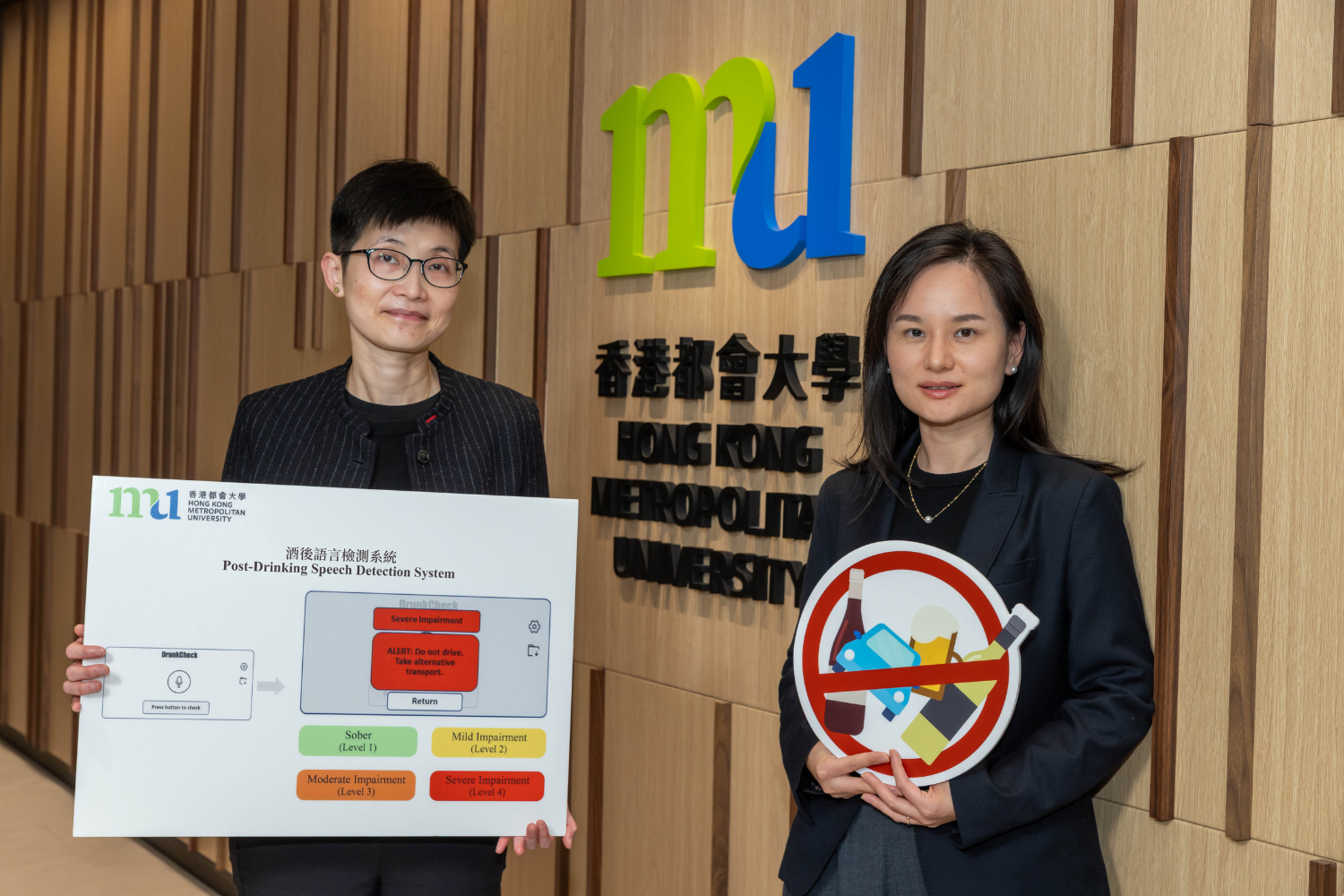
Led by Prof. Jack Tang Wai-ho (second right) from the School of Nursing and Health Sciences, the project titled “Deciphering the pathophysiological role of platelet PANoptosis in sepsis” received the largest grant among the funded projects at HKMU.

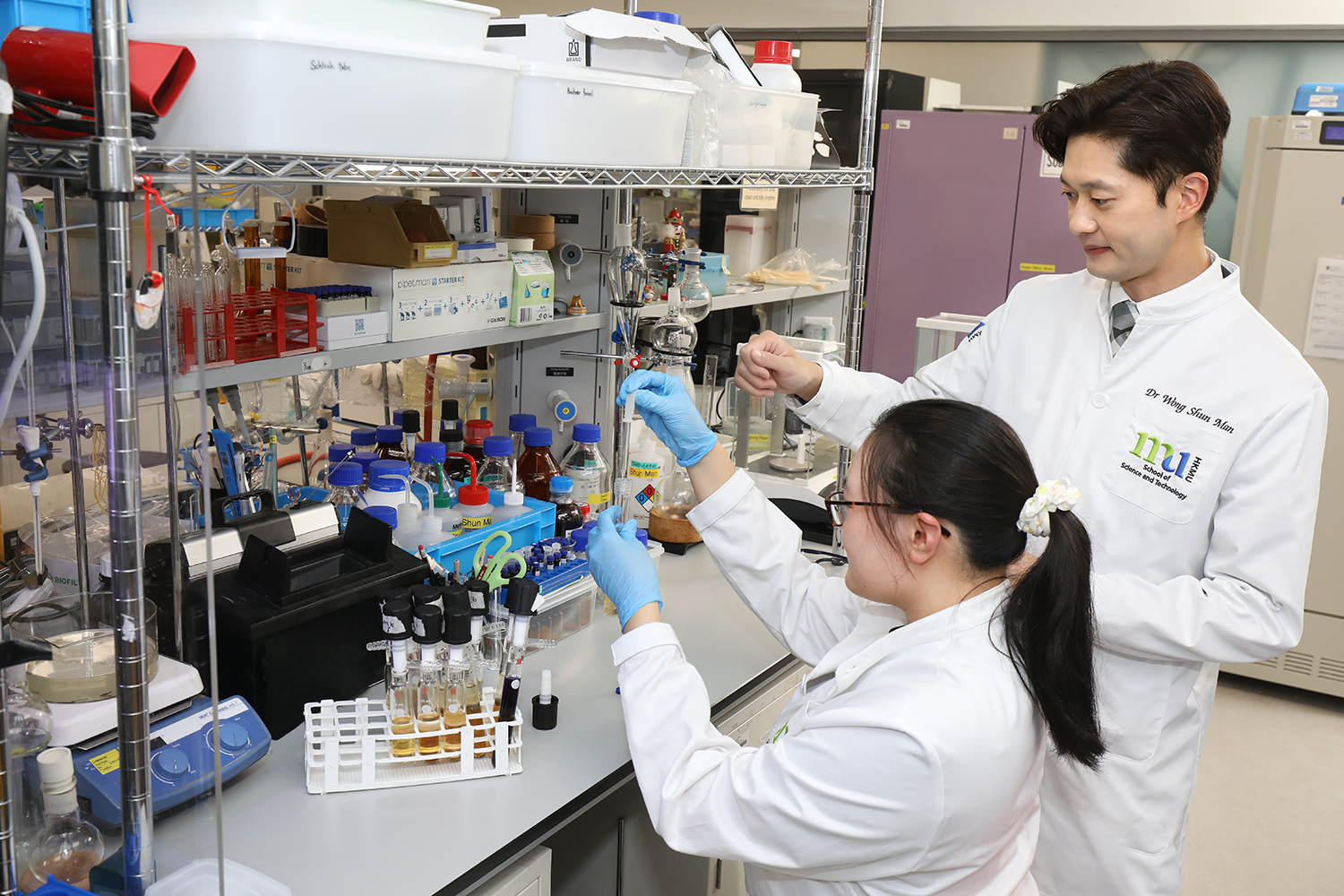
The project led by Dr Wong Shun-man (right) from the School of Science and Technology received the largest grant in the Physical Sciences area.
In the latest round of the Competitive Research Funding Schemes for the Local Self-financing Degree Sector of the Research Grants Council (RGC), Hong Kong Metropolitan University (HKMU) secured over HK$33.42 million for 47 projects, amounting to over 37.1% of the total RGC allocation. HKMU ranked first among all local self-financing institutions in terms of both funding amount and the number of projects for the third consecutive year, demonstrating the excellence of the University's faculty in research and innovation.
The University achieved an outstanding performance under the major funding category “Faculty Development Scheme” (FDS). A total of 43 projects secured over HK$31.97 million, marking an increase in the number of projects and funding amount by 13% and 7%, respectively, compared to those of the previous year. HKMU continued to outperform other self-financing institutions in both metrics. The total funding amount was the highest for the seventh consecutive year.
HKMU President Prof. Paul Lam Kwan-sing was deeply encouraged by the excellent performance of the research teams. He said, “HKMU's outstanding achievement in this year's RGC funding exercise demonstrates the relentless efforts and innovative spirit of our faculty and researchers.”
Prof. Lam emphasised that the University remains committed to supporting forward-looking research projects with social impact by continuing to allocate resources to foster a conducive research environment. He added that the University would leverage its strengths as a university of applied sciences to contribute to Hong Kong and the country.
Under the FDS, seven HKMU-led projects received funding of over HK$1 million each. These projects span multiple interdisciplinary fields, including artificial intelligence, environmental science and disease treatment.
Among them, a project led by Prof. Jack Tang Wai-ho, Head of Diagnostic Sciences in the School of Nursing and Health Sciences, titled “Deciphering the pathophysiological role of platelet PANoptosis in sepsis”, was awarded HK$1.259 million, which was the largest funding amount for HKMU. This study aims to provide new theoretical insights into the pathogenesis of sepsis and identify potential biomarkers and therapeutic targets, contributing to the prevention and treatment of sepsis.
This research, along with another project led by Dr Wong Shun-man, Senior Lecturer in the School of Science and Technology, stood out among numerous proposals from all participating institutions. They received the largest grants in the Biological and Medical Sciences and the Physical Sciences areas, respectively.
Under the Inter-Institutional Development Scheme (IIDS), four HKMU-led projects, covering themes such as smart cities, environmental sustainability, health informatics and cultural studies, secured a total of HK$1.45 million, representing a 25% increase compared to that of the previous year.
Over the years, HKMU has continuously enhanced its research infrastructure based on its strengths and expertise across a wide range of strategic research areas. The University has set up five research institutes and four research centres to promote research in various domains, including the digital humanities and literature, public and social policy, international business, responsible business, bilingual learning and teaching, gerontechnology, personalised care, environmental science, smart city, and open and innovative education.
Following are some of the funded research projects:
| Project | Principal Coordinator | Amount Awarded |
| Faculty Development Scheme (FDS) – 7 research projects awarded funding of over $1,000,000 each | ||
| Deciphering the pathophysiological role of platelet PANoptosis in sepsis | Prof. Tang Wai-ho,
School of Nursing and Health Sciences |
$1,259,312 |
| Integrating AI-driven techniques and advanced IoT monitoring to assess seawater intrusion impacts on inland riverine systems | Dr Lu Yi,
School of Science and Technology |
$1,116,821 |
| Investigation of Antitumor Effects of Vitamin D in Giant Cell Tumor of Bone | Dr Carol Lau Po-ying,
School of Nursing and Health Sciences |
$1,116,758 |
| Mechanistic Insights into Microalgal-Bacterial Biofilm Interactions: Enhancing Pharmaceutical Removal from Wastewater | Dr Deng Dan,
School of Science and Technology |
$1,066,150 |
| Do anti-amyloid beta monoclonal antibodies reassuringly offer hope for Alzheimer's disease risk reduction? | Dr Maggie Kwok Man-ki,
School of Nursing and Health Sciences |
$1,051,835 |
| Development of Earth-Abundant 3d Metal (Fe, Co, and Ni) Based Catalysts with Hemilabile Phosphine Ligands and Its Applications Towards Suzuki-Miyaura Coupling Reaction and Buchwald–Hartwig Amination | Dr Wong Shun-man,
School of Science and Technology |
$1,023,362 |
| Emerging Pollutants in Mangroves: Occurrence of Liquid Crystal Monomers (LCMs) and Their Interaction with Microplastics (MPs) | Dr Han Jie,
School of Science and Technology |
$1,022,335 |
| Inter-Institutional Development Scheme (IIDS) – 4 Research projects awarded funding | ||
| A Symposium on Digital Twin Research and Applications: Advancing Smart Cities for a Sustainable Future | Dr Fu Yaru,
School of Science and Technology |
$414,675 |
| Exploring AI and Big Data Strategies in Environmental Sustainability | Dr Pan Min,
School of Science and Technology |
$367,640 |
| Workshop Series on Reliable and Interpretable Deep Learning: Challenges, Theories and Applications in Biomedical Informatics | Dr Wang Dan,
School of Science and Technology |
$340,500 |
| Aging, Subjectivity and Culture: Existential Psychological Issues of Chinese Seniors Living in Hong Kong | Prof. Eva Man Kit-wah,
School of Arts and Social Sciences |
$331,668 |

Led by Prof. Jack Tang Wai-ho (second right) from the School of Nursing and Health Sciences, the project titled “Deciphering the pathophysiological role of platelet PANoptosis in sepsis” received the largest grant among the funded projects at HKMU.


In the latest round of the Competitive Research Funding Schemes for the Local Self-financing Degree Sector of the Research Grants Council (RGC), Hong Kong Metropolitan University (HKMU) secured over HK$33.42 million for 47 projects, amounting to over 37.1% of the total RGC allocation. HKMU ranked first among all local self-financing institutions in terms of both funding amount and the number of projects for the third consecutive year, demonstrating the excellence of the University's faculty in research and innovation.
The University achieved an outstanding performance under the major funding category “Faculty Development Scheme” (FDS). A total of 43 projects secured over HK$31.97 million, marking an increase in the number of projects and funding amount by 13% and 7%, respectively, compared to those of the previous year. HKMU continued to outperform other self-financing institutions in both metrics. The total funding amount was the highest for the seventh consecutive year.
HKMU President Prof. Paul Lam Kwan-sing was deeply encouraged by the excellent performance of the research teams. He said, “HKMU's outstanding achievement in this year's RGC funding exercise demonstrates the relentless efforts and innovative spirit of our faculty and researchers.”
Prof. Lam emphasised that the University remains committed to supporting forward-looking research projects with social impact by continuing to allocate resources to foster a conducive research environment. He added that the University would leverage its strengths as a university of applied sciences to contribute to Hong Kong and the country.
Under the FDS, seven HKMU-led projects received funding of over HK$1 million each. These projects span multiple interdisciplinary fields, including artificial intelligence, environmental science and disease treatment.
Among them, a project led by Prof. Jack Tang Wai-ho, Head of Diagnostic Sciences in the School of Nursing and Health Sciences, titled “Deciphering the pathophysiological role of platelet PANoptosis in sepsis”, was awarded HK$1.259 million, which was the largest funding amount for HKMU. This study aims to provide new theoretical insights into the pathogenesis of sepsis and identify potential biomarkers and therapeutic targets, contributing to the prevention and treatment of sepsis.
This research, along with another project led by Dr Wong Shun-man, Senior Lecturer in the School of Science and Technology, stood out among numerous proposals from all participating institutions. They received the largest grants in the Biological and Medical Sciences and the Physical Sciences areas, respectively.
Under the Inter-Institutional Development Scheme (IIDS), four HKMU-led projects, covering themes such as smart cities, environmental sustainability, health informatics and cultural studies, secured a total of HK$1.45 million, representing a 25% increase compared to that of the previous year.
Over the years, HKMU has continuously enhanced its research infrastructure based on its strengths and expertise across a wide range of strategic research areas. The University has set up five research institutes and four research centres to promote research in various domains, including the digital humanities and literature, public and social policy, international business, responsible business, bilingual learning and teaching, gerontechnology, personalised care, environmental science, smart city, and open and innovative education.
Following are some of the funded research projects:
| Project | Principal Coordinator | Amount Awarded |
| Faculty Development Scheme (FDS) – 7 research projects awarded funding of over $1,000,000 each | ||
| Deciphering the pathophysiological role of platelet PANoptosis in sepsis | Prof. Tang Wai-ho,
School of Nursing and Health Sciences |
$1,259,312 |
| Integrating AI-driven techniques and advanced IoT monitoring to assess seawater intrusion impacts on inland riverine systems | Dr Lu Yi,
School of Science and Technology |
$1,116,821 |
| Investigation of Antitumor Effects of Vitamin D in Giant Cell Tumor of Bone | Dr Carol Lau Po-ying,
School of Nursing and Health Sciences |
$1,116,758 |
| Mechanistic Insights into Microalgal-Bacterial Biofilm Interactions: Enhancing Pharmaceutical Removal from Wastewater | Dr Deng Dan,
School of Science and Technology |
$1,066,150 |
| Do anti-amyloid beta monoclonal antibodies reassuringly offer hope for Alzheimer's disease risk reduction? | Dr Maggie Kwok Man-ki,
School of Nursing and Health Sciences |
$1,051,835 |
| Development of Earth-Abundant 3d Metal (Fe, Co, and Ni) Based Catalysts with Hemilabile Phosphine Ligands and Its Applications Towards Suzuki-Miyaura Coupling Reaction and Buchwald–Hartwig Amination | Dr Wong Shun-man,
School of Science and Technology |
$1,023,362 |
| Emerging Pollutants in Mangroves: Occurrence of Liquid Crystal Monomers (LCMs) and Their Interaction with Microplastics (MPs) | Dr Han Jie,
School of Science and Technology |
$1,022,335 |
| Inter-Institutional Development Scheme (IIDS) – 4 Research projects awarded funding | ||
| A Symposium on Digital Twin Research and Applications: Advancing Smart Cities for a Sustainable Future | Dr Fu Yaru,
School of Science and Technology |
$414,675 |
| Exploring AI and Big Data Strategies in Environmental Sustainability | Dr Pan Min,
School of Science and Technology |
$367,640 |
| Workshop Series on Reliable and Interpretable Deep Learning: Challenges, Theories and Applications in Biomedical Informatics | Dr Wang Dan,
School of Science and Technology |
$340,500 |
| Aging, Subjectivity and Culture: Existential Psychological Issues of Chinese Seniors Living in Hong Kong | Prof. Eva Man Kit-wah,
School of Arts and Social Sciences |
$331,668 |

20 Nov 2025
SIGN UP FOR OUR LATEST NEWS
This website uses cookies so that we can provide you with the best user experience possible. Cookie information is stored in your browser and performs functions such as recognising you when you return to our website and helping our team to understand which sections of the website you find most interesting and useful.
Strictly Necessary Cookie should be enabled at all times so that we can save your preferences for cookie settings.
If you disable this cookie, we will not be able to save your preferences. This means that every time you visit this website you will need to enable or disable cookies again.