HKMU Learning and Teaching Week 2025: Empowering Faculty and Staff to Leverage AI for Enhanced Education

News HKMU Learning and Teaching Week 2025: Empowering Faculty and Staff to Leverage AI for Enhanced Education
1

HKMU Learning and Teaching Week 2025: Empowering Faculty and Staff to Leverage AI for Enhanced Education

News Centre

HKMU News Centre HKMU Learning and Teaching Week 2025: Empowering Faculty and Staff to Leverage AI for Enhanced Education

HKMU Learning and Teaching Week 2025: Empowering Faculty and Staff to Leverage AI for Enhanced Education

SHARE

Share on email
Share on facebook
Share on twitter
Share on whatsapp
Share on linkedin

To improve teaching and learning effectiveness for the new academic year, the Office for Advancement of Learning and Teaching (ALTO) at Hong Kong Metropolitan University (HKMU) hosted its annual “Learning and Teaching Week” from 11 to 25 August. This year's theme was leveraging artificial intelligence (AI) to improve teaching and learning, aiming to equip faculty and staff with the latest professional knowledge and skills. Local and international scholars were invited to share their insights on the applications of AI in higher education and the implementation of Scholarship of Teaching and Learning (SoTL), further promoting HKMU's excellence in education.

This year marked the fifth consecutive “Learning and Teaching Week”, attracting over 200 newly employed and current faculty and staff. The opening ceremony, held on 11 August, was attended by President Prof. Paul Lam Kwan-sing, along with the Provost and Vice Presidents, officially kicking off the new academic year.

In his speech, Prof. Lam described this annual event as an orientation for new staff, providing them with a comprehensive understanding of the University and helping them engage in their work for the new academic year. He noted the continued growth in student enrolment and expressed hopes of admitting more and more outstanding students.

Prof. Lam encouraged faculty and staff to dedicate themselves to supporting students' learning and development, to set exemplary professional standards in their respective fields, and to create and foster a collaborative and harmonious work environment. “The success of the University depends on its people, especially the faculty and staff of HKMU,” he said. “More precisely, our success depends on how effectively our faculty and staff utilise campus facilities and resources to achieve effective, high-quality teaching and learning.”

The Provost and three Vice Presidents also attended the ceremony and shared the latest developments in various areas of the University. Provost Prof. Reggie Kwan Ching-ping outlined the key points of the upcoming Institutional Review (IR); Vice President (Strategic Initiatives) Prof. Alan Au Kai-ming discussed the University’s internationalisation efforts and its latest performance in the QS World University Rankings; Vice President (Administration and Corporate Development) Prof. Charles Kwong Che-leung introduced recent campus developments and facility enhancements; and Vice President (Research and Institutional Advancement) Prof. Ricky Kwok Yu-kwong explored opportunities for research collaboration.

During the opening ceremony, the University appointed 12 faculty members from various Schools as Learning and Teaching Evangelists (LTEs). They have been entrusted with the important responsibility of fostering exchanges of teaching and learning across different programmes, departments and schools.

The eight-day “Learning and Teaching Week” featured seminars conducted by several international scholars. On the first day, the focus was on how to effectively utilise AI tools in education while maintaining academic rigour. Keynote speakers included Prof. Jason M. Lodge from the University of Queensland; Dr Brent A. Anders from American University of Armenia; and Dr Haya Ajjan from Elon University.

Prof. Lodge stated that when the education sector discusses whether to allow the use of AI on campus, concerns about integrity and security inevitably arise, particularly regarding fears that students might cheat using generative AI. This issue has sparked widespread discussion in Australia, leading to the establishment of guidelines for faculty and students to ensure the ethical and safe use of AI. He emphasised that effectively utilising generative AI can enhance teaching and learning efficiency and provide a new learning experience for both teachers and students.

Prof. Lodge added that educators should explore how AI can assist students, encouraging them to think critically and explore diverse learning methods, integrating knowledge for lifelong learning.

The seminar on the second day focused on research and applications in SoTL. Both days concluded with roundtable discussions hosted by Prof. Kwok to allow the participants to further discuss and exchange views on two main themes.


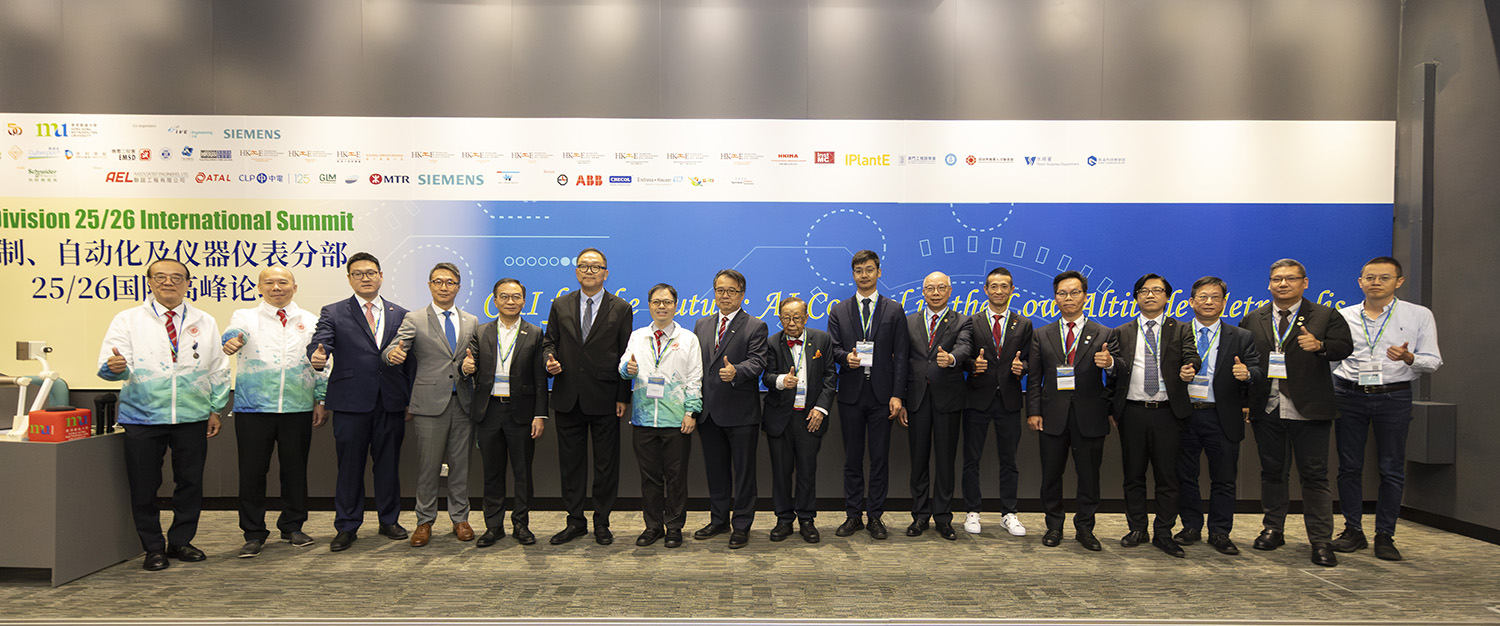
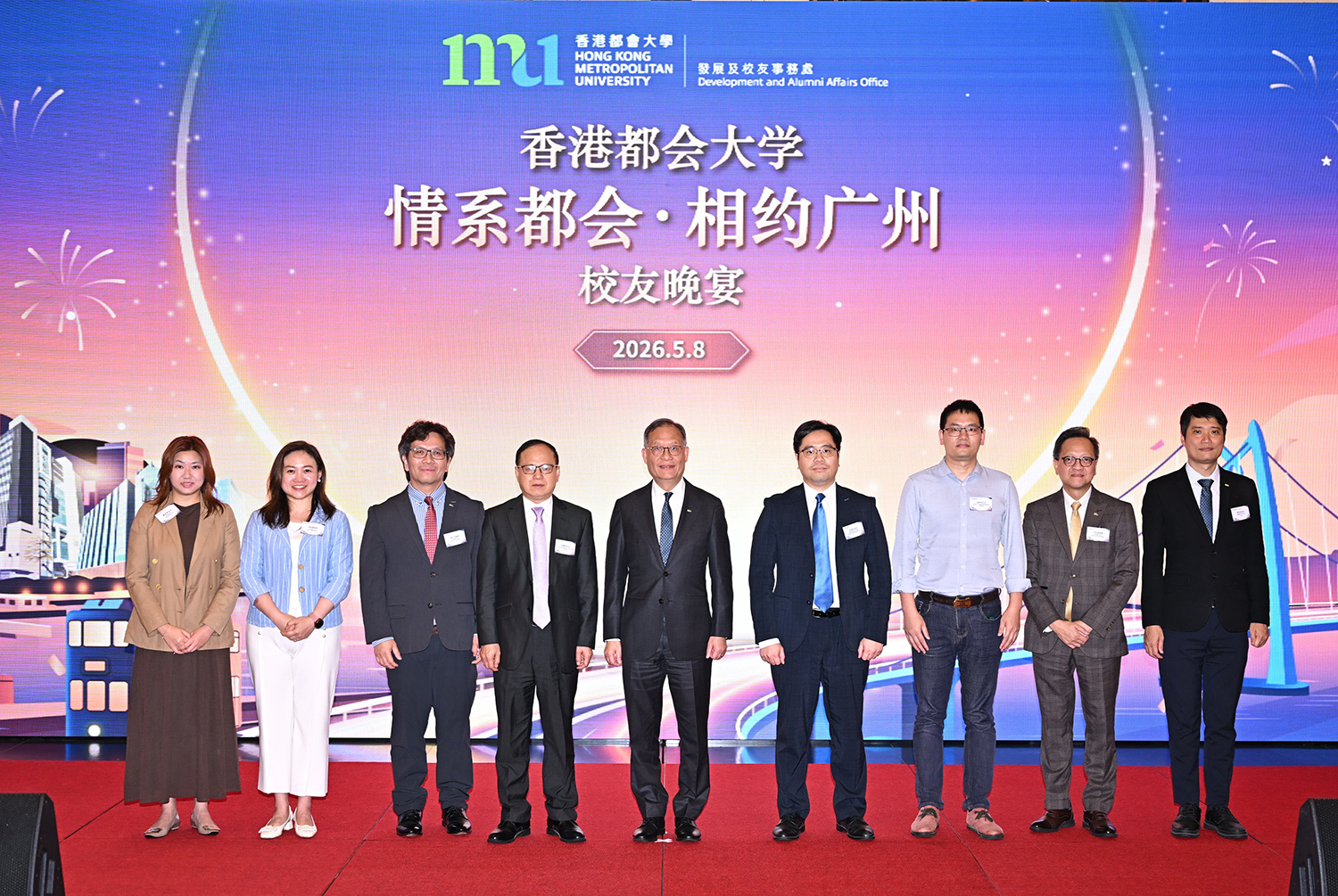
Prof. Reggie Kwan Ching-ping (seventh from left) with LTEs from this year and last year.

To improve teaching and learning effectiveness for the new academic year, the Office for Advancement of Learning and Teaching (ALTO) at Hong Kong Metropolitan University (HKMU) hosted its annual “Learning and Teaching Week” from 11 to 25 August. This year's theme was leveraging artificial intelligence (AI) to improve teaching and learning, aiming to equip faculty and staff with the latest professional knowledge and skills. Local and international scholars were invited to share their insights on the applications of AI in higher education and the implementation of Scholarship of Teaching and Learning (SoTL), further promoting HKMU's excellence in education.

This year marked the fifth consecutive “Learning and Teaching Week”, attracting over 200 newly employed and current faculty and staff. The opening ceremony, held on 11 August, was attended by President Prof. Paul Lam Kwan-sing, along with the Provost and Vice Presidents, officially kicking off the new academic year.

In his speech, Prof. Lam described this annual event as an orientation for new staff, providing them with a comprehensive understanding of the University and helping them engage in their work for the new academic year. He noted the continued growth in student enrolment and expressed hopes of admitting more and more outstanding students.

Prof. Lam encouraged faculty and staff to dedicate themselves to supporting students' learning and development, to set exemplary professional standards in their respective fields, and to create and foster a collaborative and harmonious work environment. “The success of the University depends on its people, especially the faculty and staff of HKMU,” he said. “More precisely, our success depends on how effectively our faculty and staff utilise campus facilities and resources to achieve effective, high-quality teaching and learning.”

The Provost and three Vice Presidents also attended the ceremony and shared the latest developments in various areas of the University. Provost Prof. Reggie Kwan Ching-ping outlined the key points of the upcoming Institutional Review (IR); Vice President (Strategic Initiatives) Prof. Alan Au Kai-ming discussed the University’s internationalisation efforts and its latest performance in the QS World University Rankings; Vice President (Administration and Corporate Development) Prof. Charles Kwong Che-leung introduced recent campus developments and facility enhancements; and Vice President (Research and Institutional Advancement) Prof. Ricky Kwok Yu-kwong explored opportunities for research collaboration.

During the opening ceremony, the University appointed 12 faculty members from various Schools as Learning and Teaching Evangelists (LTEs). They have been entrusted with the important responsibility of fostering exchanges of teaching and learning across different programmes, departments and schools.

The eight-day “Learning and Teaching Week” featured seminars conducted by several international scholars. On the first day, the focus was on how to effectively utilise AI tools in education while maintaining academic rigour. Keynote speakers included Prof. Jason M. Lodge from the University of Queensland; Dr Brent A. Anders from American University of Armenia; and Dr Haya Ajjan from Elon University.

Prof. Lodge stated that when the education sector discusses whether to allow the use of AI on campus, concerns about integrity and security inevitably arise, particularly regarding fears that students might cheat using generative AI. This issue has sparked widespread discussion in Australia, leading to the establishment of guidelines for faculty and students to ensure the ethical and safe use of AI. He emphasised that effectively utilising generative AI can enhance teaching and learning efficiency and provide a new learning experience for both teachers and students.

Prof. Lodge added that educators should explore how AI can assist students, encouraging them to think critically and explore diverse learning methods, integrating knowledge for lifelong learning.

The seminar on the second day focused on research and applications in SoTL. Both days concluded with roundtable discussions hosted by Prof. Kwok to allow the participants to further discuss and exchange views on two main themes.

RELATED NEWS

RELATED TOPICS

CATEGORY

FEATURED TOPICS

YEARS

MORE HKMU

SIGN UP FOR OUR LATEST NEWS