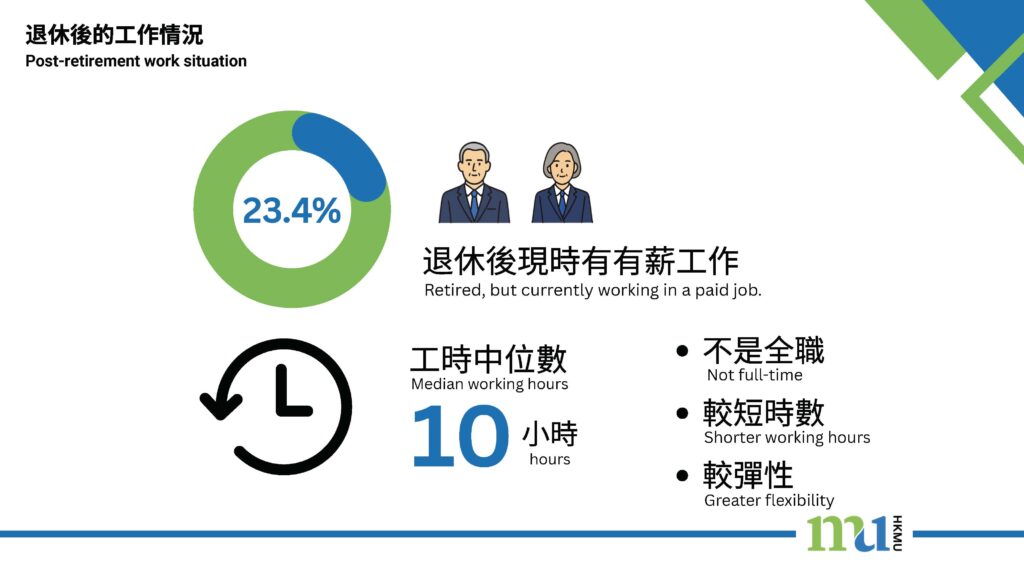
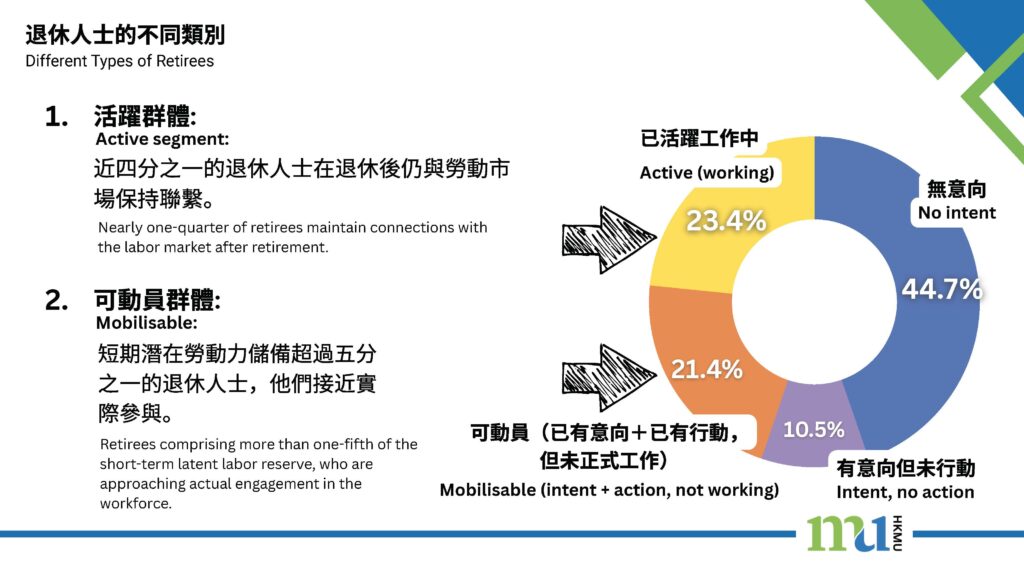
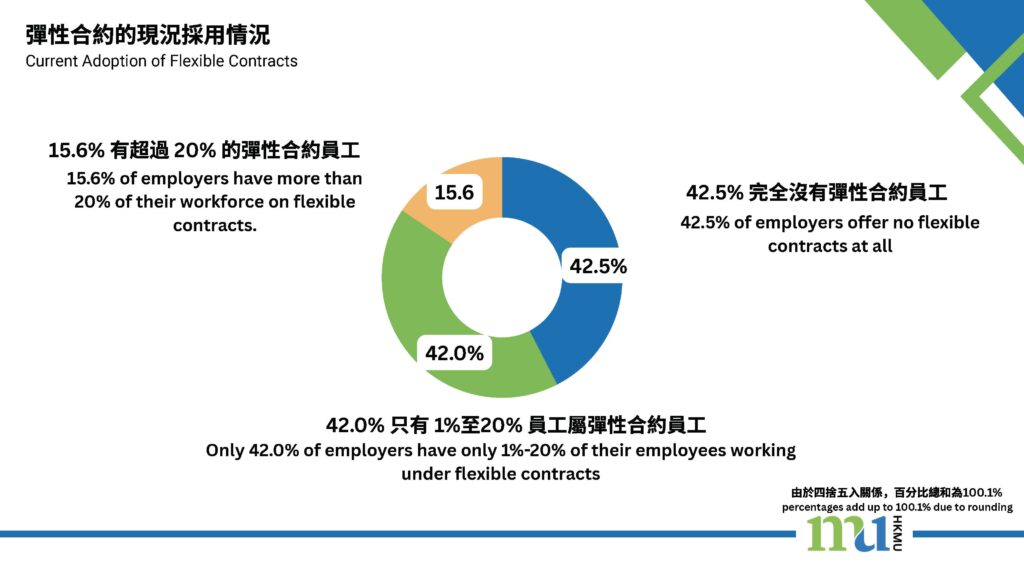
The findings show that Hong Kong already has a visible participation base and a sizeable near-term reserve. On the retiree side, 23.4% of respondents were already in paid work after retirement, while a further 21.4% were in a mobilisable group, defined by the presence of both intention and action but no current paid work. Qualitative evidence showed that retirees do not approach professional gig work as generic post-retirement employment. Participation is filtered through retirement meaning, competence use, selective contribution, work design, feasibility, access, and trust. Professional gig work is most attractive when it is meaningful, bounded, manageable, and allows retirees to apply their expertise on acceptable terms. On the employer side, readiness was also uneven but
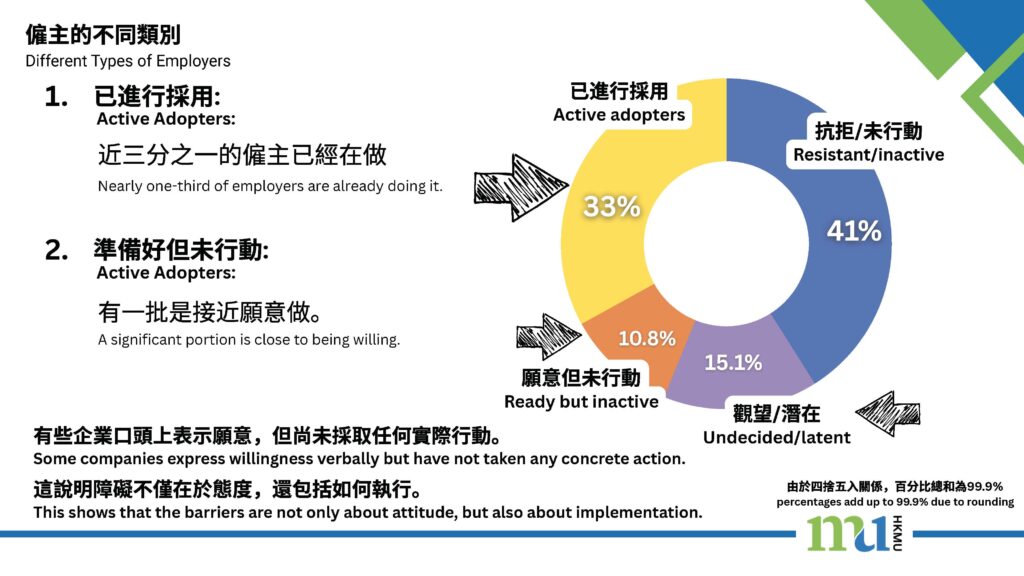
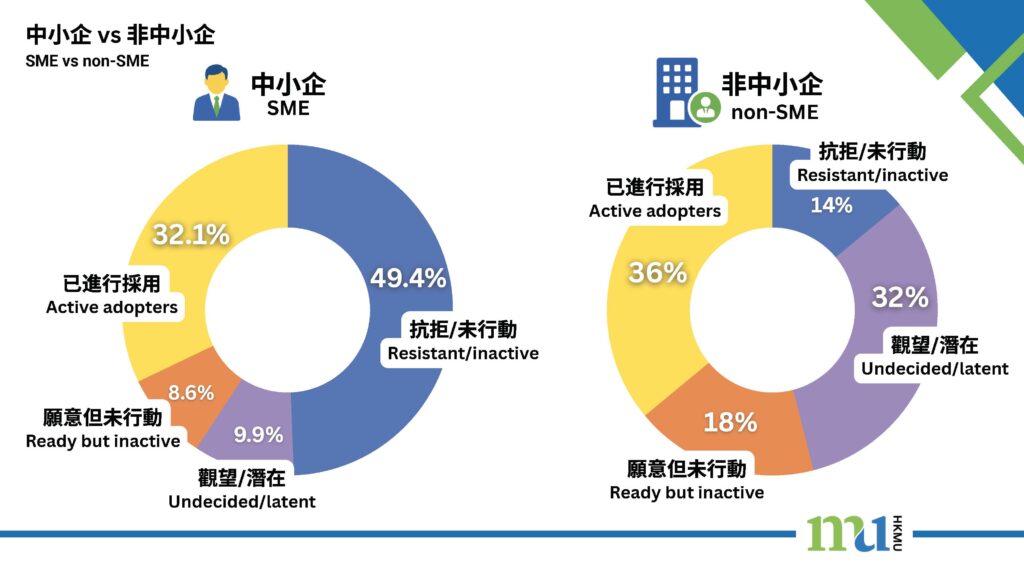
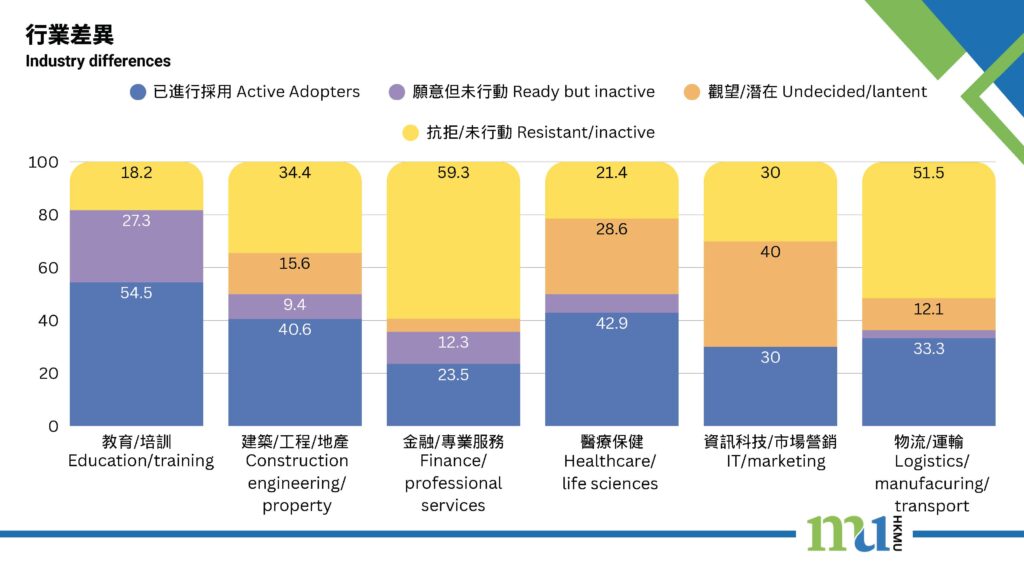
substantive. 33.0% of employers were active adopters, 10.8% were ready but inactive, 15.1% were undecided or latent, and 41.0% were resistant or inactive. This suggests that the main barrier is not outright employer resistance, but rather a large “open but inactive” middle group that could be far more effectively activated with better institutional support and practical
conditions.
The quantitative model shows that only competence emerged as a clear and significant predictor of participation in professional gig work (β = 0.115, p = 0.002), while autonomy and relatedness were not supported once estimated simultaneously. Participation was not significantly related to physical health or financial condition, but it showed a marginal association with better mental health, reflected in lower anxiety symptoms (β = -0.098, p = 0.092). There was marginal evidence that gig-contract availability strengthened the positive relationship between competence and participation in professional gig work (β = 0.087, p = 0.084), suggesting that competence may be more likely to translate into actual participation when supportive contract arrangements are available. Exploratory analysis nevertheless suggested that retirees were more likely to participate when work offered greater autonomy and task significance, and less likely to participate when roles required broader skill variety or stronger feedback demands. Overall, the retiree model suggests that later-life participation is driven less by a broad set of equally strong motivational pathways and more by a narrower mechanism centred on competence, meaningful contribution, and manageable work design.
The employer-side findings point to the same broad conclusion from a different angle. Employers did not make decisions in simple pro- or anti-older-worker terms. Rather, they weighed retirees' potential value, especially maturity, expertise, reliability, and mentoring capacity, against concerns about role suitability, implementation burden, governance issues, and risk. The structural employer results further suggested that cost pressure was the clearest direct predictor of offering professional gig work, whereas uncertainty and outsourcing experience were not significant. Taken together, the evidence suggests that the key bottleneck in Hong Kong is one of conversion and coordination: retirees often lack trusted routes into professional gig work, while employers often lack channels, templates, and job design support to operationalise such work.
The study concludes that retiree professional gig work in Hong Kong is a conditional rather than automatic pathway. The main challenge is not generating interest from zero, but building a stronger institutional bridge between retirees and employers. The report therefore recommends more trusted matching infrastructure, clearer contractual and protection standards, stronger retiree-friendly role design, and targeted employer-side conversion support. These findings contribute to the bridge-employment and gig-work literature while also offering practical policy guidance for active ageing and workforce resilience in Hong Kong.