Bachelor of Computing with Honours in Computer Science (For Year 1 Entry)

School of Science and Technology Computing Programmes Full-time Programmes 3 credit-unit Bachelor of Computing with Honours in Computer Science (For Year 1 Entry)

Bachelor of Science with Honours in Computer Science (For Year 1 Entry)

Face-to-Face Full-time SSSDP 3 Credit-unit JSSU72 BSCHCSJ1
  • Overview
  • Curriculum
  • Study Plan
  • Admission

Introduction

The Bachelor of Science with Honours in Computer Science programme (BSCHCSJ/JUPAS JSSU72) aims to produce graduates to be computing professionals with the breadth of understanding of theories and practices in the field of computer science.

The study pathway of this programme will allow students to explore all aspects of computing, as well as specialized topics such as artificial intelligence and smart technologies.

This programme provides multiple entry points: Year 1 Entry through JUPAS or Direct Application and Senior Year Entry through Direct Application at the HKMU website.

Entry Points Application Methods Code
Year 1 Entry JUPAS / Direct Application # JSSU72 / BSCHCSJ1 #
Senior Year Entry Direct Application BSCHCSJS for Year 2 and 3 Entry

#Students who are not sitting the HKDSE this year and have an equivalent qualification such as IB or GCE-A Level should apply through [Direct Application].

Learning Outcomes

On successful completion of the BSCHCSJ programme, students should be able to:

  • Utilize computer programming for problems solving and software development.
  • Communicate technical information capably and engage in a collaborative software development environment effectively.
  • Analyze problems critically and formulate solutions with techniques in computer science for various industries.
  • Perform competently the work of a professional in computing and IT industry.
  • Engage effectively in projects involving the integration of techniques in computing and IT applications.

Program leaflet page 1/2

Program leaflet page 2/2

Graduates of HKMU Computing are renowned in the IT industry for their good work ethics, broad technical competence, and being well versed in software development and system integration tools. They are found in major IT companies, public organizations, and large and small startups, using their knowledge and skills to contribute to the local innovative economy.

Student Achievements

HKMU Computing Graduates regularly show their strength in problem solving and academic paper writing in inter-varsity contests and competitions. Since 2010, they have won over 30 prizes and awards, affirming their competitiveness among the UGC universities.

Please refer to the Student Achievements or Best Projects page for more details.

Scholarships and Awards

Full-time MUHK Computing students with outstanding academic performance and other achievements may be nominated for scholarships and other awards in a competitive manner.

Career Prospects

Graduates are qualified to work as professional software developers, software engineers, mobile application developers, AI and machine learning designers. The training received by the graduates would allow them to continuously develop their professional skills in selected areas such as AI, data mining and cyber security. They would also acquire skills and knowledge of the business and industrial world beneficial for possible future promotion to a managerial or leadership position.

The training received by the graduates would allow them to continuously develop their technical skills in selected areas. They would also acquire skills and knowledge of the business and industrial world beneficial for possible future promotion to a managerial or leadership position.

Further Studies

Graduates of this programme have been admitted to various postgraduate programmes in local and overseas universities. Graduates may choose to study for a postgraduate degree in an advanced area in computing and information technology, or in other areas for the broadening of their exposure and skill set. Some of them are also pursuing for a doctoral research degree.

Enquiries

Department of Electronic Engineering and Computer Science

Programme Leader

Dr. Au Yeung Siu Kei Jeff

Tel: 2768 6893

Email: jauyeung@hkmu.edu.hk

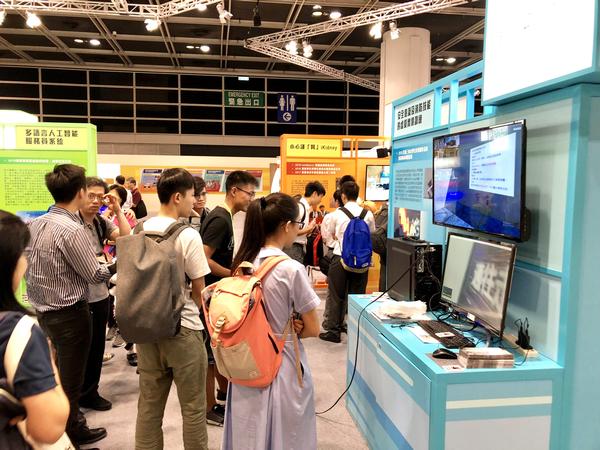
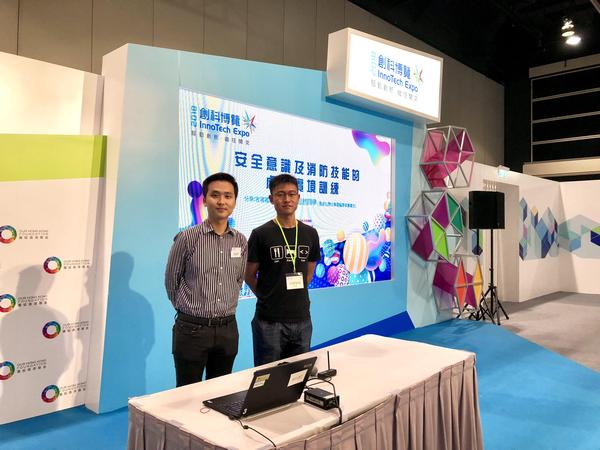
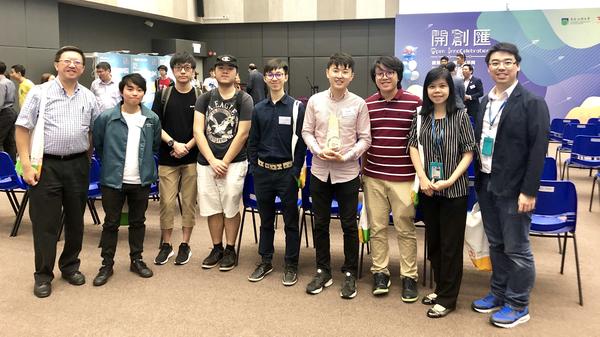
MUHK Students Showcasing their Innovation at the InnoTech Expo

MUHK InnoAward 2019

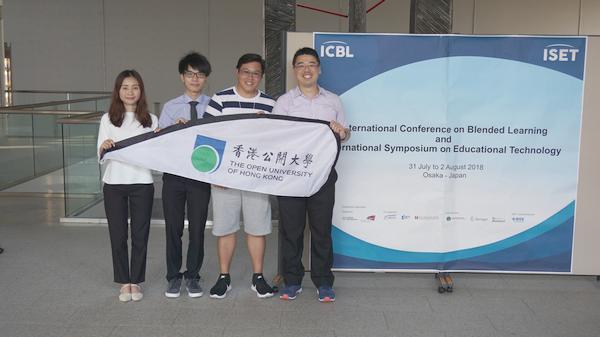
Students presenting their research work at a conference

Programme Structure

The 4-year programme consists of a balanced set of subject-area courses, language courses, general education courses and University core values courses.

Core Courses: Provide fundamental training in some of the major pillars in modern computing: processing of information, networking of information, and management of information.

Include programming, software development, software engineering, computing infrastructure, and databases.

Code Title Credits
COMP 1080SEF Introduction to Computer Programming 3

This is intended to be a first course in computer programming. In this course, students will study how to write computer programs in the Python language to solve simple computing problems.

Students will use fundamental programming and data containers to ease programming effort and to allow writing larger programs to solve problems. Topics include variables, operators, control structures, arrays and strings.


Code Title Credits
IT 1020SEF Computing Fundamentals 3

The aim of this course is to introduce a number of basic concepts concerning computing and information technology.

This course takes students to a data-centric point of view of computer systems: how computer processes data to produce useful information, how meanings are represented with data symbols, and how real world data is captured into digital form.

The course also explains how different parts of a computer can work together so that it can perform tasks defined by computer programs.


Code Title Credits
IT 1030SEF Introduction to Internet Application Development 3

The aim of this course is to introduce the fundamental skills in web programming for developing internet applications. This course focuses on data processing with small-scale computer programs.

It provides students some ideas about data input and output, data operations, and features and structures of computer programs.

Students will also gain experience of the stages in software development, and especially software testing and debugging.

The course also gives an overview of human-computer interaction and security issues of internet application development.


Code Title Credits
MATH 1410SEF Algebra and Calculus 3

This course teaches fundamental concepts in calculus and linear algebra. The course aims to provide a transition between school and university mathematics. The course also aims to develop in students understanding the concepts and techniques of differentiation, integration, vectors and matrix operations.


Code Title Credits
STAT 1510SEF Probability & Distributions 3

This course is intended to provide conceptual understandings of Probability & Distributions. Probability & Distributions has wide applications to diverse areas in statistics.


Core Courses: Provide intermediate training in some of the major pillars in modern computing: processing of information, networking of information, and management of information.

Include programming, software development, software engineering, computing infrastructure, and databases.

Code Title Credits
COMP 2020SEF Java Programming Fundamentals 3

Java is one of the most popular languages in the IT professional world. The aim of this course is to provide students with sound foundation in software development using the object-oriented programming language Java.

The course will cover fundamental object-oriented programming concepts such as classes and objects, and the structure of text-based Java applications.

Students will study how to analyze problems and apply object-oriented methodology in software development.


Code Title Credits
COMP 2030SEF Intermediate Java Programming and User Interface Design 3

This course aims to provide students with more knowledge in Java programming as well as an introduction to user interface design. Students will study how to design computer user interface, and develop graphical-based computer programs using the Java programming language.

Students will also study how to analyse more difficult problems and apply object-oriented methodology in development.


Code Title Credits
COMP 2090SEF Data Structures, Algorithms, and Problem Solving 3

As a sequel to COMP 1080SEF, the aim of this course is to facilitate students to acquire skills for writing larger programs effectively.

Students will study how program structures, software development process, data structures, and algorithms can be used to deal with larger programming tasks. Topics include modular programming, abstract data types, searching and sorting, recursion, and data structures such as linked lists, binary trees, and hash-tables.


Code Title Credits
COMP 2640SEF Discrete Mathematics 3

The aim of this course is to lay the foundation of discrete mathematics of students which will be used in studying other more advanced programming courses.

Students will study the concepts of discrete mathematics, using different techniques for analysing and solving discrete mathematical problems. Topics include sets, functions, equivalence and induction.


Code Title Credits
COMP 2650SEF Design and Analysis of Algorithms 3

The aim of this course is to introduce the algorithms in various domains, and techniques for designing efficient algorithms.

It trains student the ability to analyze the time and space complexity and correctness of algorithms and skills to design solutions to problems. Topics include regular and context-free languages and finite and pushdown automata, and the Turing machine.


Code Title Credits
COMP 2660SEF Computer Architecture 3

The aim of this course is to equip students with the fundamentals of the design of computer systems and their major components.

The course begins with a discussion of how to represent data in computer systems and then moves onto the design of a simple programmable computer system. Techniques for improving various aspects of computer system performance will be discussed in the second half of the course.

Major topics include data representation, computer system design, instruction execution model, memory, input/output system, pipelining, and instruction set design.


Provide advanced training in some of the major pillars in modern computing: processing of information, networking of information, and management of information. Also, expose students to specialized topics related to Internet Technology.

Include programming, software development, software engineering, computing infrastructure, and databases.

Code Title Credits
COMP 2670SEF Operating Systems 3

The aim of this course is to equip students with knowledge about the design of operating systems for the management of system resources.

Students will be allowed to study various methods and algorithms for effectively managing major computing resource types including processors, main memory, and input output devices. Major topics include structure of operating systems, process management, concurrency, synchronization and deadlock, memory management, and input/output management.

Code Title Credits
COMP 4210SEF Advanced Database and Data Warehousing 3

As a sequel to COMP 3200SEF, this course aims to provide students with more advanced concepts of relational databases and more practical experience in different situations.

Students will study more advanced concepts and theories about relational databases. Major topics include Entity-Relation model, normalization, transaction management, and other advanced topics.

Advisory Pre-requisites: Students should have completed most foundation and middle level computing courses.


Code Title Credits
COMP 4330SEF Advanced Programming and AI Algorithm 3

This course aims to introduce basic concepts and algorithms of artificial intelligence (AI) and to facilitate students to develop advanced programming skills to tackle sophisticated problems, especially using AI algorithms and techniques.

Students will be able to explain the capabilities, strengths and limitations of various AI techniques, as well as AI algorithms and their applications. Students also learn how to apply AI algorithms and programming methods to solve real world problems, and write programs to implement the devised algorithmic solutions.

Code Title Credits
COMP 4620SEF Concurrent and Networks Programming 3

This course develops in students' ability to write programs that can run on computer networks. Students will improve their productivity as network programmers by learning programming frameworks and advanced programming language features.

The topics may include basic networking concepts, multi-threaded programming, web services, regular expressions, recursion, Lambda expression, map/reduce paradigm, aspect-oriented programming, message queues, etc.
Advisory Pre-requisites: Students should have completed most foundation, middle and higher level computing courses.

Code Title Credits
COMP 4630SEF Distributed Systems and Parallel Computing 3

The aim of this course is to develop in students' knowledge and skills in the development of distributed systems and parallel programs. It covers major parallel programming approaches and describes how to model parallel programs with various tools. It also takes students through case studies such as web services and Hadoop.

The topics may include distributed systems concepts, Erlang programming language and its Open Telecom Platform (OTP), hot code swapping, Hadoop and MapReduce, unconventional DB, Petri nets, clock synchronization, global state detection and election algorithms.
Pre-requisites: Students are expected to have completed three semester courses or more using any programming languages. Students are recommended to have taken COMP 4620SEF (Concurrent and Network Programming) though motivated individuals without 4620SEF will still be able to handle this course.

Code Title Credits
COMP 4820SEF Data Mining and Analytics 3

This course introduces the key concepts, techniques and tools that would allow hidden patterns of data to be uncovered. Key topics of this course include: data warehousing, the data mining process, classification, regression, clustering and association mining.

Students will learn how to apply this knowledge to solving typical data mining problems through case studies of real-world applications of data mining techniques. The topics may include data mining and data warehousing concepts, data mining process and software, classification and regression methods, clustering algorithms, and association rule mining.
Advisory Pre-requisites: Students should have completed most foundation, middle and higher level computing courses.

Code Title Credits
COMP 4900SEF Creative Programming for Games 3

This course aims to develop the students' capabilities in applying programming skills to develop serious games and creative applications. The course consists of three parts.

The first part will teach students how to generate interactive and algorithmic graphics using a game engine. The second part discusses various theories and issues in designing a serious game. The third part introduces various technologies and techniques for enhancing the user experience, which includes using sensors to orient a device in physical space and to interact with game objects. The course will enable students to design and develop serious games and creative applications with an appropriate integration of programming skills and techniques.

Code Title Credits
COMP 4930SEF Deep Learning 3

This course aims to develop the students’ capabilities in Deep Learning.


Code Title Credits
ELEC 3050SEF Computer Networking 3

This course aims to introduce the concepts and fundamental design principles of modern computer networking in a top-down approach, focusing on the Internet's architecture and protocols. The lecture begins at the application layer and working its way down toward the data link layer of the computer network reference model.

The topics may include delay and loss in packet switched networks, protocol layered architecture, application layer HTTP, transport layer TCP, UDP, network layer routing, addressing, link layer switching, multiple access protocols, MAC addresses and Ethernet.
Advisory Pre-requisites: Students should have completed most foundation, middle and higher level computing courses.

Code Title Credits
ELEC 3470SEF Multimedia Technologies 3

This course aims to introduce the concepts of Multimedia Technologies.


Code Title Credits
ELEC 4310SEF Blockchain Technologies 3

This course introduces the concepts and applications of blockchain technologies, explains their potential impacts on different industries, and explores the latest techniques of permissionless and permissioned blockchains. Students will learn practical development skills in the two popular blockchain platforms (Ethereum and Hyperledger fabric) to understand blockchain programming and application development.

Code Title Credits
ELEC 4480SEF IOT Security 3

This course aims to introduce students to the concepts of discovering vulnerability, risk assessments, researching in and recommending risk mitigation strategies for common security threats in Internet of Things (IoT) systems. Students will be able to use industry-standard models to explain security requirements in IoT systems, and IoT security risks in an industry sector.

Students will also learn to evaluate physical device / communication / application security vulnerabilities in IoT systems, and design threat mitigation measures based on threat modeling and risk management frameworks. Topics include IoT Security Challenges, IoT systems and architectures, IoT Device Layer Attack, Communication Layer Attack, Application Layer Attack, vulnerability and risk assessment in an IoT System.
Code Title Credits
ELEC 4710SEF Digital Forensics 3

This course will cover the fundamentals of computer forensics and investigations. Topics include historical and current digital forensics; a systematic approach to computer investigations; digital forensics, email and image file analysis; and guidelines for writing digital forensics reports. Various forensic tools will be used during the laboratory sessions of the course.

Advisory Pre-requisites: Students should have completed most foundation, middle and higher level computing courses and should have a solid knowledge in networking or have completed ELEC 3050SEF.

Code Title Credits
COMP 4950SEF Professional Placement 3

The course aims to provide an opportunity for students to gain first-hand practical experience in the workplace and to develop communication and interpersonal skills through interacting with different stakeholders in the industry.

Project Courses: The final year project courses provide an opportunity to develop in-depth knowledge and high-level thinking process in a research and development project or an advanced software development project.

Code Title Credits
COMP 4560SEF Software System Development Project 6

This is a project course. Students will attempt a final year project which should provide an opportunity to integrate knowledge and skills acquired in the programme of study. Students will normally form a team to handle one project. Performance will be assessed both at the project level and the individual level.

After the course, students should be able to explain the current state of development in the application domain similar to his or her project area, to design, propose, implement and evaluate software system solutions. Students should also be able to collaboratively manage a software system development project and to write effective project reports.

(Tentative) Mandatory Pre-requisites: Please be mindful that students must (1) pass at least 12 credits of COMP 3120SEF, COMP 3130SEF, COMP 3200SEF, COMP 3500SEF, COMP 3800SEF and/or COMP 3810SEF, and (2) have completed at least 63 credits for Year 1 entry, 42 credits for Year 2 entry and 18 credits for Year 3 entry students respectively.

Other Activities: In addition to the development of technical knowledge and skills, students are expected to develop their soft skills such as teamwork and communication.

Students are needed to participate in the English enhancement courses.

Code Title Credits
ENGL 1101AEF University English: Reading and Writing 3
ENGL 1202EEF University English: Listening and Speaking 3

Other Activities: In addition to the development of technical knowledge and skills, students are expected to develop their soft skills such as teamwork and communication.

Students are encouraged to participate in various contests, seminars, and workshops for sharpening their competitiveness.

Code Title Credits
GE I GENERAL EDUCATION COURSE I 3
GE II GENERAL EDUCATION COURSE II 3

Other Activities: In addition to the development of technical knowledge and skills, students are expected to develop their soft skills such as teamwork and communication.

Students are needed to participate in University Core courses to study the concepts of core values of the University by online learning.

Code Title Credits
Social Responsibilities 1
University Core Values 2
The Effective Communication & Teamwork 3
Entrepreneurial Mindset & Leadership for Sustainability 3

Study Plan

  • Year 1 Entry

Students admitted to the programme through Year-1 Entry are required to successfully complete at least 120 credit-units of which at least 24 credit-units should be taken at 3000-level and another 24 credit-units at 4000-level.

Categories Weightings
Core Courses 69 Credits
Elective Courses 24 Credits
Project Courses 6 Credits
English Enhancement Courses 6 Credits
General Education Courses 6 Credits
University Core Courses 9 Credits
Total 120 Credits
  • Year 1
  • Year 2
  • Year 3
  • Year 4
Code Title Category Credits
Autumn Term COMP 1080SEF Introduction to Computer Programming Core 3
iT 1020SEF Computing Fundamentals Core 3
MATH 1410SEF Algebra and Calculus Core 3
General Education Course GE 3
English Enhancement Course ENG 3
Spring Term COMP 2090SEF Data Structures, Algorithms & Problem Solving Core 3
IT 1030SEF Introduction to Internet Application Development Core 3
STAT 1510SEF Probability & Distributions Core 3
General Education Course GE 3
English Enhancement Course ENG 3
Code Title Category Credits
Autumn Term COMP 2020SEF Java Programming Fundamentals Core 3
COMP 2660SEF Computer Architecture Core 3
COMP 2640SEF Discrete Mathematics Core 3
MATH 2150SEF Linear Algebra Core 3
Spring Term COMP 2030SEF Intermediate Java Programming & User Interface Design Core 3
COMP 2650SEF Design and Analysis of Algorithms Core 3
COMP 2670SEF Operating Systems Core 3
STAT 2610SEF Data Analytics with Applications Core 3
IT 2900SEF Human Computer Interaction & User Experience Design Core 3
Code Title Category Credits
Autumn Term COMP 3500SEF Software Engineering Core 3
COMP 3120SEF Java Application Development Core 3
COMP 3810SEF Server-Side Technologies and Cloud Computing Core 3
COMP 3200SEF Database Management Core 3
Social Responsibilities University Core 1
University Core Values University Core 2
The Effective Communication & Teamwork University Core 3
Spring Term COMP 3510SEF Software Project Management Core 3
COMP 3130SEF Mobile Application Programming Core 3
COMP 3800SEF Web Applications: Design and Development Core 3
COMP 3920SEF Machine Learning Core 3
Entrepreneurial Mindset & Leadership for Sustainability University Core 3
(Optional): Student who has completed COMP 4950SEF (Professional Placement) in Year-3 Summer Term may take one less elective course in Year-4 study.
Summer Term COMP 4950SEF Professional Placement Elective 3
Code Title Category Credits
Autumn Term COMP 4560SEF Software System Development Project Project 6
Elective Course Elective 3
Spring Term COMP 4560SEF Software System Development Project Project -
Elective Course Elective 3
The programme requirements & the courses on offer are subject to amendment

Subsidy

JUPAS Entry

This SSSDP programme normally admits students through JUPAS.

Please refer to SSSDP's website for eligibility and more information.

Admission

This programme provides multiple entry points: Year 1 Entry through JUPAS or Direct Application and Senior Year Entry through Direct Application at the HKMU website.

Entry Points Application Methods Code
Year 1 Entry JUPAS / Direct Application # JSSU72 / BSCHCSJ1 #
Senior Year Entry Direct Application BSCHCSJS for Year 2 and 3 Entry

#Students who are not sitting the HKDSE this year and have an equivalent qualification such as IB or GCE-A Level should apply through [Direct Application].

Admission Requirements

JUPAS Admission

Please refer to JUPAS website for more JUPAS admission information

Tuition Fee *

The amount of subsidy for the JSSU72 programme under the SSSDP is HK$44,950 per annum.

Tuition Fee after subsidy:

SSSDP
Each Year HK$34,610*
Total (4-Years) HK$138,440*

*Please refer to the JUPAS page for updates and details.

*The estimated tuition fees listed above are for reference only. Tuition fees are charged according to the number of course credits taken by a student.

*The subsidy is tenable for the normal duration of the study programme concerned and is subject to the students' satisfactory fulfilment for progression in the study programme. The government's terms and conditions apply.

Please refer to the program's website for below or more information

  • Application Procedures
  • Online Application
  • Tuition Fees, Scholarships and Financial Assistance