New Campus Development - Community

New Campus Development - Community

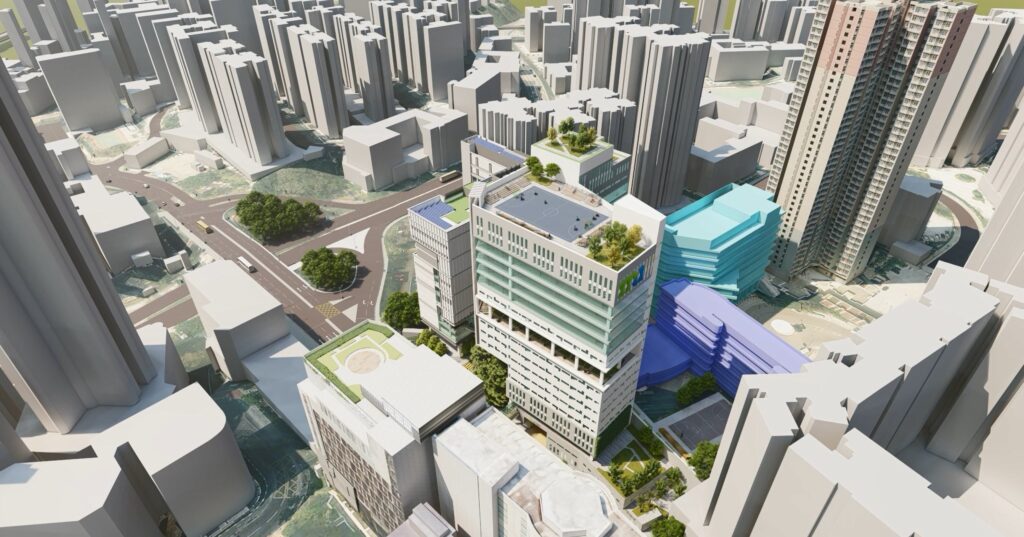
HKMU's Proposed New Campus

A Hub for Community Health and Wellness

Community

Engagement and Consultation

HKMU appreciates the community's feedback on the new campus development project for meeting the community need. We will proactively communicate and collect feedback from different stakeholders and provide updates on the latest works and development.

Since 2022, the University began to arrange face-to-face consultation sessions with nearby community (including NGOs, schools, and residential committees etc.) to introduce the new campus development and collect feedback from the public.  A meeting was arranged with Kowloon City District Council Social Services Committee to introduce the development planning on June 2022. A roadshow was also established at Homantin Plaza from 30 Aug 2023 to 8 Sept 2023 to play the fly-through animation and distribute leaflets to passers-by. Questionnaire has been distributed in the Ho Man Tin Plaza at the same period and we have received over 100 numbers of supportive replies from the Homantin community.

In the early 2023, we have communicated and consulted a number of the local organizations (*) and received positive feedbacks regarding our proposed new campus.

Remark:

 (*) Some of the consulted organizations were: Auxiliary Medical Service, Hong Kong Football Association, Martha Boss Lutheran Community Centre, Pui Ching Middle School, Pui Ching Primary School, Hoi Ping Chamber of Commerce Secondary School, St. Teresa Secondary School, Chan Sui Ki (La Salle) Primary School, Yu Chun Keung Memorial College, Lock Tao Nursing Home, SKH Tsoi Kung Po Secondary School, Ellery Terrace Owners Corporation, Chun Man Court Owner Corporation, Ho Man Tin Estate Mutual Aid Committee, Oi Man Estate Mutual Aid Committee, One Homantin Owner Corporation, Cacades Owner Corporation.

FAQ

Positioned as the Hong Kong Metropolitan University (HKMU) “Hub for Community Health and Wellness (HCHW)”, the new campus will serve as a vital platform for HKMU to promote community health education and services, bringing multiple positive impacts to Hong Kong society and the neighbourhood, including the following:

• Upgrading teaching facilities and nurturing high-calibre talent to support the long-term development of society and education.
• Strengthening the training of healthcare professionals to respond to an ageing population and rising demand for healthcare services.
• Organising educational programmes and activities to promote community health and wellness, thereby helping to develop the HCHW.
• Constructing a convenient network of pedestrian footbridges to reduce pedestrian flow crossing at street level, thereby enhancing road safety.
• Providing diverse facilities to promote the physical and mental health and wellness of students and the community.
• Conserving valuable trees within the development site and planting new trees to enhance greenery in the area.

Two of the pedestrian footbridges at the new complex will be open to the public: one across Fat Kwong Street to connect the new complex with the Main Campus, and the other across Sheung Shing Street to link the new complex with the Jockey Club Institute of Healthcare. Each footbridge will be equipped with barrier-free lift access on both sides. Upon completion, students, faculty and nearby residents will be able to safely cross Fat Kwong Street and Sheung Shing Street via the elevated walkways, easing pedestrian flow at street level, providing a more convenient walkway for the community and improving road safety.

Some facilities in the new complex will also be open to the public, such as restaurants, the integrated health centre and other community facilities, fostering engagement and interaction with the community.

With the continuous increase in the number of full-time students at HKMU, the existing campus space and facilities may not fully meet the demand for quality teaching and learning. To respond to teaching needs and align with our long-term development, the University obtained approval from the Town Planning Board to develop a new academic complex on the abandoned slope site at the junction of Sheung Shing Street and Fat Kwong Street.

The new complex will provide additional space and state-of-the-art facilities to support the University's vision of providing quality education, while contributing to the long-term development of education and the community.

Adjacent to the HKMU Jockey Club Institute of Healthcare, which trains healthcare professionals, such as nurses and physiotherapists, the new campus will serve as a vital platform for HKMU's education in physical and mental health. Teaching and research activities in the complex will span multiple disciplines, ranging from physical health to behavioural health and community wellness. It will house a wide range of state-of-the-art facilities, including an integrated health centre and an interdisciplinary research centre, to support teaching, research, and the promotion of health and wellness in the community.

The new campus design has adopted community- and eco-friendly concepts, and is equipped with various lifestyle facilities, such as dining areas and a podium garden, and activity spaces. These features are intended to enhance the community environment and strengthen engagement and interaction with the community.


The new campus will be equipped with a wide range of teaching and activity facilities, including an auditorium, an interdisciplinary research centre, an integrated health centre, lecture theatres, classrooms, a library and exhibition areas. It will also feature outdoor learning spaces to foster an interactive and innovative learning experience. Near the top floor of the complex, a roof garden and a multi-purpose hall will be built, providing better venues for sports and recreational activities for students and staff.

The new campus will enhance energy efficiency and resource utilisation through various eco-friendly design measures, including installing solar panels to provide renewable energy, setting up a rainwater recycling system to optimise water use, and introducing green walls and landscape features to create a comfortable green environment. Both the design and construction processes of the complex will emphasise energy saving, water conservation and carbon reduction to support sustainable development.

The construction works have been carefully planned. The contractor will be required to strictly comply with environmental and safety regulations to reduce noise, dust and waste emissions, including the use of noise barriers, quieter, high-efficiency equipment and dust suppression measures, such as regular water spraying and ensuring that all vehicles transporting materials have their loads properly covered. Additionally, site personnel will conduct regular inspections of mechanical equipment to prevent improper emissions and ensure compliance with environmental requirements. The contractor will also properly manage and regularly remove construction waste from the site to maintain a clean and hygienic environment in the surrounding area.

General construction hours are from Monday to Saturday, 8:00 am to 6:00 pm (excluding public holidays).

To minimise the impact on Ho Man Tin residents and others, the University has coordinated with the contractor to arrange for construction vehicles to queue at and access the site via nearby lower-traffic roads, such as Sheung Foo Street. Traffic marshals will be stationed at the site entrances and exits to help manage vehicle movement, maintain smooth traffic flow and ensure pedestrian safety.

The University and the contractor have carefully planned the construction arrangements and will demarcate temporary pedestrian walkways around the site to ensure pedestrian safety and minimise any impact on the public.

The contractor has installed survey monitoring points near the site in accordance with the approved plans. During the construction period, the contractor will conduct daily monitoring and assessment of any impact on the surrounding public facilities and buildings. All monitoring data will be regularly submitted to the Authorised Person, the Registered Structural Engineer and the Buildings Department for supervision and assessment, ensuring the works comply with relevant standards and regulations to ensure safety.

The University fully understands the importance of preserving the natural ecology. During the initial planning stage, professional assessments were conducted to preserve the large, mature banyan tree on the slope in situ and to integrate it into the landscape design of the new complex. The University will also plant additional greenery and install green walls on the new campus to optimise the green environment of both the campus and the surrounding community.

The University attaches great importance to communication with the community. If you have any questions or feedback about the construction, please feel free to contact the site office:

Mr Chau (Senior Site Agent)

The University highly values and welcomes feedback from all sectors on the new campus development. You may share your views and suggestions with us through the following channels:

As a self-financing institution without recurrent government funding, HKMU relies on tuition fee income to cover daily operational expenses and depends on the generous support of the community to drive its continuous and steady development. Every dollar you donate is of great significance to HKMU. It helps upgrade our teaching facilities, support our mission of providing quality education, and nurture a new generation of high-calibre talent for the long-term development of Hong Kong.

To make a donation, please complete the online form: https://hkmu.powerappsportals.com/en-US/Online-Donation-Form/

For more information, please feel free to contact the Development and Alumni Affairs Office: