It has been a year of celebration and a year of crisis management, a year of looking back and a year of looking forward. Throughout, the big picture has remained the same — one that shows the OUHK as a fully engaged, forward-looking university with a proud history, ready and able to cope with change and to drive it too.
Stepping into a fourth decade
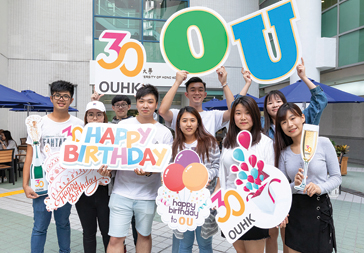
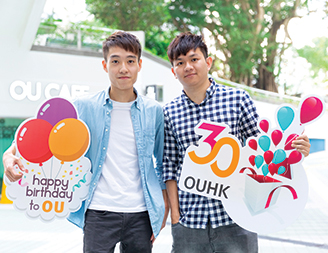
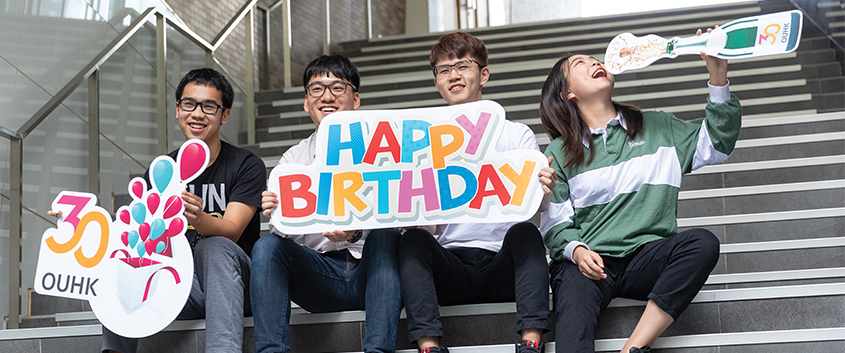
The first half of this reporting year (April 2019 – August 2020) coincided with a milestone in the OUHK’s lifespan— the University’s 30th anniversary. Three decades of service, growth and transformation certainly called for celebrations! To reflect the University’s diversity, a celebration programme was developed that embraced as many stakeholders as possible, including current and former staff, students and alumni, donors and supporters, partners and friends, government and institutional backers, as well as representatives from the wider community served by the OUHK. Scattered throughout the year, the anniversary celebrations not only celebrated the University’s many successes but also showcased its strengths across the board, through academic talks and conferences, exhibitions, performances, sports events and much more. Further details about the celebrations and some of the highlight events can be found in Chapter 2.

Long strides forward
Stunning new infrastructure on the verge of completion
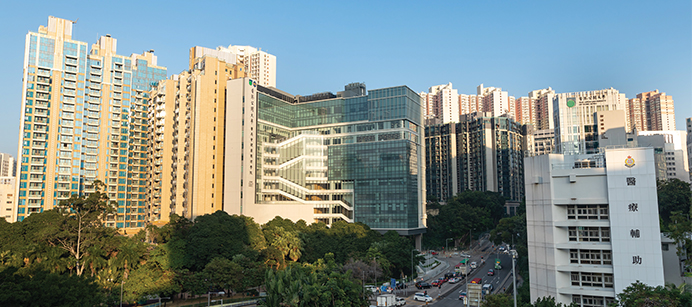
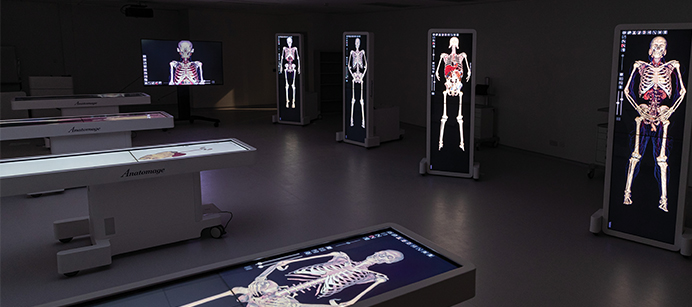
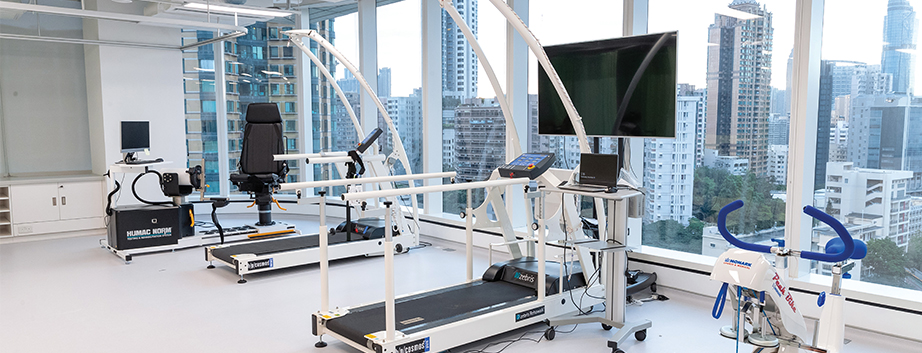
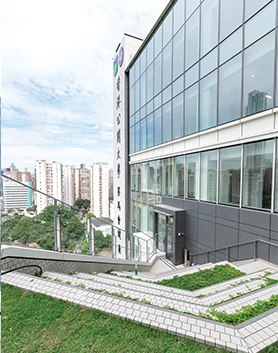
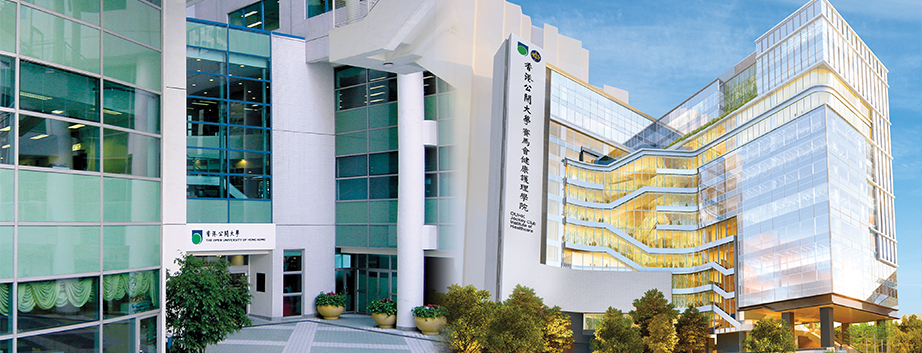
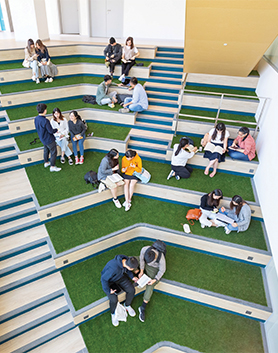
Work on the University’s fine new Jockey Club Institute of Healthcare (IOH) proceeded according to schedule in the year, and by the end of the reporting year the building was complete and on track for use in late 2020. There is a real buzz developing around its opening, when finally the OUHK will have the space and facilities it deserves to support its rapidly growing health programmes. For example, the new IOH laboratories will be equipped with the latest advanced technologies, including a digital dissection system, Virtual Reality and simulation facilities, and computerized motion measurement sensors. The IOH has enabled the University to set up a new physiotherapy programme. Launching in 2020/21, the programme will provide suitably qualified applicants with a generous entrance scholarship, and be supported by state-of-the-art facilities. But the new IOH building is not just about healthcare. Its spacious, well-designed structure will also deliver many benefits for the wider student population, including exceptional collaborative learning, sports, recreation and leisure facilities.
A new name to reflect a new profile
After decades of growth and transformation, the OUHK looks very different from what it was when it began 30 years ago as an open access distance learning institute. Today, it has over 10,000 full-time students, six schools, three campuses and two learning centres, and awards a wide range of higher degrees. Despite this transformation, the OUHK name has constrained its public image due to its associations with open access, part-time and distance learning. To better reflect the reality of the University today and to communicate its current mission and strategic focuses, the OUHK has been exploring options of retitling over the past year through a series of consultations with stakeholders. Strong positive support has emerged for a name change, and the University has now established a Selection Committee on University Title which is in the process of name development. In late August 2020, an invitation was extended to all OUHK members and the public to submit title nominations. The outcome will be a brand new name for the University in line with its commitment to advancing learning, knowledge, and research, and to offering innovative, practical and professional programmes that meet the changing needs of Hong Kong.
Planting a shoot in the Greater Bay Area
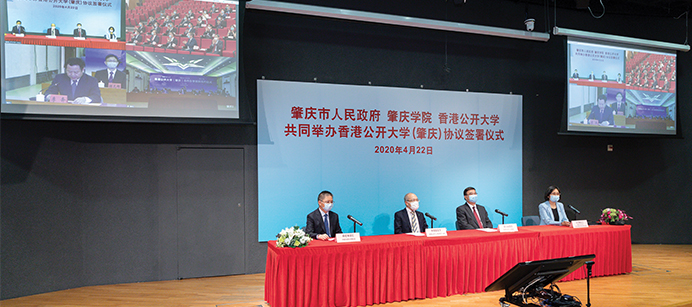
On 22 April 2020, the OUHK signed a milestone agreement with the Zhaoqing Municipal Government and Zhaoqing University in Guangdong Province. The agreement involves setting up a new OUHK branch in the city on a sprawling 1.67 million square metre site. Like its Hong Kong counterpart, the OUHK (Zhaoqing) will be positioned as a full-fledged teaching and research university, and will share the OUHK’s educational philosophy and high quality teaching and management systems. The new university is an exciting prospect especially because of the number of potential benefits it will deliver. For Zhaoqing, it will bring a major new English-language university with a range of practical and socially beneficial programmes for up to 10,000 students eventually. For the OUHK, the entire construction cost will be covered by the Zhaoqing Government, leaving the University free to focus on ensuring that the new university’s academic quality and research levels are on a par with its Hong Kong counterpart. And for Hong Kong and the mainland, the new university will play a meaningful role in spearheading the development of higher education in the Greater Bay Area and fostering the exchange of talent. Application for the joint project has been submitted to the Ministry of Education and is pending its approval.
Taking up the reins for growth
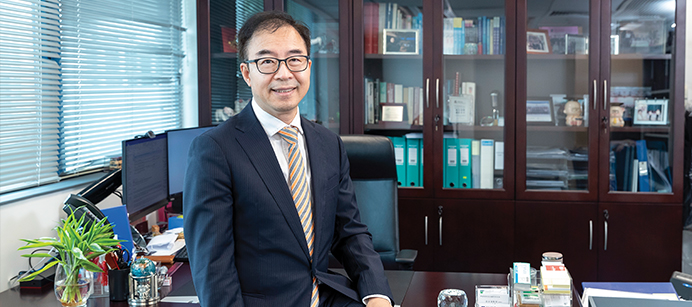
With a number of ambitious projects in the pipeline, the University has been looking for a leader capable of overseeing a wide range of areas including finance and facilities management, human resources, mainland and international affairs, and public affairs. In March 2020, veteran Prof. Lui Yu-hon took on the challenge. Prof. Lui has a long history in leading initiatives as Director of OUHK LiPACE, and as President of Tung Wah College in the last few years. Now he has returned to take up the position of Vice President (Resources and Development). The job has not only plunged him into early planning for the OUHK (Zhaoqing), but has also required him to oversee the University’s resources including the reorganization of space in readiness for the opening of the new Jockey Club Institute of Healthcare. Prof. Lui is gearing up to play an influential role in shaping the OUHK’s future.
Cushioning the ride for staff and students
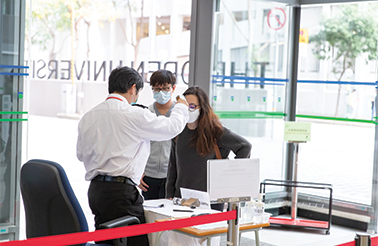
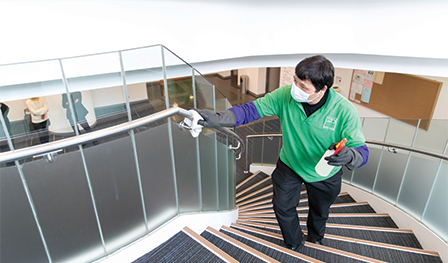
Alongside its teaching and research efforts, the OUHK has needed to respond to some major disruptions to Hong Kong life during the year. First social unrest in 2019 and then, more drastically, the arrival of COVID-19 in 2020, called forth a swift multi-faceted response from management to protect and safeguard students, staff and property. In total, the University allocated around HK$27 million to address health, safety and well-being concerns arising from these challenges.
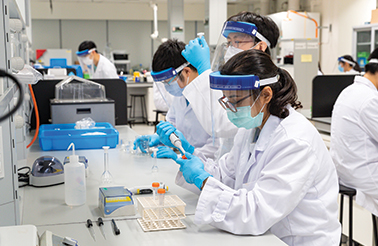
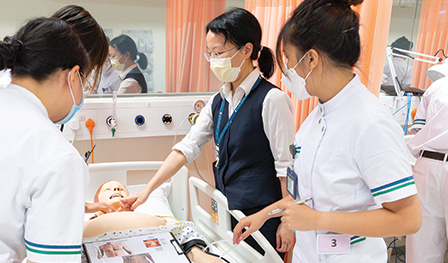
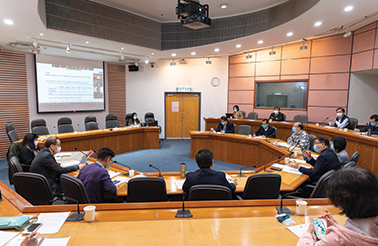
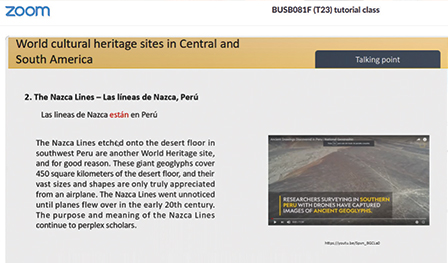
In January 2020, shortly after coronavirus cases were first detected in China, the University set up a Committee Against Novel Coronavirus chaired by President Prof. Yuk-Shan Wong to coordinate efforts to combat the epidemic at a university level. Immediately, cleaning and disinfection were stepped up, campus access controls were imposed, lessons were moved online and special work arrangements were implemented. To ensure a smooth transition to remote learning across the University, a full-scale hardware and software upgrade was undertaken that involved large-scale investment in Zoom plans and licenses, remote access tools such as VPN and VDI software, devices like tablets and webcams, together with extra bandwidth and faster networks. The University’s experience of remote learning helped it continue its teaching and learning activities with minimal disruption. Alongside its online classes, and according to the ebbs and flows of the pandemic, the University also introduced adaptive initiatives such as simulated clinical practice, small group in-person classes, mixed mode tutorial classes and laboratory work. Other measures introduced to directly benefit students, including a one-off HK$20 million special relief fund, a Special Student Enhancement Scheme linking a cash subsidy with a self-enhancement programme, expanded bursaries and multiple career support programmes, are detailed in Chapter 4. The University’s efforts to stay closely connected with the wider community during the pandemic months are expanded upon in Chapter 6.