






Exploring the Nexus of Education, Technology and Equity

Office of Research Affairs and Knowledge Transfer Impact Cases Exploring the Nexus of Education, Technology and Equity

Exploring the Nexus of Education, Technology and Equity

Key points

  • Early childhood education in Hong Kong has undergone many reforms over the past two decades, most recently with new requirements for both national education and digital literacy in the classroom.
  • Gaps persist between policy intentions and real-world outcomes for educators and parents alike, and there are challenges to ensuring equity, especially for minority ethnic group children.
  • Digital pedagogy tools, including those based on artificial intelligence, have an important role to play in early childhood education and play, but require investment in training and resources, as well as structured guidance and frameworks for responsible engagement.

Researcher

School

School of Education and Languages

Hong Kong's kindergarten-related statistics reveal an interesting fact about the city: enrolment is over 100%. That means that some children are attending not one but two kindergartens, going to one in the morning and another in the afternoon. Any Hong Kong parent will be able to explain this local anomaly: the choice of pre-school education can have a significant impact on the child's future journey through the city's intensely competitive schooling system.

With education so highly valued in Hong Kong society, the kindergarten sector is a fascinating setting for research. In turn, research findings can have real world impact, and inform education policy and educational practices to improve this foundational stage of a child's learning journey.

The next generation of early childhood educators

Jessie Wong Ming Sin, assistant professor of education at the School of Education and Languages, Hong Kong Metropolitan University (HKMU) has been looking at early years education in Hong Kong from many angles, and her research offers practical insights for how it can be improved, and better adapt to societal changes. Her impactful research recently led her to become the first and only academic in her School's history to win the University's Outstanding Research Publication Award (Gold Prize), a standard of excellence she sustained with a Bronze Prize and the international Emerald Literati Award in 2025.

As Programme Leader for Early Childhood Education (Distance Learning), Wong oversees a diverse range of programmes and encounters students at all levels, from sub-degree to postgraduate, enrolled as full-time students or through distance learning. This diversity has raised a lot of interesting research questions for Wong: How have multiple government policy reforms directed at the kindergarten sector over the years affected quality? Are kindergarten teachers treated with the respect they deserve for their professional training? How do pre-service and in-service students of early childhood education differ in their attitudes and practices?

Wong is interested in the role that technology plays in pre-school education. For example, she's been looking at how newly trained and existing kindergarten teachers engage with artificial intelligence (AI) and other aspects of digital pedagogy. She's also turned her attention to parents, who have intertwined and at times conflicting attitudes, aspiring for their children to be tech-savvy, yet being deeply concerned about the effects of digital technology on their children's education and development. The salience of her research is reflected in the more than HK$3 million in grant support she has been awarded, including through the highly competitive Hong Kong Research Grant Council Faculty Development Scheme (FDS), as well as from the Equal Opportunities Commission and the Quality Education Fund.

“Right now, I’m combining my longstanding interest in early childhood education with a newer interest in information technology, especially AI, which is playing a big part in the reform of early childhood education around the world,” says Wong.

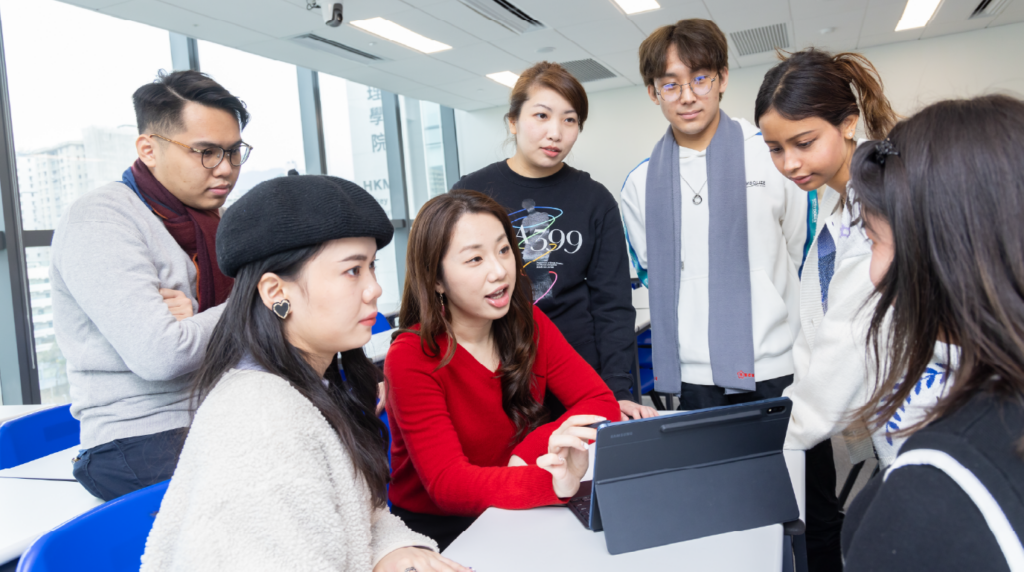
To do this, Wong first started by looking at her own early childhood education students, to see how they are engaging with digital technology in their studies. The disruption to education caused by the COVID-19 pandemic in 2020 created a natural experiment in hybrid education that leaned heavily on technology. Wong investigated how her masters-level early childhood research students responded to the agile-blended learning (ABL) approach implemented during the pandemic. She found that whilst ABL and integration of technology gave students flexibility, convenience and learner autonomy, it detracted from the social and personal interaction that they desired. On balance, Wong is a proponent of ABL though. “To get the best of both worlds, it really comes down to having strong, continuous support from the institution,” she says.

Artificial intelligence is here, for better or worse

When Wong started noticing that her students were using (and misusing) AI, she decided to investigate their use more deeply, to inform how they can be better guided to use AI tools. She fully expected to find that her students were using these tools, but was surprised when the data came in: “half of the students use AI, but they don’t really have the literacy to know how to use it wisely, and the other half don’t use AI at all, which was quite interesting to me,” Wong says. Her research underlined the need for training on how to use AI tools, and how the critically appraise the output of large language models.

Wong was interested to know whether there is also a marked difference between critical AI literacy among HKMU's full-time early childhood education students, who are typically pre-service, and the distance learning students, who are usually already working, for example as kindergarten teachers. “For the in-service kindergarten teachers in Hong Kong, most of them got into the field before the government finally recognized that early child education warranted university-level training,” says Wong. “As a result, their backgrounds are very different to the new generation of early childhood education students, and probably the mindset is going to be different too. When the new students and the existing teachers are all faced with the global wave of AI, I wanted to see how they deal with it, because they have to deal with it sooner or later anyway.”

With grant funding from HKMU's Teaching and Learning Research Fund, study participants from both groups are assigned an education policy analysis to see how well they can critically assess AI writing, whether they can detect fabrications, whether they can do their own research on policy documents. “This critical analysis is something that AI can't do for you, at least for now,” says Wong. “I always felt that kindergarten teachers are not quite keen on using AI technologies, but the surprising thing is that it's also the case for a lot of our early childhood education major full-time students too.”

Professionalism is not enough

As a professor so actively involved in the upgrading and education of Hong Kong's kindergarten teachers, there's a palpable sense of dismay that so many new graduates start their careers in early childhood education, but frequently rotate out of it into something else entirely after only one or two years. Given that government policy towards kindergarten education has focused on increasing the professionalism of teachers, underscoring the importance of early childhood education, Wong wanted to know why teachers leave. From 2019 to 2021 with HK$785,000 in FDS funding, Wong led a research project, The Development of Kindergarten Practitioners’ Professional Identity under the Free Kindergarten Education Policy in Hong Kong.

“We surveyed students from seven teacher education institutions, and most of them perceived that they were professionals. They had all the training they needed. They'd learned all about psychological theories, management, and policy, but they feel that the general public still do not see them as professionals,” Wong says. This was also reflected in the salary scale, which had increased as government policy towards early childhood education changed, but was still well below the pay scale for fresh graduate primary and secondary school teachers.

Continuing this work on the dissonance between education policy and kindergarten teacher's real-world experience, Wong is currently collecting data from students on their perceptions of kindergarten education in Hong Kong is like, and how they assess its quality. “We then compare with the government’s quality reviews written by early childhood education experts, to see if there’s a discrepancy,” she explains. “The government has their own assessment criteria, but for our students, what they focus on may be different, and I want to see how they define good quality.”

Advocating for the rights of the child

Alongside her interests in early childhood education policy, pedagogy, and curriculum management, and educational technology, as a dedicated advocate for children’s rights, Wong is also very much interested in equity, cultural comparisons, and inclusive education.

With grant funding from Hong Kong's Equal Opportunity Commission, Wong looked at the government's efforts to encourage kindergartens to enroll students from minority ethnic backgrounds by offering financial incentives. These incentives could be used for pedagogical and resource support. The aim was to enable minority ethnic group students to start Chinese language learning early, to help them cope with Chinese medium of instruction in primary school.

The study found that the incentives were successful in increasing enrollment of ethnic minority children in Chinese-language kindergartens, and also made recommendations for how this work could be extended and improved. “We found that, of course, money plays a part for them to take the first step, but we also found that after a while, as they got to know the parents, they saw them as partners,” Wong says. “For the kindergartens with more experience in admitting ethnic minority students, regardless of subsidies, they still very much hoped to admit these students. It’s a very encouraging message to send to all our kindergartens and everyone in Hong Kong.”

New demands on kindergartens

Wong has been researching how kindergartens are responding to the government's requirement, introduced in 2022, to include national education into the curriculum. Wong has also investigated the pedagogical challenges faced by preschool teachers as they grappled with the new policy directive. From 2022 to 2024, with a HK$647,000 FDS grant, Wong led a study, Developing a National Identity in Young Children: Values and Practices of Kindergartens, Local Chinese and Non-Chinese Families of Different Backgrounds in Hong Kong. Given that minority ethnic groups account for more than 8% of Hong Kong's population and growing, the call for national identity education is nuanced. “In Hong Kong, we have a lot of international schools, and we have local schools admitting ethnic minority children,” says Wong. “I wanted to see if the schools are really just focusing on Chinese national identity, or national identities in the larger sense, and how they would encourage development of national identity in children, and how to work with parents on this.”

At the nexus of three research interests

More recently, she has been able to combine all three of her core research interests, and work at the nexus of education policy, equity, and educational technology, with a study on the perceptions of parents and educators of national identity, technology, and collaboration in Hong Kong kindergartens. Her research was based on thematic analysis of focus group discussions with parents and educators from four diverse Hong Kong kindergartens. She found that both parents and teachers shared common ground, both espousing the benefits of learning through play, for example. However, their views diverged on who should be responsible for teaching concepts of national identity. They also had mismatched views on managing the emergence of AI in children's learning and play. “Educators are deeply wary of introducing screen-based learning too early, due to pragmatic concerns over inadequate resources, training, and pedagogical suitability, yet parents are increasingly turning to platforms like YouTube to fill gaps,” says Wong.

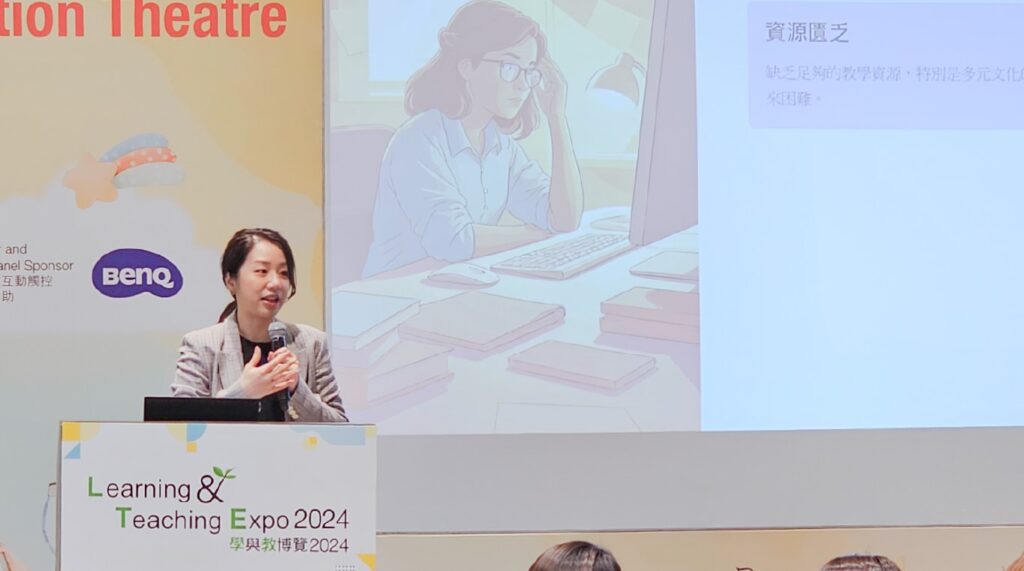
AI continues to increase its presence in the education system, and in wider society, and Wong sees plenty of scope for her research to help inform early childhood education policy and practice, both locally and internationally. She recently wrote a white paper, The Algorithm in the Toybox: Navigating AI, Play, and Culture on how to help parents and educators navigate AI in the playroom while protecting the integrity of play. Wong notes that AI is a powerful new force in the world of play, with potential to offer children personalized, engaging, and educational experiences, but if it lacks careful guidance and critical oversight, these same technologies risk promoting a homogenized global culture, replacing vital human relationships, and compromising a child's fundamental right to privacy.

“This is a conceptual paper, proposing a roadmap combined with classic theories of developmentally appropriate practice in early childhood education, and then a framework to bring in some practical guidelines,” says Wong. The path forward is not to ban these new tools, but to engage with them wisely. As always her focus is on the rights of the child. “We must shift the conversation from what a toy can do to what it ought to do in the service of a child's holistic development,” she says. As Vice President (International Affairs) of the World Organisation for Early Childhood Education – Hong Kong (OMEP-Hong Kong) and a guest editor for leading international journals, Wong continues to drive the strategic growth of her field, ensuring that the integration of technology in early years education remains both equitable and profoundly human.