Eric Chong King Man thinks about citizenship a lot. He questions what it means, examines how it shifts in the face of global and local political change, and seeks to understand how concepts of citizenship make their way into society. Chong's musings on the subject of citizenship are part of a centuries-old intellectual tradition: Greek sage Diogenes in credited with introducing the concept of cosmopolitanism when he declared himself to be “a citizen of the world.” Whilst it's an interest he shares with ancient philosophers, Chong's research into the multiple aspects and levels of citizenship has real-world, modern-day applicability, including how to help teachers in Hong Kong equip their students to be good citizens.
Chong brings to this task a deep understanding of the political context of his native city, thanks to his early academic training in political science, followed by stints as a political researcher, and assistant to a member of Hong Kong's Legislative Council, before entering academia and working on civics and citizenship education since the early 2000s. His PhD research at The University of York investigated identity development and national education in Hong Kong, which in turn led to an interest in how concepts of identity are transmitted through the city's education system and perceived by teachers.
As a scholar, Chong was an Assistant Professor in the Education University of Hong Kong before moving over to Hong Kong Metropolitan University in 2023, where he is associate professor in the School of Education and Languages. “Coming to HKMU expanded my horizons,” Chong says. “This is an applied sciences university, there are science, technology, nursing people and artists and social scientists, as well as my School of Education and Languages, so I have wider connections with people who are dealing with language education and early child education, as well as teacher training.”
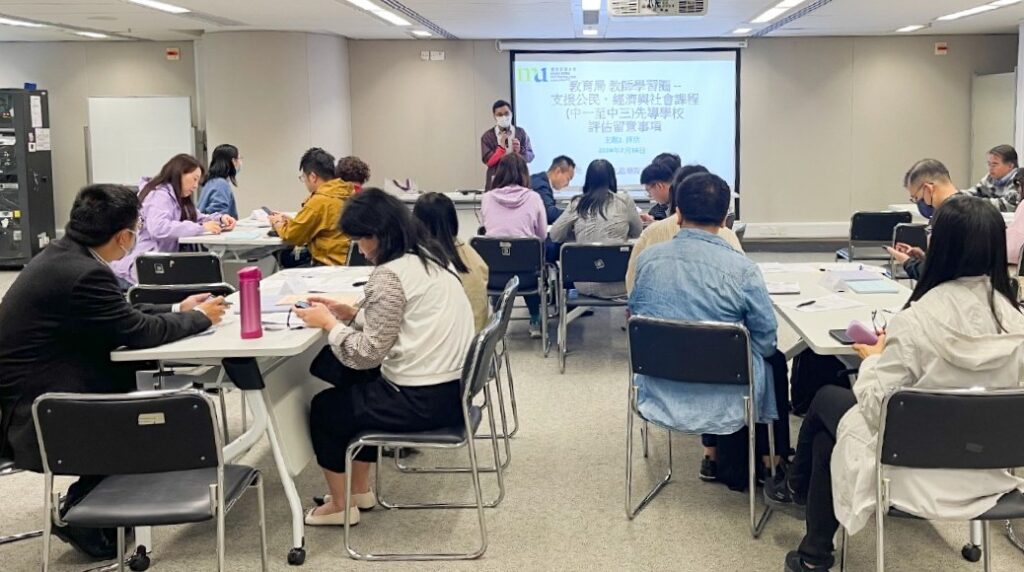
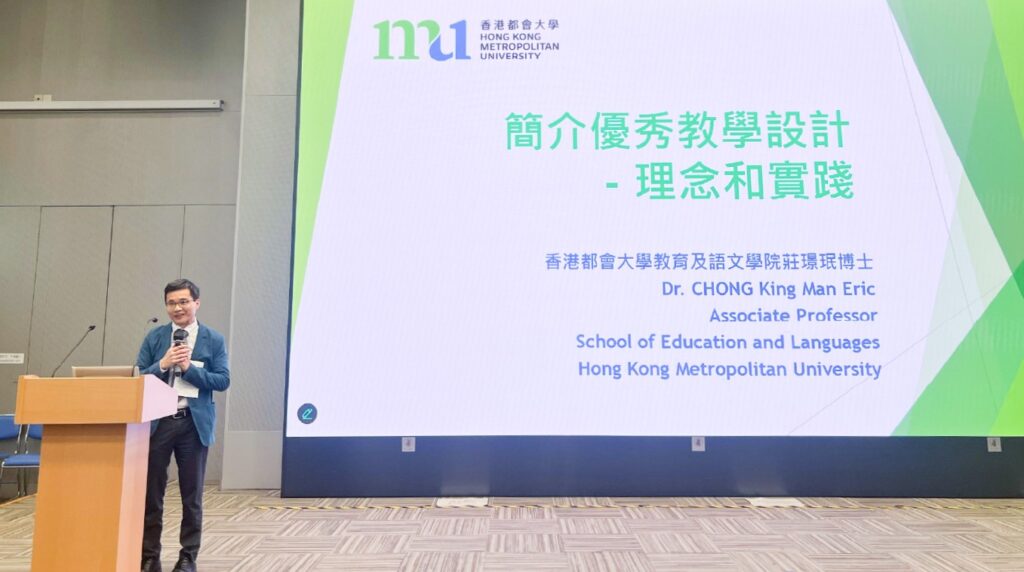
The value of Chong's research has been recognized through institutional grants for research, consultancy, and teaching development projects. He is also regularly invited to present his findings on topics of citizenship education at international conferences. Beyond academia Chong has been commissioned by the Hong Kong SAR government's Education Bureau to conduct teacher training and develop teaching kits on topics related to citizenship education.
Chong's research examines both perceptions and meanings of citizenship. “I want to explore and understand more about people, how they think, so we may come up with some common ground or common perspectives. Some people in Hong Kong will say these are very sensitive topics, but politics should be about spending more time on understanding each other, and more time on discussion and deliberation, sharing our viewpoints and trying to come to a consensus,” he says.
In particular Chong is interested in how teachers in Hong Kong's school system go about teaching citizenship, which has many levels from community, to city, to country and beyond, to global citizenship, which the United Nations defines as “social, political, environmental, and economic actions of globally minded individuals and communities on a worldwide scale”. There is also environmental, corporate and other aspects of citizenship. “When we talk about civic education we are talking about enabling the young people and our future generation of adults to be able to care about and communicate with people who may come from different backgrounds,” Chong says, “so I believe that civics and also citizenship are educating people to participate in a diversified society.”
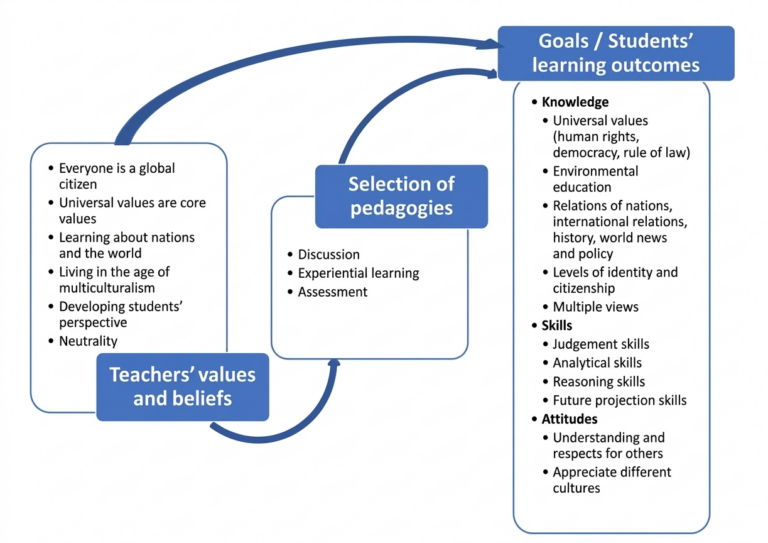
More recently, Chong, together with co-author Eric Cheng Chi-Keung of Yew Chung College of Early Childhood Education, interviewed Hong Kong secondary school teachers to explore their conceptions of citizenship education and learn more about their pedagogy in this area. Their analysis offered unique insights into what, why and how these teachers teach global citizenship. This led to a framework for understanding teachers’ values and teaching beliefs and the cultivation of global citizens (see figure 1). This framework has not just theoretical value but practical applications, as it “can inform school leaders, curriculum planners and teacher trainers in developing a more substantial pedagogical framework for global citizenship education,” Chong and Cheng write.