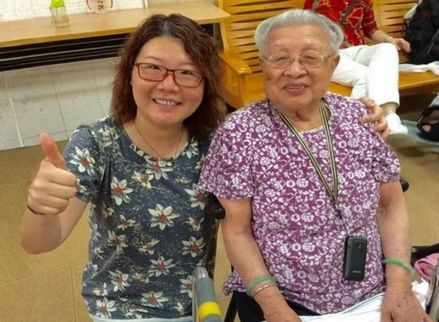
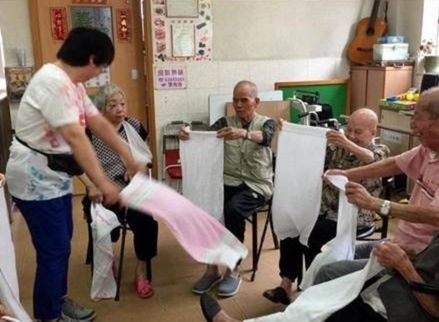
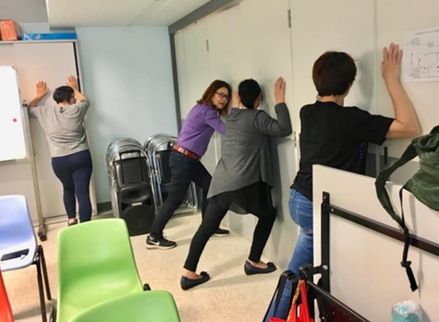
Tse believes that pain management education should also be provided outside clinical settings, to the public in general and to nursing home residents in particular. She led a study training over 100 adults at the lower end of older age, from 50 years and above, to serve as peer volunteers and visit nursing home residents to carry out a 12 week pain management programme. The peer volunteers expressed positive views of their experience of helping nursing home residents, while older adults reported lower pain ratings and improved quality of life.
Tse has turned images of Hong Kong landscapes into a distraction from chronic pain. In the photo-with-movement programme. participants were invited into a sensory experience combining images, and invitations to move, learn and remember. The photographs set the stage for an exercise regimen, and pain education, with follow-up by a messaging app to provide the necessary nudges to maintain the activity. She also designed a gamified web-based pain management programme where older adults played simple online games that taught breathing exercises and self-care strategies, and saw their pain severity and interference drop over just four weeks.
For older adults already suffering from chronic pain, it is the patient-caregiver dyad that needs support, not just the patent alone. In one study, older adults with more severe pain and emotional distress were more likely to let to heavier burden for their caregivers, showing how pain radiates outward into family life rather than remaining with the patient alone.
Tse devised a cluster randomized controlled trial to test out a dyadic pain management program for community-dwelling older adults suffering from chronic pain. “We ran workshops for the caregivers,” she explains, “including pain management by medication and by exercise. But it also focused on communication, because often older adults in pain express it by anger and we gave the carers an opportunity to talk about the emotional burden of dealing with somebody that you love who’s in pain.” The research was done in cooperation with a community centre, was focused on caregivers' needs, and presented in layman's terms. Participants went home with a follow-up plan, and received reminders via a messaging app to do the exercises at home. The study found that caregiver stress was reduced.
Pain is a universal experience, but different segments of the population face it differently. For example, Tse is now working with one of her PhD students on using gamification in pain management education for young adults. The benefits of outdoor exercise, weight training and good posture in preventing back pain are well known, but getting young adults to adopt these habits is challenging. “So, the thinking is, we can use a game, where, for example if you walk in sunshine for 10 minutes you get a token, and will enter the next level of the game, or the key to open the door of a virtual escape room is exercise,” Tse says.
Tse has also conducted research in mainland China, including a review of activities such as Qigong, mindfulness, massage, and exercise. Tse's research suggests that some of the most effective pain care does not fight the body like an enemy; rather, it teaches the body a new language of movement. Survey findings on chronic pain in mainland China that Tse worked on confirmed Tse's instinct that there are important differences in people's experience of pain, according to factors such as sex, income, education, and pain beliefs. People's subjective experience of pain is filtered through culture, work, pride, fear, expectation, and the stories people tell themselves about what pain means.
With rapid advances in technology, for Tse, pain management has come a long way since her days as a nursing student. However, what has not changed is the central focus of her work: what can I do to help make the pain easier to bear?
Contact Mimi Tse Mun Yee: https://scholars.hkmu.edu.hk/en/persons/mun-yee-mimi-tse
Written by: Dr Jane Parry, Adjunct Assistant Professor and Advisor