Forewarned is forearmed
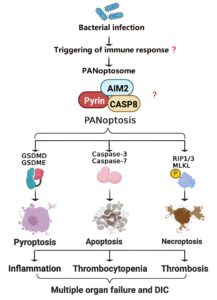
One example is severe sepsis. “The key problem is for the patients who will develop severe sepsis in 72 hours. At the moment, we have no idea how to predict who that will be, we just have to wait and see,” says Tang. There are medications that can be used ahead of time to inhibit that protein, but when given to patients with mild sepsis, the benefits can be outweighed by the side effects. “At the moment, you have to do a bacterial culture, but it’s too slow, taking two to three days, in which time the patient might go from mild to severe sepsis.” Tang has been working on a diagnostic kit for severe sepsis. “There’s a protein that some sepsis patients have that increases their risk of dying,” he explains. Tang started by identifying exactly what protein amplifies inflammation in certain sepsis patients.
The assay kit can take a few drops of blood and rapidly show whether this protein's level is up or down. Early identification of those at increased risk of developing a severe form of the condition means that clinical caregivers are forewarned and forearmed. They can then deploy more intensive care, check the patient's status more often and know the situation better.
“There’s a lot of clinical data about sepsis based on artificial intelligence and big data analytics, but we’re observing changes in a protein that are personalized to a patient,” says Tang. This leads to better resource allocation and more timely, personalized care.
Another of Tang's research strands is the mechanism behind a diagnostic test for Kawasaki disease, a rare but serious condition that affects children three to five years old, and causes inflammation of the blood vessels. “The cause is unknown and diagnosis is based on clinical signs, such as a strawberry tongue and more than one week with fever and rash,” explains Tang. The problem is that 15% of those symptoms will go on to become gravely ill, developing systemic inflammation, super-clotting, and blood vessel swelling. They are at high risk of an aneurysm circulating in their blood, which can be fatal. Tang together with colleagues at Yale University and Guangzhou Medical University identified the mechanism by which hyperactive platelets contribute to inflammation and vasculopathy in Kawasaki disease patients.
Tang also worked with colleagues in mainland China and Australia on identifying the biomarkers for patients with abdominal aortic aneurysm, a silent but potentially deadly disease in which the main blood vessel in the abdomen becomes weakened and expands abnormally. This biomarker can help predict who will have this severe illness. “There are regional genetic differences with coronary artery aneurysm, and it is more common in East Asian populations,” adds Tang, so the test has particular utility close to home.
Tang's career as a molecular biologist started with an MPhil and PhD at the University of Hong Kong, investigating why cardiomyopathy, is one of the leading causes of death among diabetes mellitus patients. He followed that with a stint as a postdoctoral fellow at Yale University. There he researched under a grant from the American Heart Association on why diabetes patients have thicker and more reactive blood platelets than those without the disease. This ignited Tang's interest in vascular disease, and brought him back to Asia, first to the Guangzhou Medical University, and in 2023, to HKMU.