Impact Stories: Research for Real Life — Dr Catherine M. Capio

School of Nursing and Health Sciences Impact Stories: Research for Real Life — Dr Catherine M. Capio

Impact Stories: Research for Real Life

A Hong Kong Metropolitan University paediatric physiotherapy expert is finding ways to get Hong Kong children moving, in support of both their physical health and mental development.

Key takeaways

  • In Hong Kong, childeren's physical activity and academic learning often compete for attention, but this is a false dichotomy: physical activity supports intellectual and social development.
  • By finding creative ways to overcome barriers of time poverty and environmental limitations, it is possible to increase physical activity levels for children of all ages.
  • The benefits of physical activity for the general population are amplified for children with special needs, such as autism spectrum disorder, Down syndrome and developmental coordination disorder.

Hong Kong parents and educators alike face a dilemma: how to meet children's innate need for physical activity within the physical constraints of the city's space-poor built environment, and the pressure to favour academic subjects over exercise in the school day. These issues are even more complex for children with neurodevelopment conditions and special educational needs.

The World Health Organization (WHO) recommends that children aged 1 to 4 years spend at least 180 minutes a day being physically active, and for those aged 3 and 4, at least 60 minutes of that should be of moderate to vigorous intensity. For children aged 5 to 17, WHO recommends a minimum daily average of 60 minutes of moderate to vigorous-intensity physical activity.  

The Hong Kong context

The WHO guidelines have been adopted in Hong Kong. In 2018, the Hong Kong government published Towards 2025: Strategy and Action Plan to Prevent and Control Non-communicable Diseases in Hong Kong which proposed a series of actions, including an increase in physical activity.  In 2020, the Department of Health adopted the WHO physical activity guidelines for children aged 2 to 6 years, where they lay the foundation for health habits across the life course, and the Department of Health promotes also WHO activity recommendations for older children and adolescents.

However, data from the Active Healthy Kids Hong Kong Report Card, an evidence-based synthesis of physical activity behaviors in children and youth, paints a dismal picture. Survey data indicates that Hong Kong children's level of physical activity worsened from 2018 when the city got an overall score of C-minus, to a D-minus in 2022. In line with global trends, children and adolescents became less physically active due to the impact of restrictive measures in response to the COVID-19 outbreak, but even taking the COVID-19 effect into account, this has been a longstanding issue in Hong Kong and clearly more needs to be done to get the city's children moving.

Physical activity vs. learning: a false dichotomy

One way to encourage more physical activity is to break down the false dichotomy between physical activity and intellectual development and social impact. This approach made sense to Catherine M. Capio, Associate Professor, Physiotherapy in the School of Nursing and Health Sciences at Hong Kong Metropolitan University. During her doctoral studies, Capio was investigating how physiotherapists can most efficiently facilitate children's motor learning when she had an important realisation. “In the beginning my research was about how to teach motor skills more effectively, then later as I interacted more with other disciplines, I saw motor skills also had a social impact,” she says. Research points to motor skills developed in early childhood, especially those requiring visuospatial processing, as contributors to cognitive and academic functions in later childhood.

Exercise and executive function

Another emerging area of research that caught Capio's attention was on exercise and executive function–a collective term for working memory, cognitive flexibility and inhibition control–the skills that we learn over time and use to manage everyday tasks, focus thinking, filter distractions, and adapt to new situations. Development of executive function skills begins in childhood and continues through to early adulthood.

Capio saw that a study using data from the highly respected Dunedin Multidisciplinary Health and Development Study at the University of Otago, New Zealand, showed that executive function was one of the strongest predictors of health outcomes. At the same time, vigorous physical exercise has been shown to positively affect stress levels, social skills, and brain development, including executive function. “Basically, if you improve a child's ball skills, there's a dose response in executive function,” says Capio. “This was a very good study for Hong Kong, because parents here say: “as long as he does well in maths and English I don't care about physical education.”

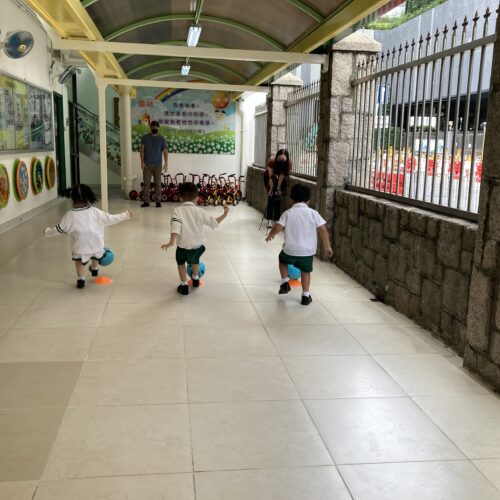
To investigate this phenomenon in the Hong Kong context, Capio led a study, recruiting participants from a local kindergarten, with 185 children aged 3 to 5 years, randomized to join a motor skills training group delivered by kindergarten teachers, or to be part of a control group. The study measured outcomes of fundamental movement skills, executive function and social competence. The study showed that object control proficiency and executive function increased at a faster rate in the intervention group. There was “a dose‒response relationship, in which those children who displayed greater development of object control skills over time also displayed greater development of executive function.” 

Getting parents, other caregivers and teachers onboard

Parents, other caregivers and educators all potentially have the opportunity to intervene and improve children's development, including motor skills and executive function, through increased physical activity.

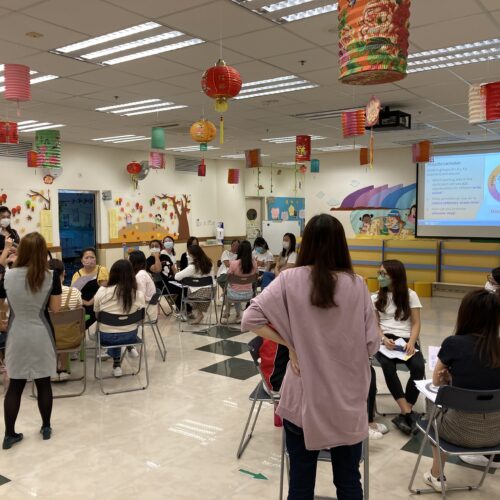
To better understand the barriers and facilitators to improving physical activity levels among Hong Kong children, Capio and colleagues conducted an online survey of kindergarten researchers, parents and domestic helpers who provide care for school-aged children in Hong Kong, to assess their knowledge of the local guidelines for physical activity and identify factors affecting their uptake. Teachers were more aware of the guidelines than parents and domestic helpers, but even they did not have a thorough understanding of them. Time poverty was a significant barrier in both domestic and educational settings, as well as the requirements of the local curriculum, limited physical spaces, social values, and pandemic-related restrictions, the study found.

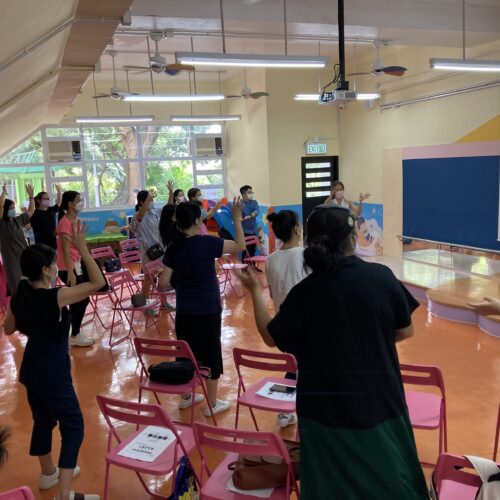
Capio responded with both short-term practical solutions for parents, and a plan to help work around the time poverty problem in schools. “Two teachers on my team are yoga instructors, and they recorded instruction videos for yoga in their own small Hong Kong homes, so that parents could see it could be done even in a typical Hong Kong apartment,” she says. “Then I thought if we can address the issue of time we may be able to do a little bit of improvement, to go from less than 5% meeting the 3-hour target for a physical activity to around 30% meeting it. It's still not enough but it is at least a measurable difference.”

Motor-maths

Having measured teachers and parents knowledge and self-efficacy, Capio and her team secured funding from the Hong Kong Government Health Bureau's Health and Medical Research Fund for a study to develop physical activity modules for teaching maths, English and Chinese. “We are going back to the same school where we'd done the research before, and this time the principal is a co-investigator and the teachers are co-creators in the study,” says Capio. In maths, for example, the team completed a previous project where they created modules combining physical activities with counting. The children in the intervention arm of the study clocked up more steps and showed improvements in fine motor skills, with equal performance in maths testing, compared to the control group.

Children with special needs

The benefits of physical activity for the general population are amplified for children with special needs. Throughout her career as a paediatric physiotherapist, Capio has worked with children with a range of neurodevelopmental conditions. She has retained a particular interest in children for whom the starting line is already at a distance from children who are developing typically.

Capio studied physiotherapy as an undergraduate in the Philippines, on the way to fulfilling her parents' dream that their daughter would go on to medical school and become a doctor. “But during my final year placement my direction changed,” she said.

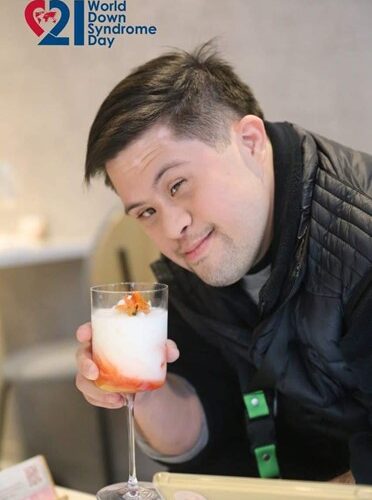
The placement was at a paediatric centre, and Capio spent a lot of time working with Jeremy, who was 10 months old and had Down syndrome. “Every time he came to the pediatric centre with his parents, the dad turned up in his suit, and then took off his jacket and got down on the mat and played with his son.” Seeing the dedication of the parents, and her own growing bond with Jeremy as a clinician, helped her realise her true calling, and that she didn't want to go to medical school. “My parents were gutted at the time, and hoped I'd change my mind, but two years later I said I was going to Sweden to do a master's degree in this area, and they finally accepted it.

“Jeremy is now 27, I am still in touch with him and his family, and saw that the proximal stability he gained as a child has been transformational for him. He went on to compete in the Special Olympics.”

Since then, Capio has expanded her interest to other neurodevelopmental conditions, such as attention deficit hyperactivity disorder, autism spectrum disorders, cerebral palsy, and developmental coordination disorder (also called dyspraxia).  Children with developmental coordination disorder tend to have poorer overall health, lower physical activity, less positive emotions and more severe cognitive difficulties. “The kid who can't tie his shoelaces, and is labelled clumsy, actually has issues with coordination, and whilst they are still developing may not be able to achieve motor skills,” explains Capio.

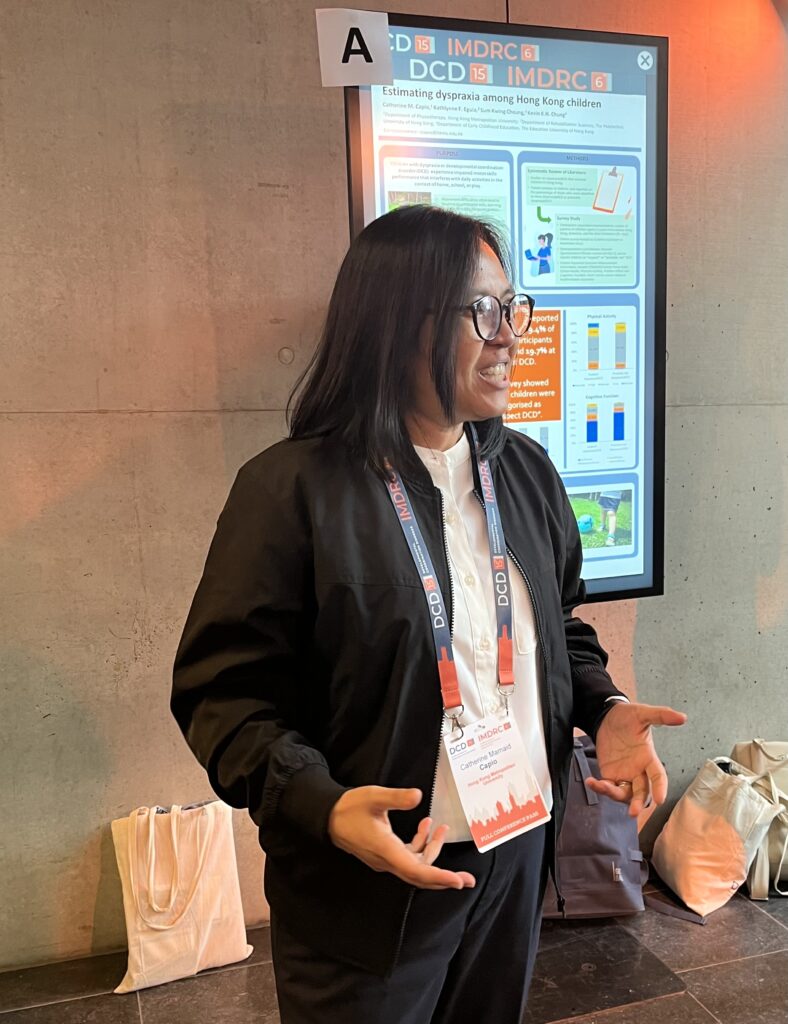
In 2022, Capio partnered with the Hong Kong Dyspraxia Foundation, to produce a study examining the extent to which children in Hong Kong might be affected by developmental coordination disorder. “I continue to work with the foundation to develop screening and supportive programmes for children with developmental coordination disorder,” says Capio. “HKMU is also funding a project now where we are looking at the combined value of bilingual exposure and movement programmes for children with developmental coordination disorder and children with autism. The papers related to this continuing work are still on the pipeline.”

Working with children, especially those with special needs, calls for a more imaginative approach than physiotherapists might use with adults. “Instead of the physiotherapy exercises we might give to adults, we design play opportunities, such as an obstacle course, or activities that practise movement,” she says.

Having transitioned from clinical practice to an academic career, Capio sees that her impact has become less individualised, and potentially more impactful. “As a paediatric physiotherapist, the ideal outcome is that kids are able to play, learn about the world and learn to make friends. As an academic, I can still help the individual child, but my role as a researcher is not just for the child, but also for the adults around them and for the broader policy environment.”

Contact Catherine M. Capio: https://scholars.hkmu.edu.hk/en/persons/catherine-m-capio

Written by: Dr Jane Parry, Adjunct Assistant Professor and Advisor