Children with special needs
The benefits of physical activity for the general population are amplified for children with special needs. Throughout her career as a paediatric physiotherapist, Capio has worked with children with a range of neurodevelopmental conditions. She has retained a particular interest in children for whom the starting line is already at a distance from children who are developing typically.
Capio studied physiotherapy as an undergraduate in the Philippines, on the way to fulfilling her parents' dream that their daughter would go on to medical school and become a doctor. “But during my final year placement my direction changed,” she said.
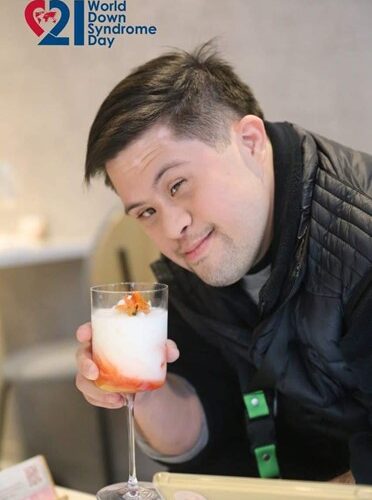
The placement was at a paediatric centre, and Capio spent a lot of time working with Jeremy, who was 10 months old and had Down syndrome. “Every time he came to the pediatric centre with his parents, the dad turned up in his suit, and then took off his jacket and got down on the mat and played with his son.” Seeing the dedication of the parents, and her own growing bond with Jeremy as a clinician, helped her realise her true calling, and that she didn't want to go to medical school. “My parents were gutted at the time, and hoped I'd change my mind, but two years later I said I was going to Sweden to do a master's degree in this area, and they finally accepted it.
“Jeremy is now 27, I am still in touch with him and his family, and saw that the proximal stability he gained as a child has been transformational for him. He went on to compete in the Special Olympics.”
Since then, Capio has expanded her interest to other neurodevelopmental conditions, such as attention deficit hyperactivity disorder, autism spectrum disorders, cerebral palsy, and developmental coordination disorder (also called dyspraxia). Children with developmental coordination disorder tend to have poorer overall health, lower physical activity, less positive emotions and more severe cognitive difficulties. “The kid who can't tie his shoelaces, and is labelled clumsy, actually has issues with coordination, and whilst they are still developing may not be able to achieve motor skills,” explains Capio.
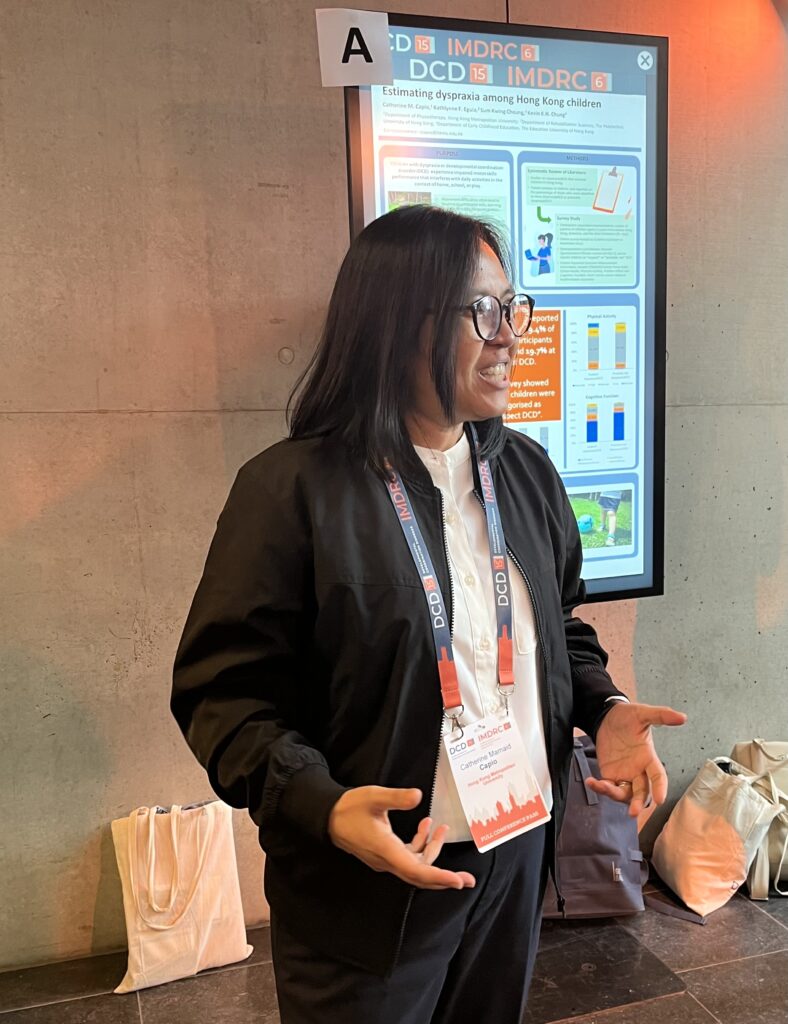
In 2022, Capio partnered with the Hong Kong Dyspraxia Foundation, to produce a study examining the extent to which children in Hong Kong might be affected by developmental coordination disorder. “I continue to work with the foundation to develop screening and supportive programmes for children with developmental coordination disorder,” says Capio. “HKMU is also funding a project now where we are looking at the combined value of bilingual exposure and movement programmes for children with developmental coordination disorder and children with autism. The papers related to this continuing work are still on the pipeline.”
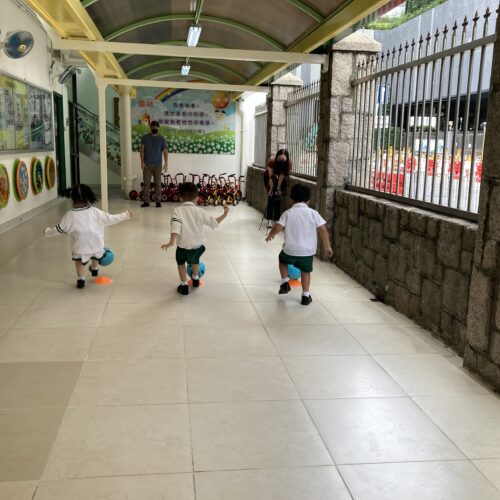
Working with children, especially those with special needs, calls for a more imaginative approach than physiotherapists might use with adults. “Instead of the physiotherapy exercises we might give to adults, we design play opportunities, such as an obstacle course, or activities that practise movement,” she says.
Having transitioned from clinical practice to an academic career, Capio sees that her impact has become less individualised, and potentially more impactful. “As a paediatric physiotherapist, the ideal outcome is that kids are able to play, learn about the world and learn to make friends. As an academic, I can still help the individual child, but my role as a researcher is not just for the child, but also for the adults around them and for the broader policy environment.”
Contact Catherine M. Capio: https://scholars.hkmu.edu.hk/en/persons/catherine-m-capio
Written by: Dr Jane Parry, Adjunct Assistant Professor and Advisor