Impact Stories: Research for Real Life — Prof. William TSANG Wai nam

School of Nursing and Health Sciences Impact Stories: Research for Real Life — Prof. William TSANG Wai nam

Impact Stories: Research for Real Life

With a gadget in development at Hong Kong Metropolitan University for frail older adults, being wheelchair-bound doesn't have to mean game over:

Key takeaways

  • Tai-chi, even when practiced seated, has proven fall prevention benefits for older adults
  • Technology to track body movements can gamify seated tai chi, and collect valuable health data on participants
  • Exergaming can help older adults independently maintain a seated tai chi practice

It's a common sight across Hong Kong, especially early in the morning. Under the shade of trees in of the city's urban parks, in public housing estate sitting out areas, on the boardwalk along the shimmering harbour, you can find tai chi practitioners, gracefully flowing from one stance to the next. Tai chi, developed in China in the mid 1600s, is based on Taoism, an ancient Chinese philosophy that emphasizes living in harmony with nature. Long considered by tai chi practitioners to have general health benefits, the martial art has also been the subject of extensive academic research, and has been found to improve balance control, cardiovascular health and muscle strength, and cognitive performance in older adults.

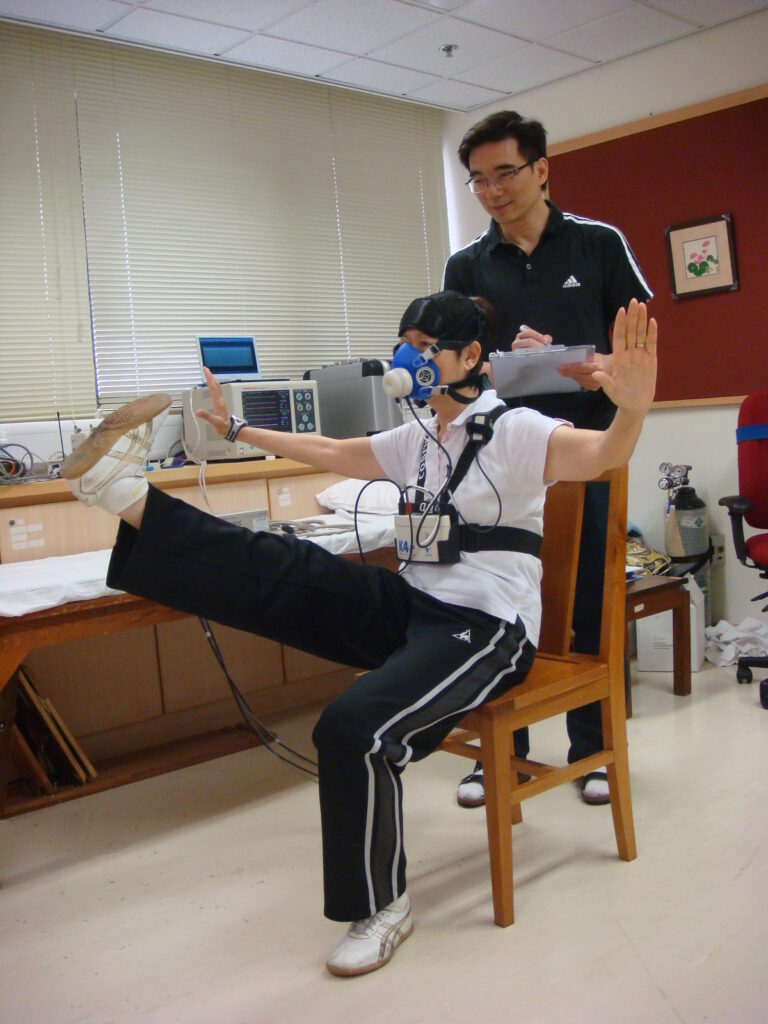
For wheelchair-bound older adults, the benefits of tai chi, practiced in these popular outdoor settings, can seem completely out of reach. In reality, a modified form of seated tai chi can still yield impressive gains. In the past decade, seated tai chi has garnered increasing interest as a way to improve older adults' hand-eye coordination and balance control, preventing falls and promoting active aging, explains physiotherapist William Tsang Wai-nam, Associate Dean (Development and Strategic Relationships) in the School of Nursing and Health Sciences at Hong Kong Metropolitan University.

Growing need for fall prevention

Tsang is particularly interested in what's known as the 'old old', those aged 75 and above. For them, in traditional tai chi, having to stand up, turn around and make steps is challenging because they are often frail and find it difficult to perform vigorous exercise. With seated tai chi, participants can focus on their upper limbs, and also the trunk. Once they've mastered this, for some there is scope for them to progress to standing tai chi, and on to the full, traditional form with its signature graceful turns and steps.

Tsang's interest in the potential benefits of seated tai chi was sparked by a trip to the hospital with his elderly mother, who had taken a fall and had to stay for observation. While he sat with her, Tsang realized that all around her were other older adults who had fallen down and were injured. “I thought if I could so something to help prevent falls, then the demand could be huge.”

Tsang was right about the demand: in 2024, 9.5% of Hong Kong's population was aged 75 and above, up from 5.2% 20 years earlier. Looking 20 years ahead, the trend is going to accelerate: by 2045, the 75 and over age group is projected to account for a staggering one fifth of the city's population.

Fall prevention is a complex area, that cuts across both physiological and neurological health disciplines, and this was why tai chi was so intriguing to Tsang.  “Tai chi is a combination of the mind and body. As a physiotherapist I’m interested in how people move, their coordination and balance control, but I’m also interested in dual tasking, such as walking downstairs while performing a mental task. Tai chi can help with that dual tasking.”

Extending in-person training

Bringing seated tai chi classes to frail older adults, such as in an elderly day care centre or nursing home, is relatively easy. It just needs a teacher and a bit of space, and has been shown to be effective in fall prevention even with just four to eight weeks' training. The challenge is how to maintain people's tai chi practice over the long term when the recurring cost of in-person teaching is prohibitive, and also in situations where they might not be able access a class, as is the case for homebound older adults.

Tsang and his colleagues in the tai chi and physiotherapy communities have been working hard on a novel solution to this problem. The answer? To combine the ancient moves of tai chi with the latest in gaming technology, in an exergaming format that is accessible, affordable, and effective when used by older adults.

Game-on for seated tai chi

Tsang is leading a 3-year, multi-disciplinary research project. They're working with an industrial partner to develop an inexpensive, simple to operate gadget that can incorporate seated tai chi as an exergaming practice. This company has a history of making user friendly technology, so we're tapping their expertise on that. With the tai chi, and instead of 12 forms that we did in our research, we may simplify it into three form or four forms with a specific physiological reason behind them, and the industrial partner will try to make it more fun, user friendly game.”

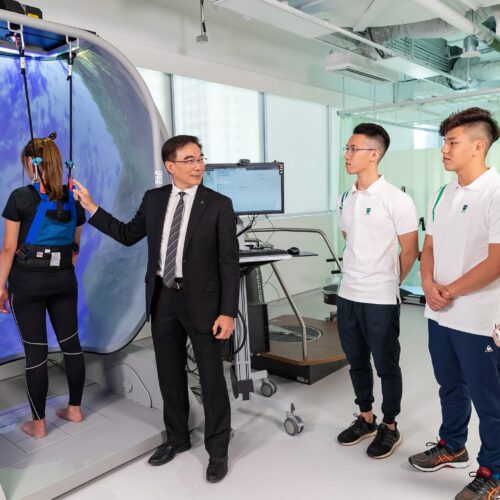
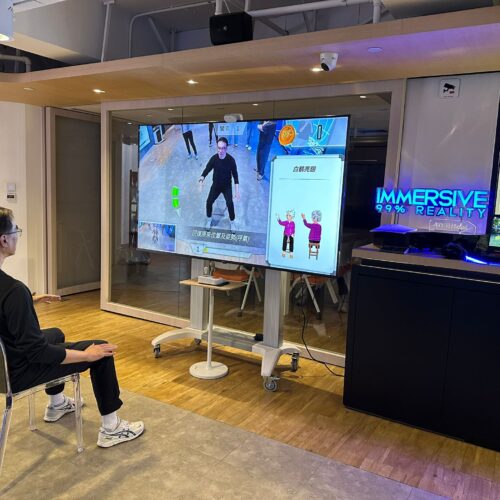
The gadget, put in front of a regular TV  monitor and connected to it, capture the body shape of the person sat in front of it. As they move, the gadget tracks their body movements and centre of gravity in fine detail, and represents these movements on the TV screen as an avatar in a gamified exercise programme. Having learned the basic forms of seated tai chi, the exergame can guide the player to, for example, defeat an opponent or complete a quest. The game can incorporate cognitive challenges too, to help improve dual tasking. The programme incorporates typical gaming features, with points accumulation enabling the player to level up and progress.

When connected to the Internet, the same gadget can share data on the user's performance. This can be fed back to their health care providers and carers to monitor progress, and used to tailor an individual's exercise programme. The data can also be pooled to create an invaluable dataset to study the effect of seated tai chi on health outcomes.

Real-world testing

The research project, which runs until the end of 2026, will not only develop the technology, but also test it out in real-world settings, and also look at its cost relative to traditional trainer-led tai chi. “If, for example, someone does the exercises once a week in an in-person class at an elderly centre, they can also do them at home, and their progress can still be monitored,” says Tsang. “I don't think it will replace face-to-face contact, because that's important, but they can still do the exercises in their home environment.”

The project is taking technology more typically associated with young people, and using it to empower older adults to continue a health practice autonomously, in a fun and engaging way, whilst generating valuable data on their progress. “We've got all the research we need to prove either traditional tai chi or seated tai chi are effective for the older adults' balance control, hand-eye coordination and flexibility. But we want older adults to continue, to adhere to an ongoing exercise regimen, and to be able to do that without needing a healthcare professional standing beside them.”

This kind of academic-industrial collaboration is made easier by the fact that Hong Kong Metropolitan University is the city's first tertiary institution with the University of Applied Sciences designation.

“The sustainability of this exergaming programme depends on its impact on society,” says Tsang. “We don't just want to design a game that improves joint and muscle strength, we also want it to be engaging, useful and meaningful. That's why we involve participants from the start of the research, ensuring the program is practical and beneficial for them.”

Learn more about HKMU's research in this field: Exergaming Research Centre (ERC) for Healthy Aging

Contact William Tsang Wai-nam: wntsang@hkmu.edu.hk

Written by: Dr Jane Parry, Adjunct Assistant Professor and Advisor