Bachelor of Science with Honours in Diagnostic Radiography
(Launching from: 2026 Autumn Term)

Programme Code

BSCHDRJ
JUPAS Code

JSSU66
Programme Mode

Face-to-face
Medium of Instruction

English
Duration of Study

4 years (Full-time)

Courses & credit-units

38 courses;
138 credit-units
Tuition Fee

Subject to the latest announcement by the University

Introduction

This programme combines academic rigour with practical training to prepare students for professional registration as Radiographers (Diagnostic) under the Radiographers Board of Hong Kong. The curriculum integrates theoretical knowledge with hands-on learning, including extensive internships and work-study opportunities, to ensure students gain practical experience in real-world diagnostic radiography settings. The programme's emphasis on professional collaboration and applied learning ensures graduates are well-prepared for employment in both public and private healthcare sectors, contributing effectively to diagnostic radiography and sonography services in the Asia-Pacific region and beyond.

Programme Aims

Upon successfully completing the programme, students should be able to:

  • Understand scientific principles, techniques, and emerging technologies, including AI application and governing in advancing diagnostic radiography practices.
  • Apply critical thinking to analyse complex clinical scenarios and deliver accurate and safe medical imaging services.
  • Perform diagnostic imaging procedures competently while following ethical standards, patient care principles and regulatory requirements.
  • Integrate theoretical knowledge with practical skills through internships and work-study experience to address real-world radiography challenges.
  • Demonstrate leadership, entrepreneurial thinking and collaborative teamwork skills to innovate and adapt in the evolving healthcare landscape.
  • Commit to lifelong learning, professional development and evidence-based practice to advance radiography and healthcare services in the Asia-Pacific region.

Programme Features

  • Integration of Theory and Practice
    To embody the University's commitment to the Applied Sciences ethos, the programme integrates theory and practice through internships and work-study opportunities, fostering critical thinking, competence, and professional identity in radiography students.
  • Innovation and Technological Advancement
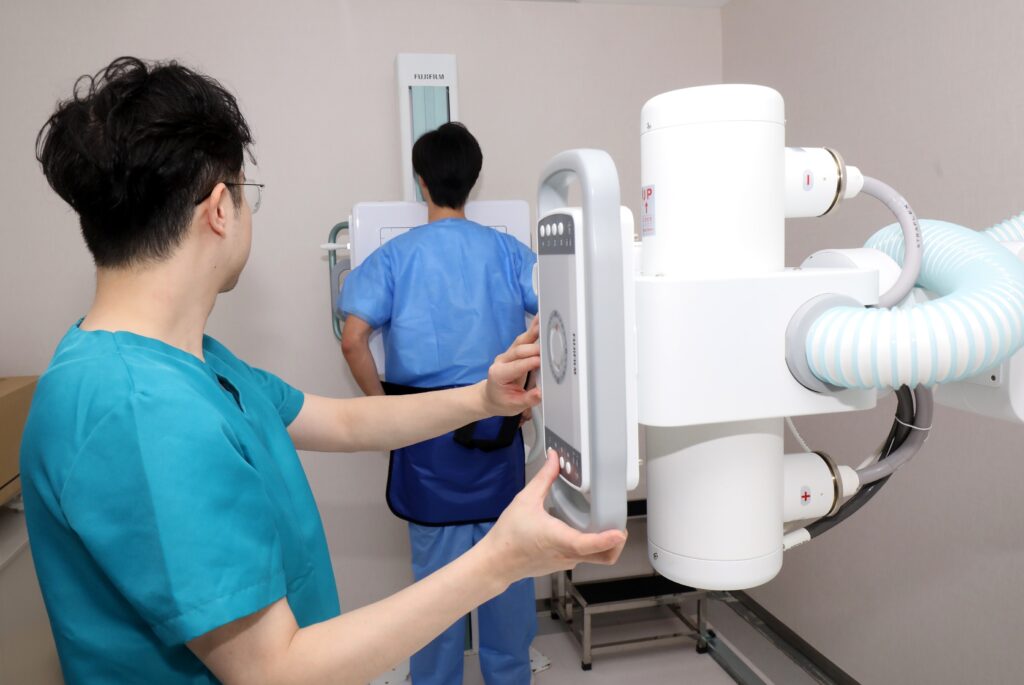
    The curriculum emphasises technological innovation and entrepreneurial thinking, ensuring that graduates are well-prepared to meet the demands of a modern healthcare system. Our Medical imaging laboratory features advanced technologies and industry-standard facilities, enhancing students' practical experience.
  • Professional Excellence and Ethical Practice
    The programme emphasises ethical practice, clinical leadership, and cultural competence through experiential learning opportunities such as clinical placements, internships, and industry partnerships. Students can develop technical proficiency alongside resilience, adaptability, and cultural sensitivity.

Admission Requirements

  • JUPAS:
    Hong Kong Diploma of Secondary Education (HKDSE):

    – Chinese Language: Level 3 or above; and
    – English Language: Level 3 or above; and
    – Mathematics (Compulsory Part): Level 2 or above; and
    – Citizenship and Social Development: Attained; and
    – 1st Elective Subject: Level 2 or above; and
    – 2nd Elective Subject: Level 2 or above
    (preferably Biology or Physics; or Combined Science with a Biology or Physics component)

  • Non-JUPAS:
    Locally accredited/overseas qualifications other than HKDSE examination results*

    *The relevant qualifications must be attained by the end of Aug 2026.

Programme Structure

Students are required to complete 138 credits and 1400 clinical practicum hours over 4-years in full-time.

Course list with credits:

  1. 117 credits of core courses and clinical practicums
  2. 6 credits of General Education
  3. 6 credits of University English
  4. 9 credits of University Core courses

The Courses

All Courses
Human Anatomy and Physiology
Psychological and Sociological Perspectives for Health Sciences
Introduction to Biophysics
Ethical and Legal Issues in Healthcare
Patient Care in Radiography
Pathophysiology and Pharmacology
Radiological and Cross-Sectional Anatomy
Radiobiology
Imaging Pathology
Radiation Physics
Medical Imaging Instrumentation
Healthcare and Radiological Informatics
Radiographic Imaging Science and Practice
Ultrasonography
Leadership and Management in Health Professions
Magnetic Resonance for Imaging Practice
Computed Tomography for Imaging Practice
Artificial Intelligence in Radiology
Radiation Protection and Safe Practice
Nuclear Medicine and Positron Emission Tomography (PET) Imaging
General Radiographic Practice I, II
Research Methods and Statistics in Imaging
Capstone Project
Breast Imaging and Image Analysis
Global Topics in Medical Imaging
Social Responsibilities
Effective Communication and Teamwork
Entrepreneurial Mindset and Leadership for Sustainability
University English I, II
General Education I, II
University Core Values
Clinical Practicum I, II, III, IV

Career Prospects & Professional Recognition

The programme will seek accreditation by the Radiographers Board (RGB), the Supplementary Medical Professions Council. Upon successful accreditation, graduates of the Bachelor of Science with Honours in Diagnostic Radiography will be eligible to register as Radiographers (Diagnostic Part 2) “放射技師(診斷類第二部份)” under Section 12(1)(a) of the Supplementary Medical Professions Ordinance and with the Radiographers Board of Hong Kong.

Graduates have a range of professional pathways (after registration) and options for further studies available:

  • Diagnostic Ultrasonographer: Graduates can pursue a Master of Science in Diagnostic Ultrasonography through a bachelor-master (4+1 years) which is recognised by the Hong Kong College of Radiographers and Radiation Therapists, and accredited to be a Certified Ultrasonographer in Hong Kong.
  • Advanced Practice Diagnostic Radiographer: With increasing clinical experience and academic achievement, graduates can progress to become Advanced Practice Diagnostic Radiographers.
  • Senior or Chief Radiographer: Graduates can advance their careers by managing and operating a department.
  • Further Studies: Graduates are able to pursue further studies in overseas Master's Degree or local Master's programmes, such as the Master of Science in Diagnostic Ultrasonography offered by HKMU and the Master of Science in Medical Imaging and Radiation Science, and Master of Medical Imaging programmes at other local universities.

Enquiries

Registry (Admission)

School of Nursing & Health Sciences (Programme Administration)

Programme Leader