 |
 |
 |
The OUHK has built up a comprehensive system of support for adult distance learning students. With the recruitment of full-time school-leavers as students in recent years, efforts have been made to provide a warm and supportive campus environment for these young adults. The University has started to revamp its student administration systems to enhance and integrate the databases of students on different modes of study and provide more efficient services. The system roll-out for the first stage of the project, covering the records of full-time students, was started in September 2007. In view of the remarkable developments in web-based technology, the University has been exploring how best to harness new tools from this medium for the benefit of students.

Flexibility for adult learners
Since its establishment by the Hong Kong Government in 1989, the OUHK has become a popular pathway for aspiring adult learners to pursue tertiary education and obtain recognized qualifications. Students can accumulate credits gained from their studies over any period of time, take time off to meet family or work commitments and choose to get awards at several exit levels. They can enrol on courses, pay tuition fees, apply for tuition loans, and check their academic records or amend their personal particulars via the University’s student portal. Those with relevant qualifications can apply for credit exemption.
Unique support for distance learning
Apart from postgraduate and professional programmes, admission to the University’s distance learning programmes is open to anyone over the age of 17. Students on each course are provided with a comprehensive self-study package – including printed text and audio-visual materials – and allocated a part-time tutor who runs tutorials, gives study advice and marks assignments. They can attend optional tutorials, watch the University’s educational programmes on television and surf the University’s Electronic Library, which offers 16,000 full-text e-journals, 17,000 e-books and various databases. The University’s Online Learning Environment, a web-based platform provided for all credit-bearing courses, allows students to plan their schedule, access course information, interact with fellow students, submit assignments and get feedback from tutors. All tutors are required to undertake training to master the skills needed for the OUHK’s unique mode of teaching and learning.
Students with disabilities or who are confined to hospitals or are serving prison terms can apply for counselling help, dedicated bursaries or special arrangements for examinations. Last year there were 47 students who were disabled, and 62 inmates in penal institutions enrolled in OUHK courses.

A burgeoning full-time student population
In response to the Government’s call for more study opportunities for
school-leavers, the OUHK launched full-time face-to-face programmes in 2001 in addition to its distance learning programmes.
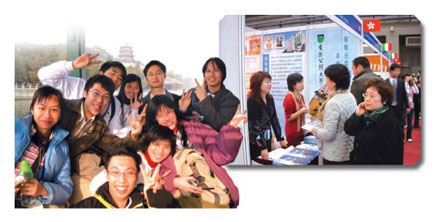
The number of students on these programmes has since increased continuously, reaching about 3,000 last year. Among these were 257 new students selected through Hong Kong’s Joint University Programmes Admissions System for the first time and 31 new students from mainland China. This was the first occasion on which the OUHK promoted its student recruitment through the mainland’s Ministry of Education, and over 500 applications were received for its four four-year programmes, namely BBA (Hons) in Accounting, BBA (Hons) in Management, Bachelor of Language Studies (English) (Hons), and the double degree of Bachelor of Education (Hons) (English Strand) and Bachelor of Language Studies (English) (Hons). Student interviews were conducted in Beijing, Shanghai and Shenzhen. Twenty-six of these new students are enrolled in the Lee Shau Kee School of Business and Administration and the remainder in the School of Education and Languages. Accommodation for these students has been provided at the YWCA Anne Black Guest House, which is within walking distance of the OUHK campus.
The OUHK was among the Hong Kong and Macau tertiary institutions which participated in the 13th China International Education Exhibition Tour organized by the Ministry of Education from late February to March 2008 in Beijing, Xi’an, Shanghai and Guangzhou, for the recruitment of students.
The Li Ka Shing Institute of Professional and Continuing Education’s Yi Jin programmes, which primarily target Secondary 5 school leavers, saw a nearly three-fold increase in students, with enrolment at 1,170 in 2007. The most popular programme was the newly launched certificate course on the Disciplinary Forces.
Better career prospects for full-time graduates
According to a survey conducted from December 2007 to late January 2008, the median monthly salary of the OUHK’s graduates from full-time degree programmes increased from $8,700 in 2006 to $9,100 in 2007. The survey also found that the highest monthly earning was $28,000, nearly 90% more than the record the year before. Over 90% of the graduates in both years had at least one job offer, and over 84% were in full-time employment six months after graduation. As in 2006, over 80% of the graduates in 2007 worked in the business or industrial sector. Those who obtained jobs in accounting, banking, finance, administration or management rose from 47% to 53% during the two years.
As a late-comer in the provision of full-time education, the OUHK is not in a position to provide facilities on its small campus similar to those of some publicly-funded local universities. Nevertheless, the University is stepping up its resources and support services for full-time students. Students are encouraged to apply for funding for extra-curricular activities and for exchange with peers from local and overseas universities. Last year over 40 student societies were provided with funding totalling $500,000 to organize activities such as academic talks and study tours, and for the promotion of various interests.
Centre for Innovation
A ‘Centre for Innovation’ (CFI) project, which aims at the creation of a
student-centred learning environment that blends the strengths of distance learning, face-to-face teaching and online learning,
received a Government grant of $62.8 million in April 2007.
The CFI project will significantly improve the University’s communication and service efficiency with a web-based service delivery platform that electronically integrates all information and service systems. It will be characterized by flexibility, interactivity, connectivity, personalization and intelligence.
A major goal of the CFI project is to develop an intelligent flexible learning model for open learning which features a Smart
Teaching/Learning Space supported by an Integrated Student Support System. A set of innovative tools using artificial intelligence
will be developed to help students choose courses, make study plans and obtain more responsive support and tutoring services. For
example, the iTutoring System will automatically remind students about their assignment deadlines, examination dates and tutorial
schedules, and it will also provide tools for automatic marking, tracking students’ progress, and enhanced synchronous and asynchronous
communication with students. Students will be able to learn more actively in small and informal online class settings. Also, the
iCounselling System will provide prompt, personalized and interactive 7x24 advice and
answers to questions from prospective and current students.
Centre for eLearning
Apart from enhancing study and administrative support, the CFI project includes the establishment of a Centre for eLearning and the development of 60 new e-learning courses, split evenly between degree or postgraduate level and sub-degree level.
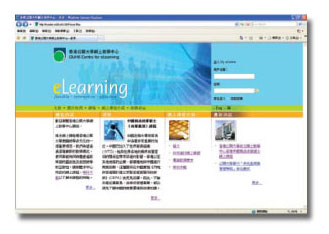
The first e-learning programme offered by the Centre for e-Learning – a Master of Laws in Chinese Business Law – was launched in October 2007 and enrolled students from Hong Kong, mainland China, Taiwan, the USA and Germany. Courses in the programme are conducted through real-time online lectures and tutorials, and are integrated with components such as interactive learning activities, online course materials, video-taped seminars, discussion boards, the Electronic Library and reference resources.

Free online courses for the public and consultancy work
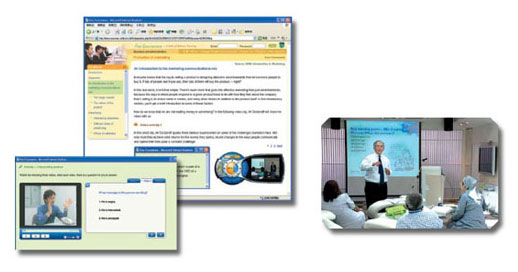
Besides e-learning courses, the OUHK has made use of the Internet to bring its distance learning materials to the attention of the general public free of charge. These well-structured learning materials can help those who wish to receive higher education get prepared and gain confidence in learning. People can also assess their own interests and capabilities through these excerpts from the University’s distance learning course materials.
The first set of 25 Online Free Courseware units was put on the University’s website for public viewing in August 2007, with 150 in total targeted to reach the public by 2010. They cover areas such as arts and history, business and management, education, social sciences, languages and information technology. In addition to a wide range of audio-visual and multi-media learning materials, a discussion forum and a blog have been set up to allow users to share experiences and exchange ideas online. Each subject is further augmented by interactive activities, quizzes, case studies and reference materials. Those who would like to participate in the interactive activities can do so after a simple registration procedure. A courseware unit takes four to 28 hours to complete but they do not lead to any credit or award from the University.
Over 6,000 registrants and more than 140,000 hits had been recorded by the end of March 2008. According to the results of two surveys conducted in September 2007 and March 2008, over 90% of the respondents said the experience had increased their interest in the subject area they accessed. A similar number said they would recommend it to friends, and over 80% even said they might enrol in OUHK courses in the future.
The University’s expertise in course design and online education has often been sought by the Government and other organizations. During the year the Educational Technology and Publishing Unit won a bid to produce an interactive course package for the Government’s Education Bureau to raise awareness of intellectual property rights and foster the informed use of copyright materials on the Internet among students and teachers. The package was hosted on the website of Hong Kong Education City for pilot testing and is scheduled for a public launch in September 2008.
International Conference on ICT in Teaching and Learning
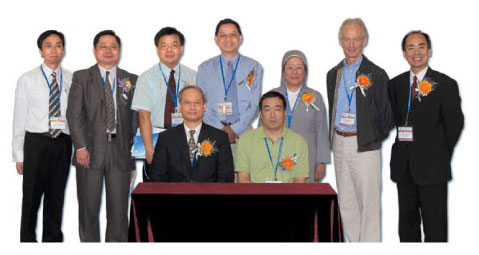
The OUHK has also been organizing academic activities such as the International Conference on Information and Communication Technologies in Teaching and Learning in recent years to encourage cross-fertilization of ideas. The 2007 Conference, held on 9 and 10 July, with 300 local and overseas academics and professionals participating, focused on bringing the excitement and power of Web 2.0 applications such as blogs and wikis into the learning experience. Participants responded to the Conference theme, ‘Enhancing Learning through Technology’, with a series of stimulating keynote speeches and over 100 paper presentations, and an impressive number of hands-on workshops. The Conference, co-organized by the OUHK with the Hong Kong Web Symposium Consortium and St Paul’s Convent School, highlighted the need to apply cutting-edge technology and advanced pedagogical practices in teaching and learning at all levels.


Copyright (C) The Open University of Hong Kong 2008. 版權所有 不得轉載