QESS Project Closing Webinar

Guest Speakers

Title:
AI for OER, AI as OER? Mapping the Intersection of OER and AI – a scoping review

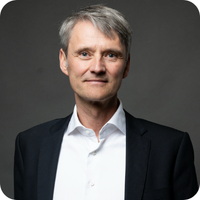
Professor Olaf Zawacki-Richter
Professor of Educational Technology at the University of Oldenburg


The rapid advancement of Artificial Intelligence in Education (AIEd), particularly generative AI and retrieval-augmented systems, is reshaping teaching and learning. At the same time, Open Educational Resources (OER) continue to promote access, reuse, and adaptability of educational content. However, these two fields have largely evolved in parallel, and their intersection remains conceptually fragmented.

In this talk, I present findings from a scoping review that maps how OER and AIEd are currently being combined across educational contexts. The review explores how these approaches are conceptualised, implemented, and evaluated in the literature, and identifies emerging patterns, challenges, and research gaps across higher education, schools, and lifelong learning.

The analysis points to three dominant modes of integration: (1) AI supporting the creation and adaptation of OER (AI for OER), (2) AI systems, models, and workflows being shared as open resources (AI as OER), and (3) OER designed to foster critical AI literacy and responsible use (OER for AI literacy). While these developments promise greater personalisation, scalability, and accessibility, they also raise important questions about openness, transparency, licensing, and the sustainability of AI infrastructures.

I argue that the convergence of OER and AIEd requires a rethinking of what “open” means in increasingly data-driven and algorithmic learning environments, and outline implications for research and practice in Open, Distance, and Digital Education.

Olaf Zawacki-Richter is Professor of Educational Technology at the University of Oldenburg, a position he has held since 2010 following a professorship in educational technology at the FernUniversität in Hagen. His research focuses on open, distance, and digital education, with particular emphasis on online learning, artificial intelligence in education, and evidence synthesis. He has authored more than 200 publications, including journal articles, book chapters, and edited volumes. He has served as co-editor of several leading journals in the field, including the Online Learning Journal, International Review of Research in Open and Distributed Learning, Open Learning, Distance Education, and Zeitschrift für Hochschulentwicklung. Since 2024, he is Editor-in-Chief of the diamond open access Journal of Open, Distance, and Digital Education (JODDE). In 2023, he co-edited the Handbook of Open, Distance, and Digital Education (Springer) with Insung Jung. Beyond academia, he has worked as a consultant for organizations such as the United Nations, the German Bundestag, and the Swiss National Science Foundation, and has delivered keynote addresses at international conferences worldwide. At the University of Oldenburg, he is Director of the Center for Open Education Research (COER) and the Center for Lifelong Learning (C3L), and served as Dean of the Faculty of Education and Social Science from 2021 to 2025.

Title:
Global Trends on Transforming Higher Education in the AI Era: Lessons from 100+ Leading Universities Worldwide

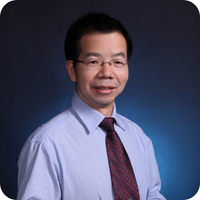
Professor HUANG Ronghuai
Co-Dean of Smart Learning Institute of Beijing Normal University
UNESCO Chair on AI in Education

This talk explores global trends in transforming higher education in the AI era, based on a systematic analysis of AI practices across leading universities worldwide. It examines how artificial intelligence is reshaping teaching, learning, research, governance, and talent development in higher education. The talk discusses the major challenges of higher education digitalization, including traditional educational paradigms, ethical concerns, data integration, and digital competence gaps. It argues that sustainable transformation requires not only technological innovation, but also a fundamental shift in pedagogy.

The talk further proposes four key dimensions for AI-enabled higher education transformation: digital competence for deep learning, evidence-based practice with quality digital resources, synergy between human teachers and trustworthy AI, and sustainable digital learning environments. It also highlights the evolving role of teachers as learning designers, career advisors, and research collaborators in the AI era. Finally, the talk emphasizes the importance of building open, inclusive, and human-centered AI ecosystems to support the future development of higher education.

Huang Ronghuai is a Professor in the Faculty of Education at Beijing Normal University (BNU). He currently serves as the Co-Dean of the Smart Learning Institute of BNU, the Director of the National Engineering Research Center for Cyberlearning and Intelligent Technology, and the Director of the Educational Informatization Strategy Research Base (Beijing) of the Ministry of Education of China. He also holds the UNESCO Chair on Artificial Intelligence in Education. In addition, he serves as the Secretary-General of the Expert Group on Education Informatization of the Ministry of Education of China, a Member of the Science Subject Expert Committee of the National Textbook Commission, and the Editor-in-Chief of Springer journals Journal of Computers in Education and Smart Learning Environments. His research mainly focuses on educational informatization, smart learning environments, technology-supported innovative teaching, and artificial intelligence in education. He has received several prestigious honors, including the National Award for Outstanding Teaching Achievement, the Outstanding Scientific Research Achievement Award (Humanities and Social Sciences) in Higher Education, the Outstanding Achievement Award in National Educational Research, as well as the titles of Beijing Famous Teacher and Beijing Outstanding Teacher. He has led or participated in over 100 national, provincial, and ministerial research projects, published more than 300 academic papers, and authored or edited over 40 books.

Title:
Can AI Boost Learning Motives and Individual Performance?
A Study of Generative AI Tools among College Students in  Hong Kong

Dr Wendy CHAN Wing Lam
President of the Hong Kong Association for Educational Communications and Technology (HKAECT)

This study investigates Hong Kong college students’ perceptions and use of generative AI tools in learning, with a focus on perceived performance in English writing tasks. Drawing on the Task–Technology Fit (TTF) model (an extension of TAM), we examine how Perceived Usefulness, Perceived Ease of Use, Behavioral Intention, Task Characteristics (need), Technology Characteristics, and Task–Technology Fit relate to students' Perceived Performance (introduced as the dependent variable).

Preliminary findings are based on 293 student responses (49.8% male; 50.2% female) from Diploma of Foundation Studies, Associate Degree, and Higher Diploma programmes. Over 46% reported using generative AI a few times per week. The most used tools were ChatGPT (53.2%), Deepseek (43.3%), and Canva (42.3%). Students also reported teacher adoption of generative AI, with ChatGPT used by 35.8% of teachers, followed by Deepseek (22.2%) and Canva (17.4%).

Overall, students rated positively that generative AI is useful, convenient, and easy to learn and use for English writing, and that it improves efficiency and task ease.

Dr Wendy Chan, President of Hong Kong Association for Educational Communications and Technology, joined tertiary sector since 2017. Prior to joining HKUSPACE Po Leung Kuk Stanley Ho Community College, she has worked for Chu Hai College of Higher Education and The Hang Seng University of Hong Kong. She has also worked in various news organisations, including Radio Television Hong Kong, Travel QnA, and Island East Markets, etc. With her hard earned media experience, she accomplished her PhD study on communication at Hong Kong Baptist University in 2017. Apart from having taught in Mainland China and in Hong Kong, she has also experienced teaching and carried out research in London—when she took a visiting researcher role at the University College London in 2016 for an academic exchange. Her research outlets are on media writing, journalistic presentations and consumer behavior, and her publications can be seen from SSCI, AHCI, and THCI Journals and other renowned journals, for instance, Journalism Practice, Visual Studies, Journal of Pacific Rim Psychology and International Communication Research Journal. Apart from journal publication, she is also a frequent column contributor to HKEJ.