Keynote Speakers
Keynote Session
Title: Competing in an Innovation-Driven Global Economy: Opportunities and Challenges for Hong Kong Firms |
|
|
|
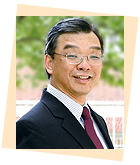
Professor Joseph Cheng
Research Professor of International Business
George Washington University
Professor Emeritus of Business Administration
University of Illinois at Urbana-Champaign
USA
Joseph Cheng (Ph.D., University of Michigan) is a Research Professor of International Business at George Washington University and Professor Emeritus of Business Administration at the University of Illinois at Urbana-Champaign. During 2013-2016, he was Professor of Management, Michael J. Crouch Chair in Innovation, and Director of the Australian Innovation and Competitiveness Initiative at the University of New South Wales in Sydney, Australia. Joseph’s research centres on three main areas: (1) innovation, R&D productivity, and international competitiveness; (2) globalization and multinational management; and (3) organizational learning, adaptation, and change. He is currently studying the changing pattern of foreign R&D investment in the Asia-Pacific and its spillover effects on innovation and entrepreneurship across the region, with focus on the JACKS countries (Japan, Australia, China, Korea, and Singapore). A former elected Chair of the International Management Division of the Academy of Management, he currently serves or has served on the editorial boards of 12 academic journals, including appointments as a consulting editor, reviewer, and special issue editor.
Keynote address
Innovation is about creating new knowledge (ideas, methods, products/services, technologies) or applying existing knowledge in new ways. There is great heterogeneity in innovation. Some are ‘break-through’ innovations with high value-added and a wide impact. Others are ‘re-combination’ innovations that have the potential to disrupt existing markets. Most innovations are incremental in nature providing minor improvements. As the global economy becomes increasingly innovation-driven, many businesses will fail unless they are able to continuously discover new and better ways of doing things. What does all this mean for Hong Kong firms? How can they strengthen their innovation capability for enhanced competitiveness? This presentation examines the opportunities and challenges of an innovation-driven global economy for Hong Kong and explores their business implications. |
|
Keynote Session
Title: Building an Innovation Culture: A Framework to Assess and Champion a Culture of Growth |
 |
Ms. Sara Vaughan
Senior Director
Microsoft Australia
Sarah Vaughan is a Senior Director at Microsoft Australia, a Non-Executive Board Member of Australian Hearing, and a co-owner of a family beef producing farm. Currently on maternity leave, Sarah has started a new business The Arché, focused on growing a regional start-up ecosystem.
In the last ten years, Sarah has been responsible for helping organizations innovate and build the next BIG thing, cool invention or business venture. Her teams have been instrumental in the Australian market adoption of emerging technology, such as mixed reality, AI and Machine Learning.
Prior to joining Microsoft, Sarah held a number of roles in both the private and public sectors. She is a graduate of the Royal Military College, Duntroon and spent eight years in the Army in a variety of Communications and Information Systems management roles. In her last four years in the Army, Sarah commanded the communications troop for the parachute battalion (‘jumping’ in satellite and lite-radio communications assets) and was the Systems Manager for the Joint Intelligence Centre, a tri-service strategic communications asset that bridged secure communications across Australia and allied countries.
Keynote address
We all know of companies that thrive when challenged, appear to adapt to industry change quickly and are considered market leaders. In this session, Sarah Vaughan will discuss the fundamental organizational principles that underpin such capabilities and share approaches that can help you foster a culture of innovation. Her presentation will also provide delegates a sense of global organizational and workplace shifts being driven by technological and digital disruption. |
|
Keynote Session
Title: Open Innovation in the Global Economy |
|
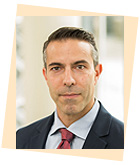
Professor Mario Kafouros
Professor of International Business and Innovation
Leeds University Business School
University of Leeds
UK
Mario Kafouros was appointed as the Head of the International Business Division at the University of Leeds (UK) in 2013, and was previously the Director of Research in the International Business Division from 2008 to 2013. He has extensive industrial and academic experience in the field of innovation and international business, and sits on the Executive Committee of the Academy of International Business (UK). His research has received strong recognition in the form of (1) Best Paper Awards (e.g. European International Business Academy 2013, Academy of International Business 2010, and the British Academy of Management 2008); (2) funding from research councils, government organizations and multinational companies; and (3) publications in leading international journals such as the Journal of Management, the Journal of International Business Studies, the Journal of Management Studies, Research Policy, Organization Studies, Human Relations, Technovation, the Journal of World Business, the British Journal of Management and the Journal of Business Research.
Keynote address
Managers and policy makers acknowledge that firms must continuously innovate in order to survive and compete successfully in the global arena. However, for various reasons, including the increasing complexity of new products and technologies, firms cannot always innovate by themselves. This prompts the need to use “open innovation” business models and engage in appropriate collaborative strategies. Professor Mario Kafouros in his keynote speech will consider this important phenomenon, will show how firms can successfully engage in open innovation, and will identify the challenges that firms should overcome in order to succeed in the global economy. |
|
Keynote Session
Title: New Year. New You. Innovate Yourself First. |
 |
Mr. Derek Kwik
Managing Partner
Brave Soldier Venture Capital
Born and educated in Hong Kong, Derek is an early ‘returnee’ to Asia with 25+ years of market entry experience. He is one of the most respected technology community leaders and involved with nearly every accelerator/incubator/co-working space in HK. Since 1999, Derek has reviewed 15,000+ business plans and pitches beginning with first generation internet companies. Since 2004, Derek is the Managing Partner of Brave Soldier Venture Capital, a technology venture capital fund (www.bsvcap.com). With a background in investment banking, direct investment and management consulting, he has worked in all aspects of fundraising including angel investing, family office, Series A and IPOs (HK Mainboard, GEM, NASDAQ). Derek was the CEO of a Chinese contactless mobile payments company and credited for ‘leading from the front’ from seed round to commercial responsibilities to investor exit. With over 500 ‘day trips’ to Shenzhen, Dongguan and Guangzhou, Derek has supervised manufacturing operations in telecoms, robotics, wearables and pc peripherals. In his limited free time, Derek is an author of two books, university guest lecturer, TEDx speaker, Trustee and Co-Chairman of the Society For The Prevention Of Cruelty To Animals (SPCA), Advisory Council member of Junior Achievement and a popular mentor/advisor to several start-ups. Derek is also an extreme multi-day ultra-marathon runner, PADI Dive Master and jiu-jitsu practitioner.
Keynote address
Hong Kong born entrepreneur and venture capitalist, Derek Kwik has made over 500 day trips to Shenzhen to walk the production and assembly lines of consumer electronics factories. Since 1999, he has witnessed local manufacturers across Guangdong Province undertake a series of upgrades from manual labor to semi-manual to full automation. He has experienced firsthand, what we all know today, that ‘Made in Shenzhen’ does not mean the same thing as ‘Made in China’. Derek will share the opportunities for entrepreneurs in Shenzhen’s title as the world’s leading technology contract manufacturer for global brands.
|
|
Keynote Session
Title: The Innovation Imperative: Being Strategic and Entrepreneurial in the New Normal |

|
Professor Michael Hitt
University Distinguished Professor Emeritus
Texas A&M University
Distinguished Research Fellow
Texas Christian University
USA
Michael A. Hitt is currently a Distinguished Research Fellow at Texas Christian University and a University Distinguished Professor Emeritus at Texas A&M University. His research has been published in many of the top scholarly journals, including the Academy of Management Journal, Academy of Management Review, Strategic Management Journal, Organization Science, Journal of International Business Studies, and Journal of Management among others. The Times Higher Education listed him among the top scholars in economics, finance and management and a recent article in the Academy of Management Perspectives lists him as one of the top two management scholars in terms of the combined impact of his work both inside (i.e., citations in scholarly journals) and outside of academia. He is a former editor of the Academy of Management Journal and a former co-editor of the Strategic Entrepreneurship Journal. He is a Fellow in the Academy of Management, the Strategic Management Society, and the Academy of International Business. He is a former President of both the Academy of Management and the Strategic Management Society.
Keynote address
Over the last two decades, firms’ competitive environment has become increasingly unstable and unpredictable causing one executive to suggest that they continuously have to navigate in the ‘new normal’. Regardless of the industry, firms must be innovative to survive and compete. Firms must seek to establish a series of temporary competitive advantages. This environment is highly challenging and yet uncertainty creates opportunities to be entrepreneurial. Research shows that as firms become more successful and mature, they also become more conservative. In other words, they generally become risk averse and less entrepreneurial; these firms often focus on producing more incremental innovation trying to extend their current advantages rather than trying to create new competitive advantages through novel innovations. Thus, firms have to be both strategic and entrepreneurial to remain competitive over time. The actions that firms must take to be entrepreneurial and innovative vary according to the major institutions in countries where they operate. We will explore actions that firms can take to engage in strategic entrepreneurship.
|
|
Keynote Session
Title: Designing Actor-Oriented Organizations |

|
Professor Charles Snow
Professor Emeritus of Strategy and Organization
Smeal College of Business
Pennsylvania State University
USA
Charles Snow is Professor Emeritus of Strategy and Organization at the Pennsylvania State University. His research areas include innovation management, organization design, new forms of organizing and managing. He is Chairman of the Organizational Design Community and Co-editor of the Journal of Organization Design. He is a Fellow of the Academy of Management and has taught organization and management to managers and students in more than 30 countries in Europe, Southeast Asia, and South America. Currently, he is co-editing a book on Organization Design for Cambridge University Press.
Keynote address
Traditional organizations have been designed for environments that are known and stable. Today’s business environments are complex, changing, and even ambiguous – requiring agile organizations that can adapt quickly and effectively. A new organizational form is emerging that is well suited to these environments called the actor-oriented organization. In actor-oriented organizations, actors have the capabilities and values to self-organize; share resource commons to collaborate and innovate; and use protocols and infrastructures for control and coordination rather than hierarchical mechanisms. In an increasing number of situations, actor-oriented organizations are the preferred means of innovating and competing. |
|